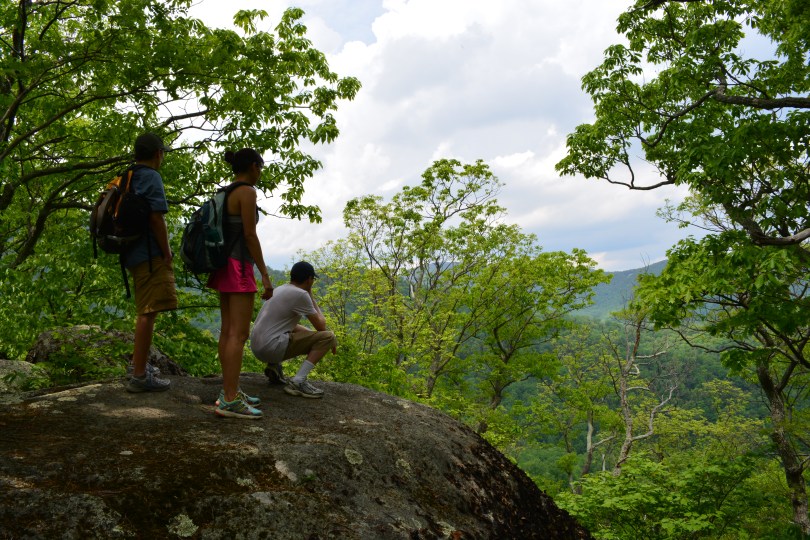
I was starting to wonder if I was ever going to make it out to the mountains before spring ended. We got our chance on May 16, 2015 when our cousin from Toronto came to visit. It was his first time to Virginia and this would be his his first hike through the Shenandoah mountains. It was a perfect day for the Bear Church Rock loop (8.5 miles) which initially starts on the Graves Mill trail before steeply climbing the mountain along the Staunton river trail. We included a detour to check out the Jones Mountain Cabin owned by the PATC (Potomac Appalachian trail Club). It was a hot day with some overcast mixed with bursts of sunshine and spring rain. The showers peaked as we reached the top of the mountain to cool us off. Heaven.
For the longest time, I’ve wanted to create the most important tool in bushcraft. The knife. There are an endless style of knives out there, however I found myself drawn to scandinavian steel and grind. Norway, Sweden and Finland are a few of the countries that have a long standing tradition in superb bladesmith with companies like Helle, Mora and Enzo. Up until this point, I have used my Morakniv as an all purpose knife, however I wished to own one with a figured handle. Instead of purchasing a knife, I decided to make one.
Carbon steel blade, forged in Karesuando, Sweden.
Choosing the steel.In the simplest sense, steel is combination of iron and carbon. There are numerous different types of steel with different properties. Different alloys can be added to provide these properties. When it comes to forging a blade, the key distinction is whether you want a simple carbon steel blade or a stainless steel blade. The stainless properties come from the addition of chromium to the iron and carbon. The chromium provides rust resistance and flexibility but at the sacrifice of the hardness of the blade. To qualify as stainless, the overall composition must be at least 10.5% chromium. Stainless steel is the choice for several folding knife makers such as Victorinox, because of the low maintenance required with this material. Carbon steel on the other hand, is more prone to rust and corrosion, however many prefer this steel in bushcraft because it is harder and can hold an edge for a much longer time if properly maintained. It is also an easier steel to sharpen in the field. I could go on and on about the different steels that are available for knife making but to keep it short, I decided to go with carbon steel, particularly from Sweden.
Karesuando, Sweden: The most northern town in the country is known for producing superb Scandinavian blades. Photo courtesy of Stephen Hudson. http://stephenhudson.net
Karesuando is the most northern town in Sweden, it is known for producing superb blades. I purchased mine from Thompson’s Scandinavian Knife Supply . An excellent supplier of anything knife related including stabilized wood, pins, and bolsters. They have a variety of blades to choose from.
Choosing the wood. This was an easy choice for me. Curly birch. A wood that in my mind exemplifies the culture of canoeing in Ontario. When purchasing the wood, it is key to choose “stabilized” wood. This means that it has been dried thoroughly and is no longer prone to movement. The cost of the wood would also vary depending on how much figure is present.
Chiseling the outline of the tang, was a simple process and completed by hand and chisel. I like the Karesuando blades due to their thicker tangs in comparison to the Moras and Helle blades. This particular blade had a drilled hole designed for pin placement however in my case, I was going to be using a hidden wooden peg instead of the usual polished brass pin. This peg would work to secure the steel to the handle and prevent slipping of the blade.
Two separate types of glue were used to mate the two halves. The most common method of fixing steel to wood is by using epoxy resin. For the wood-wood contact however, it was gorilla wood glue all the way. I clamped the pieces and let it sit for 24 hours.
Next came the difficulttask of actually shaping the handle. I decided that I was going to do this by hand. It was a laborious process of carving, filing and sanding. My influence for the handle came mostly from existing Helle models such as the Temagami and the Eggen. While many Scandinavian knives lacked any sort of finger groove, I knew that I wanted a fingerguard.
Carving and filing
The voyageur begins to take shape
When I was finally satisfied with the end result, it was time to sand it and put a finish on the handle. Ideally, you’d want the handle as smooth as possible before putting on any coats of oil or finish. The sandpaper should have a grit of at least 400. In this case, I wanted a simple finish that would bring out the grain and figure of the wood. I stuck with tried tested and true boiled linseed oil. After several coats, I then proceeded to apply layers of beeswax for further protection and to seal it.
In the end, I must say that I was overall happy with the result. The voyageur’s handle fits comfortably and the blade is fastened securely. The use of machines would definitely make the process faster and easier however I wanted my first one to be completed by hand.
In the Allegheny Mountains of West Virginia, lies the Monongahela National Forest. The Dolly Sods (open mountain top meadow) Wilderness occupies a small portion of this area. It is one of the highest points in West Virginia and as a result the vistas are unlike any other on the East Coast. The rocky landscape, spruce forests, and sphagnum bogs is a scene normally found in Canada. Needless to say, when I heard about this place, I knew I had to experience it. I finally got the opportunity on March 22, 2015. I set aside the first three days of my vacation to explore Dolly Sods. I went with Min, an old college friend and the one who actually introduced me to the Old Rag Mountain hike in Virginia. I have been on numerous camping trips in all forms: drive in sites, canoe portages and off-road but never a backpacking camping trip where I would have to carry everything in. I knew that this one was also particularly going to be challenging with temperatures in the 19-22F range requiring bulkier clothing and heavier packs. We averaged just over 45lbs per pack.
Beginning of the trail
The forecast predicted three days of clear skies however we took this with a grain of salt; the mountains were prone to abrupt changes. We started our trek that Sunday morning on the Bear Rock Trail. Walking away from our car and into the howling wind, we knew we were in for a tough trek. We were the only ones in the whole area, not another human in sight, and no other cars parked. Our progress was slow as we marched through boggy meadows and icy rocks. The spruce forests were like little oases, a place where clear streams ran and the cold wind broke. We met our first stream and took a short break to appreciate the pristine camp site.
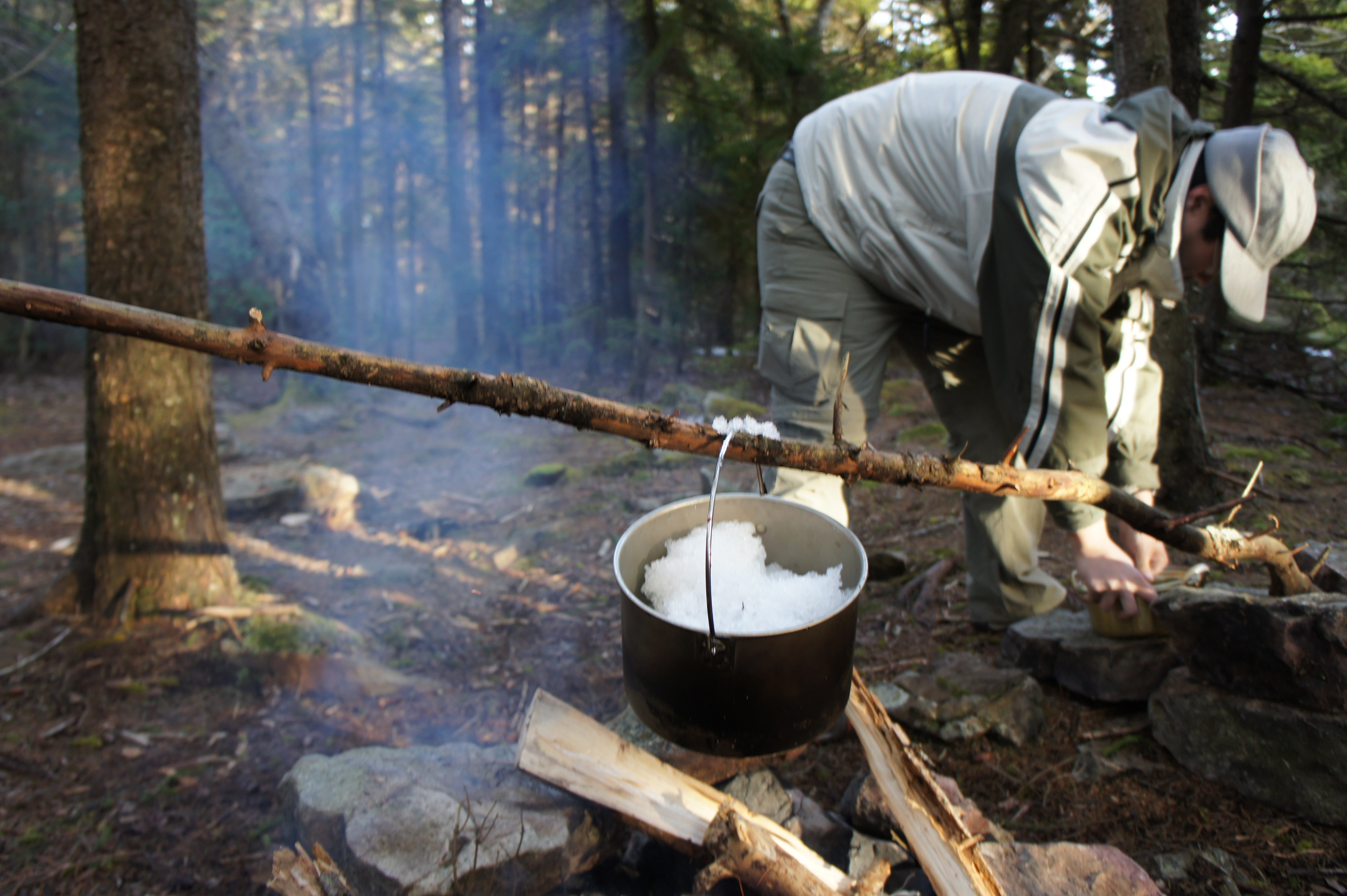
We knew it was too early to set up camp, so we pushed on through the meadows and bogs. By 4:00pm, we decided it was time to start setting up camp in one of the spruce forests. The creek in these forests had unfortunately frozen over and we were too far away from the next flowing water source to make it in time before nightfall. We decided to set up camp and melt the snow and filter out the sediment as our water source. This was made possible with an axe and folding bucksaw. In such a dense forest, these tools went hand and hand, allowing us to process the numerous downed spruce trees. It appeared that wind and the elements caused several to snap at the base, we quickly limbed the trees and got a large fire going to warm our wet socks and prepare dinner. To clarify, we DID NOT chop any down. This is a pristine wilderness area and we hope that everyone who visits pays the same respect to the Dolly Sods.
Fallen spruce trees from the winter. Don’t worry we didn’t fell any!
Ray Mears buck saw
With all of the streams frozen in the forest, we melted our snow and filtered out the sediment to get clean drinking water.
We woke up early the next morning to make up for lost ground the previous day. We found that in some parts, the trail was surprisingly difficult to find. The presence of rock cairns made the job easier left by previous hikers. We traveled across beautiful vistas and proceeded through a rock scramble where we rested our backs.
Sheets of ice layered over the clear springs
It was a good thing we decided to camp where we had the previous night because the next water source was miles away. We navigated our way up a creek with fresh flowing clear spring water. It was certainly a welcome sight.
One of the highlights of the trip was crossing Stone Coal Run, the largest body we encountered since crossing Red Creek at the beginnning of our journey. We took a break and drank as much as we could and filled up our water bottles. As a method of filtration, I prefer my Platypus. The bag holds 2L and is able to filter all of it within minutes. It has served us well in the past and is particularly useful at a campsite with abundance of water. We filtered about 60L while in Algonquin Park without any issues.
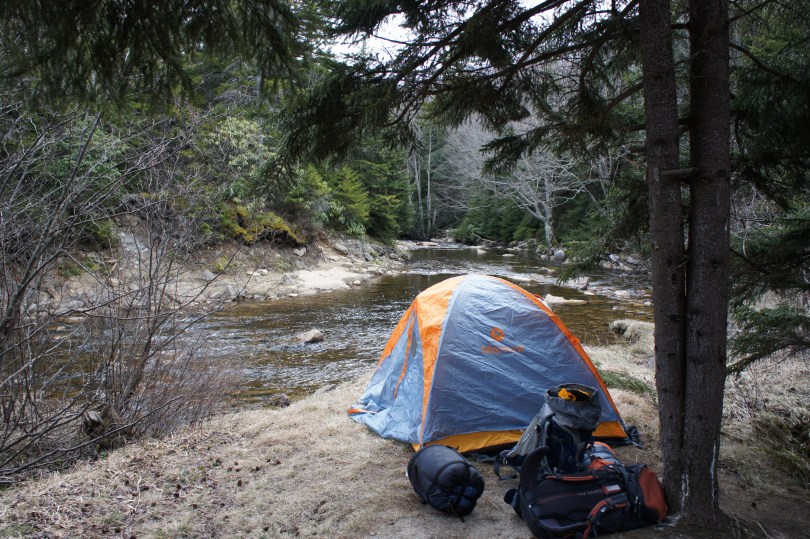
Around this area, were some prime camping spots, all unused. We pushed on to head towards the red creek crossing. It was here where we decided to camp for the night. Completely secluded with tons of fallen spruce trees to process. We washed up and set up our camp.
While the forest axe was certainly heavy with a 2lb head, Min was determined to bring it. I’m glad because it allowed us to split wood and have a fire hot enough to bake bannock. No trees were felled during this trip.
At this point, we were both pretty much spent. We decided it was time to go to town on our food. We cooked and ate several meals, including: curry and rice, Min’s korean noodles, bannock, and a lot of snacks. We were grateful for the running stream to provide us with ample drinking and cooking water. It was truly an oasis.
Spruce forest
Brushing away pine cones for the tent
campsite
bannock in a reflector oven
Learning from our previous cold night, we took no risks and layered on all clothing before climbing into our sleeping bags. We slept straight through the night without any disturbances. The next morning however, we awoke to 2 inches of snow.
We woke to 2 inches of powdery snow
Our next leg involved crossing the stream and continuing on home. This was surprisingly difficult with the snow covering most of the trail in the dense forest. There were several occasions when we had to set down our packs and scout in different directions until one of us found the trail. At the sight of the main road, we breathed a sigh of relief, our feet were wet, cold and sore and our backs ached. On the walk down the main road, we ran into the only person we saw during this entire trip. He was a young guy who carried very little gear. To our surprise he told us that he was hiking across the country. He had made his way through Delaware and DC already. He decided to take 9 months off and make a solo trip on foot. Forest Gump style I guess.
cross country hiker
final leg
At the arrival of the Bear Rock Trail sign, we knew we made it. The trip was a hard one and our bodies were pretty much done. The views and scenery were simply amazing. I must give credit to the people of West Virginia and the forest rangers, this was one of the best kept wilderness areas I have ever been to. The camp sites were immaculate and I did not see signs of garbage or debris anywhere, this made the experience so much better. Overall, our trip to the Dolly Sods was everything I hoped it would be and much more. I’ve read about the area and seen photos and videos of the Dolly Sods but nothing compares to seeing it with your own eyes. I would go back in a heart beat, preferably when it gets a little warmer.
This is my favorite canoe expedition documentary. Check out their website to learn more about the members: http://ninerivers.ca. “Nine Rivers follows four men on a month-long, thousand kilometre canoe journey through the Canadian shield. Share the hardships and splendor of the North on this journey to Hudson Bay.”
A film by Dave Hartman, Matt Perpick & Adam Biehler.
Seems like it’s video week. I’m a big fan of David Hartman’s work as a videographer. His company Hayfire Media has made some beautiful Canadian adventure documentaries. This is his latest work about cabin life in Algonquin’s backcountry.
After watching this amazing video today by Goh Iromoto, I knew I had to share. It features the legendary Ray Mears as he paddles his way through Northern Ontario in Wabakimi Provincial Park. I have always respected and admired Ray Mears and have learned a great deal from his books and videos. Definitely got me excited for the upcoming paddling season. Enjoy.
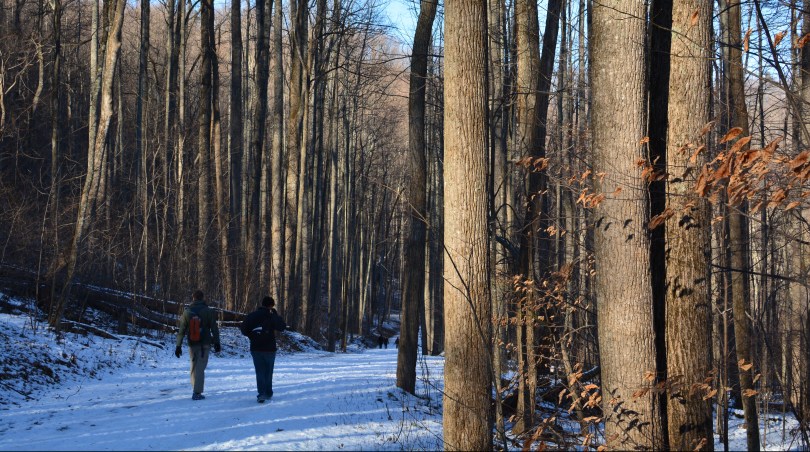
I ventured out with my friends Min and Ronan, to Shenandoah National Forest on the last day of January. We decided to take on the Robertson Mountain Trail which starts near the base of Old Rag Mountain. We left Richmond at 7:00am and began our hike at 9:30am. It was a chilly day at 22 degrees F and a solid 5 inches of snow covering the mountain. The view at the top was well worth it. This trip may have opened doors to future winter camping excursions.















 WAY NORTH