
During the days of the pandemic, we carved a canoe paddle. This is a short video of our story. Read the full entry here: Building a canoe paddle

During the days of the pandemic, we carved a canoe paddle. This is a short video of our story. Read the full entry here: Building a canoe paddle
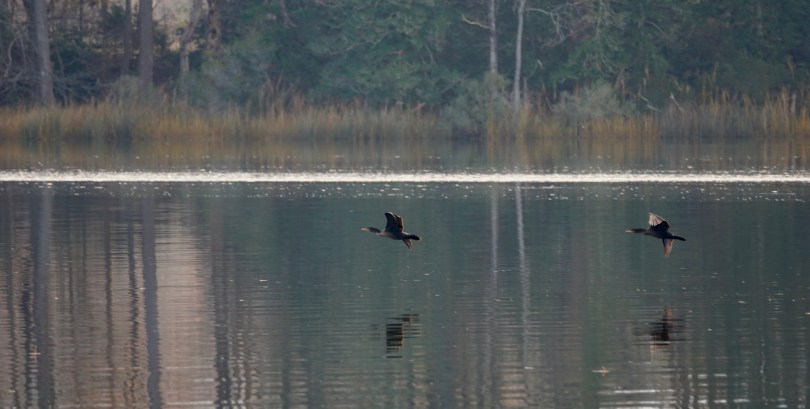


We took the family to spend a couple of days on the Piankatank River. The water was calm and the wildlife was out and about. I was able to get a shot of the bald eagles that have been hunting our segment of the river for years. I’ve been breaking in the Sigma 100-400mm telephoto lens. I still have it attached to the trusty old Sony a6000 that’s been pulling it’s weight for the past 5 years now. Hard to believe it’s been that long. I still have much to learn about telephoto lenses, but it’s been a lot of fun. Happy Holidays to everyone. Stay safe and healthy out there…and keep those masks on! Cheers.
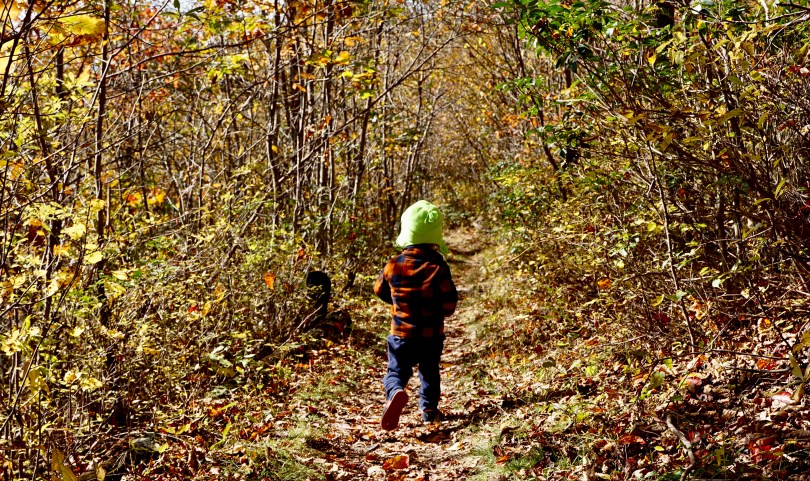
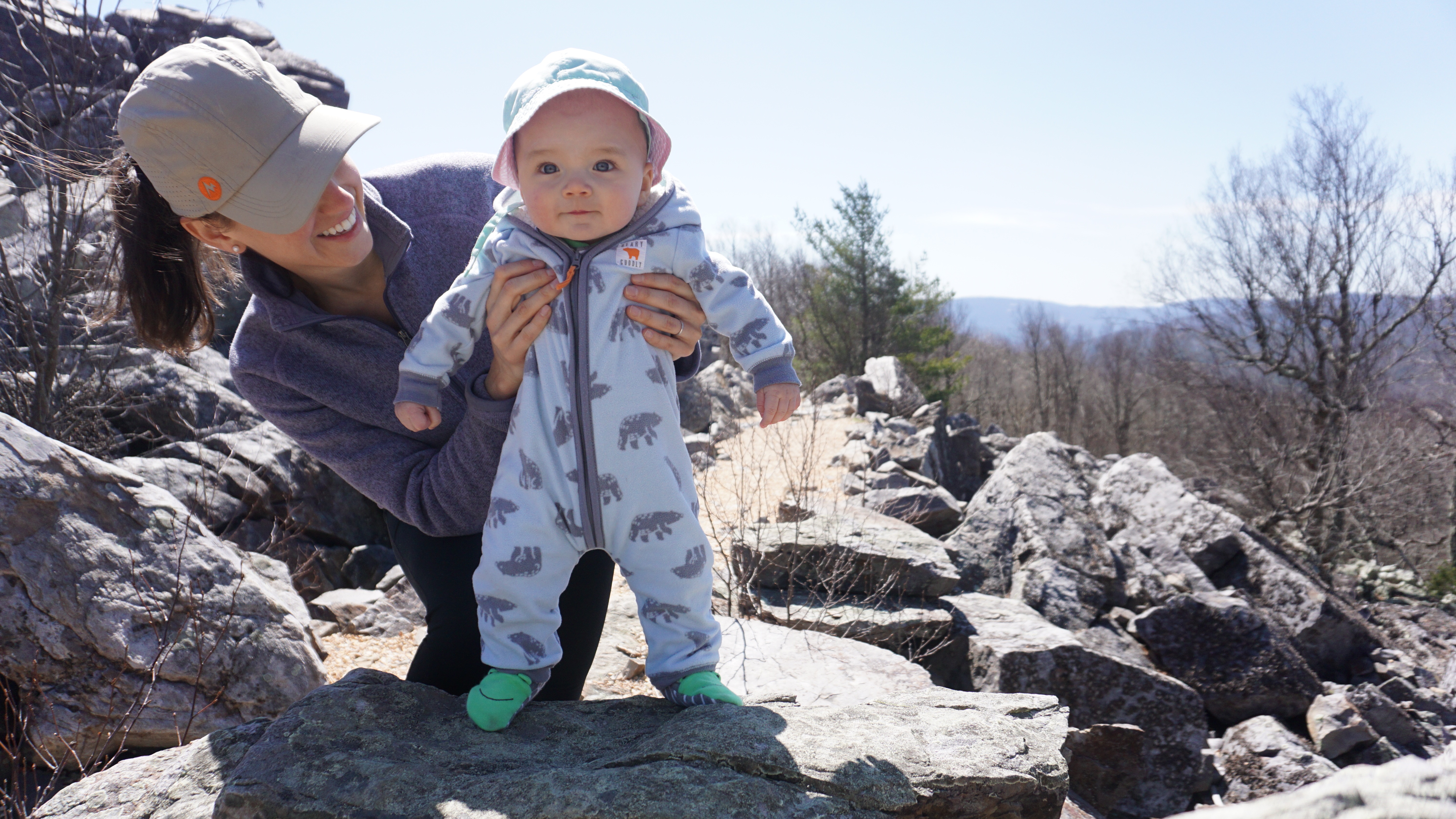
October 18, 2020 – It seems like the only normal thing in 2020 has been the autumn season. By late September, we had already experienced our fair share of chilly days in Virginia. This welcoming drop in the temperatures seemed to trigger the leaves to change color on time. Although tired from the busy work week, we needed to escape to the mountains, specifically to our backyard national park, Shenandoah National Park. We were going to take on what seemed to be a family favorite of late: the Black Rock Summit Trail. This easy 1.0 mile loop was where we took our son for his first hike, and now we were going to take our daughter there for her first hike.


We arrived at the park entrance to find a short line of cars. I think this was the first time I’ve ever had to wait in line to get into Shenandoah. It seemed like everyone wanted to escape quarantine madness and get outside. I don’t blame them. All along the way, people were pulling off at scenic outlooks to take photos of the fall foliage. The parking lot for Black Rock Summit was full when we arrived but we had no trouble finding parking on the side of the road. Our 3 year old son was able to hike the entire trail on his own this time which certainly helped! The paths on this trail are well marked and it is a short hike to get some amazing views, highly recommended if you have young kids in tow.


On the south shores of the piankatank where it opens up onto the Chesapeake Bay, we pitched our tent and settled in for my sons first overnight in a tent away from home.

All of Mathews County was draped in a thin layer of fog. The ground was damp the from morning dew and a chill was in the air reminding us that autumn was here. Such things did nothing to damper the spirits of a 3 year old boy. He galloped through the large field and marveled at the vastness of the bay. He stared at the migrating ducks as the made their way down south. He watched the sailboats from afar as they came in and out of view through the fog.


He had been raving about this camping trip for weeks and it was finally here. He would get to spend a night in a tent away from home and under the stars. We got to work setting up our gear and started a fire with the damp wood around us.
As we setup our site, the unmistakable call of a loon filled the air. I was surprised to see several loons in the bay fishing. They must be on their way south, because I have never seen them in this area before.

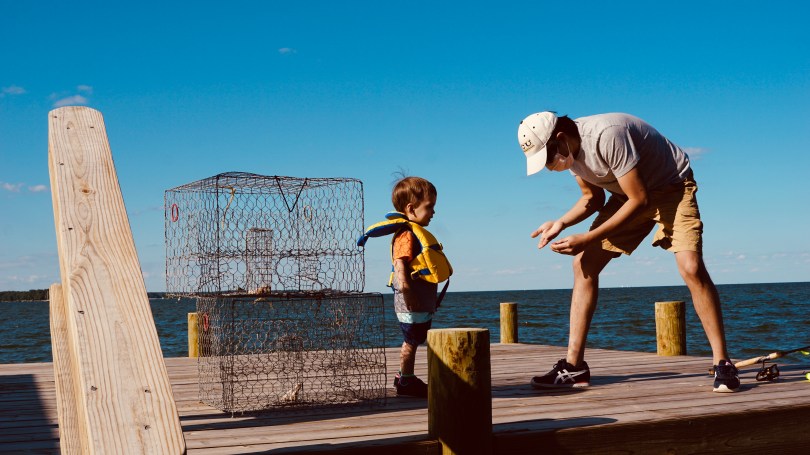
We spent the day chopping wood, catching crabs and fishing. Minh was familiarizing himself with a lot of the camping gear. We were joined by my parents and brother in the late afternoon at which point we added more wood to the fire as the night skies surrounded us. I could sense my sons excitement as the darkness surrounded us and only the glow of the fire would illuminate the campsite. He had no trouble sleeping in the tent and slept like a rock.


The next morning we were greeted with the sun! He was eager to get back out and fish. We also took a stroll down the road to see some of the neighbors cows. This trip was also a great opportunity for me to play around with the my new telephoto lens, a sigma 100-400mm for Sony alpha cameras. So far it’s been a blast to shoot with. After I took some photos of the cows, we went on some walks around the area and then packed up and headed home. He did not want to leave. He fell asleep in car immediately, and upon awakening, he asked me with eyes barely open….”when are we going canoe camping?”
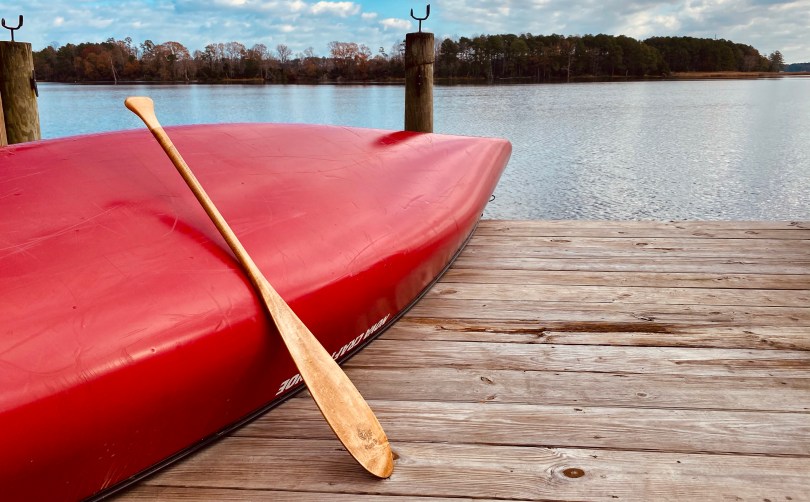
From the moment he stepped foot in a canoe, my son has never been satisfied with just sitting and taking in the views….. He wanted to paddle! He was not even 2 years old and at the time there was not a paddle small enough for him. This was my chance to make him one. As with all projects, we both learned a lot and had a blast making it.
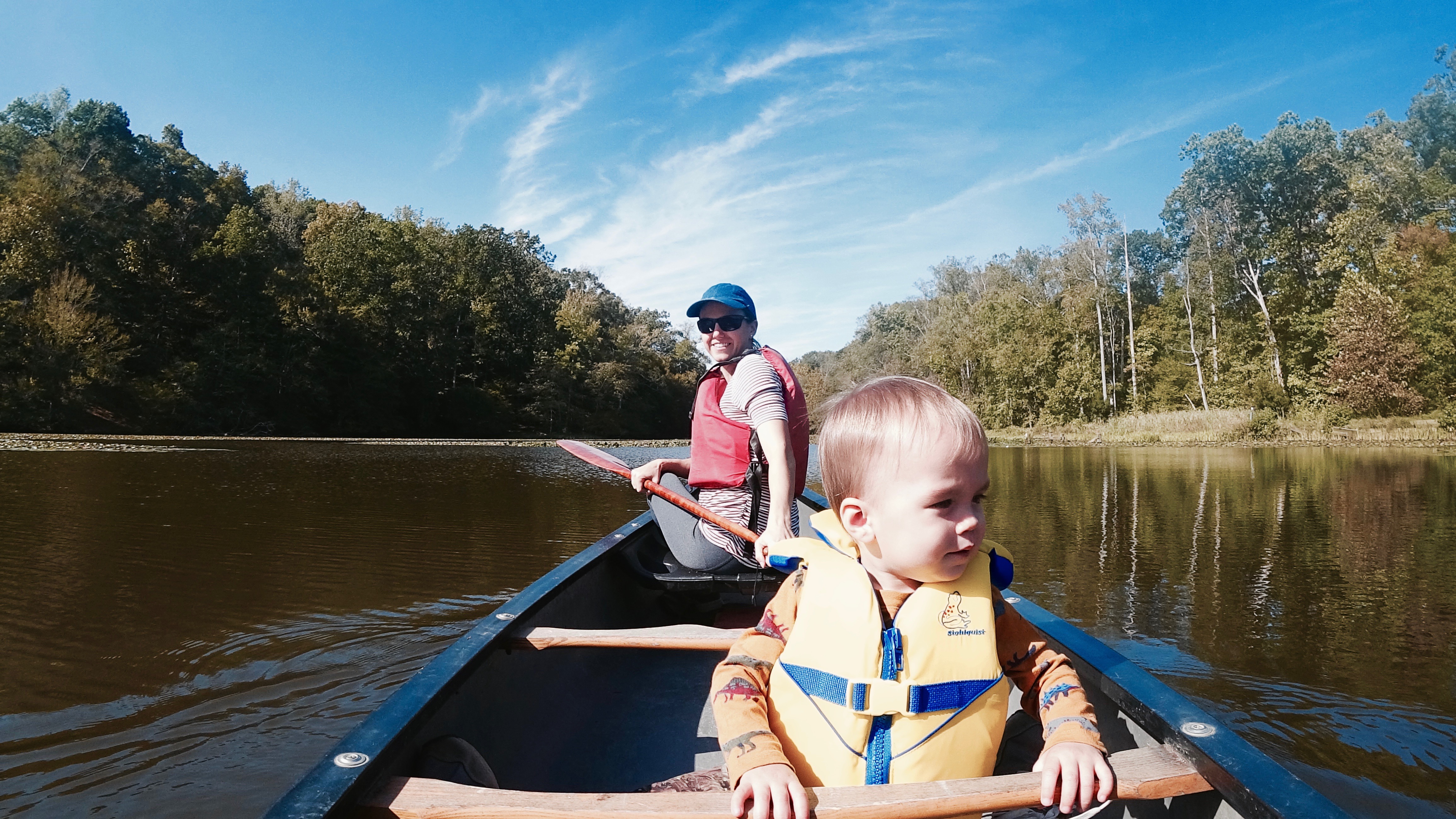 His first canoe trip.
Selecting the wood:
Traditionally, canoe paddles are made from hardwoods. The definition of a hardwood is a species of tree that will yield a seed that has a coating on it, either in the form of a fruit or a shell. (Oak, maple etc). Softwoods, yield seeds that do not have any particular coating. Example: many conifers. The terminology is sometimes misleading because there are some softwoods that are actually harder than hardwoods, but in general, hardwoods are usually indeed harder. These trees take much longer to grow to the equivalent size and as a result are usually denser.
For a project such as this, you will likely not find the board of wood that you need from Lowes or Home Depot. Your best bet is to go to your local lumber mill or wood working store. In this case, we were fortunate enough to find our wood from Woodcraft. If you haven’t spent much time in a lumbar yard, some of the terminology might be confusing. You will hear the term “board foot”. This is the unit for which wood is sold. IT is misleading because it is actually a unit of VOLUME not length. A board foot describes a piece of wood that is 1inch thick, by 12 inches wide, by 12 inches long. Hence 144 cubic inches. For our project, we used a 3′ x 1” x 4” foot long piece of hard maple.
When you are selecting the wood, make sure that there aren’t any knots or wood defects in the areas that you will be using, ESPECIALLY in the shaft of the paddle. These knots can lead to weakness in the paddle and could eventually fracture down the road.
Equipment/Materials:
Selecting the design:
When selecting the design of the paddle, keep in the mind where the paddle will be primarily used. Is it flat water? whitewater? tripping? leisure paddling? There are numerous types of canoe paddle designs to choose from. These mostly differ in the shape of the blade of the paddle. Different paddle shapes will move different amounts of water. I’ve always prefered the beaver shape paddle, it is not too wide and it is not too narrow.

The Woodworkers Journal: provided a template for one of their Northwoods canoe paddle. A beavertail shaped paddle. I didn’t use these exact dimensions because we are completing a scaled down version for my 2.5 year old son. But I was influenced by the overall shape. Notice how the design templates are for one half of the paddle, when you are finished tracing that half, flip it over and trace it again to create the complimentary side. This will allow for the most symmetrical template possible. If you’re going to making many paddles over the years, consider making this template out of wood for safe-keeping over the years.

Once the outline has been drawn on the paddle, use a bandsaw or a jigsaw to cut out the paddle. If you spend extra time making the cuts as precise as possible, this will save you time later with the hand carving, shaving and sanding. I used a Bosch jigsaw.
Here is the video of the northwoods canoe paddle making process.
2. Planing
 The key point to make during the remainder of the carving process is to maintain symmetry through the axis as well as throughout thickness. Use a gauge to mark the very center of the board on it’s axis as well as its thickness. The line, will let you know how close you are to your desired thickness of the blade. You may decide to vary the wood thickness based on the type of wood as well.
When working on a project like this, I want to emphasize the importance of knowing your tools and how to maintain them and to keep them functioning at their very best. There is no better example than the bench hand plane. If your tool is properly sharpened, maintained and tuned, this part of the project can be the best part. If your plane is not set up correctly, this could lead to a very frustrating experience.

In addition to keeping your tools finely honed, it is crucial to take into account the wood’s grain direction. Ideally your board is free of knots, this will make for the easiest planing. If there are knots, just be cautious of the grain drain direction change in these areas which could leave to tear outs. One way to battle this is to take shallower cuts if necessary. There are numerous tutorials online about how to read grain direction on a board.
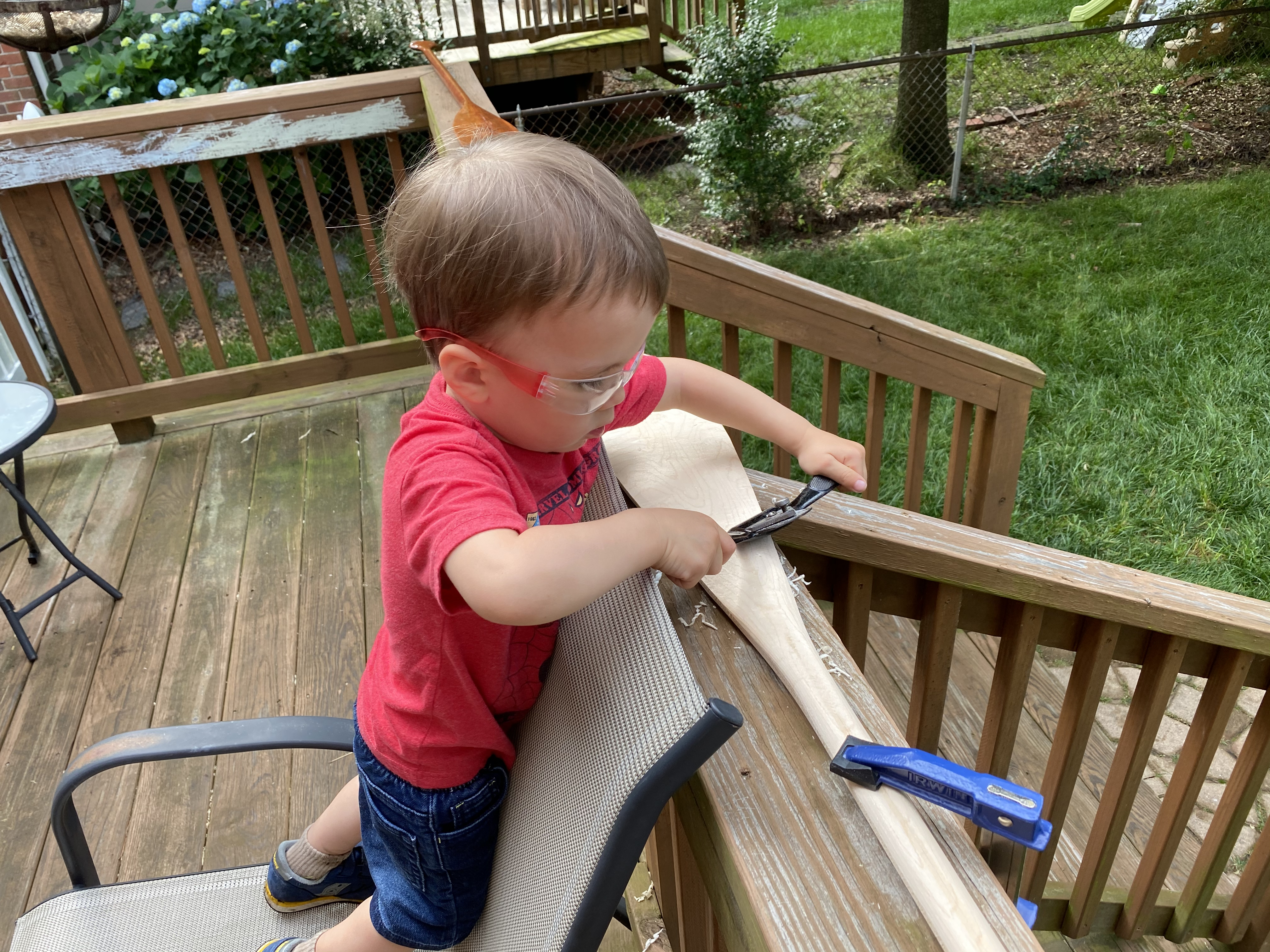
Here is a useful video on how to set up a hand plane.
The Handle
The handle is probably the most difficult part of the carving process. There are many different methods to tackle this portion. Some paddle companies will actually do this part all by a large drum sander. Others will use files to whittle away the handle. I prefer to use the spokeshave, although this can be a little, especially if you are making sharp turns. I sanded parts of the handle afterwards with a belt sander.

Watch this craftsman at Shaw and Tenney (an oar and paddle company based in Maine) shape most of the paddle using a large drum sander. Some people will say that this method is not truly “hand made”. Nevertheless, the precision is impressive.
Woodburning
This step is entirely optional; I really wanted to put a logo on our canoe paddle, with a maple leaf (representing our Canadian heritage) and an oak leaf to represent our currrent home, Virginia. Similar to the wannigan I constructed, the wood burning process is a very enjoyable part of the paddle making process. Now if you were a professional furniture or paddle maker, you could consider just getting an ironing brand. Who knows? Maybe one day we will start canoe paddle business. It certainly seems like there are quite a few out there. There is one paddle company in Minnesota named: “Sanborn Canoe Company” that appears to be doing well. They specialize in artisan paddles.
The finish:
There are different ways that you can finish your canoe paddle handle. While some people will varnish the entire paddle, others leave the handle unfinished. I opted for the latter. I left the handle unfinished and unvarnished. I later added 3 coats of boiled linseed oil on the handle. The decision to oil or varnish your handgrip is purely personal preference. I found that over long canoe trips, the feeling of a varnished hand grip can make your hand a little raw after thousands of strokes. Finishing with linseed oil, gives the handle a buttery smoothness, similar to an axe handle. Over the years of use, the grip will darken naturally.
 Personal preference, but I left the handle, unstained and unvarnished. I used 3 coats of boiled linseed oil to give it a buttery smooth finish, that will feel much better in the hands. Over time, the wood will darken naturally from the oils on your hand as well as the elements.
In conclusion:
For the canoe enthusiast, I can’t think of a more rewarding experience than using a paddling that you’ve created. It is also a fantastic father son bonding experience. As with other projects, I always find that I learn so much from even the smallest of projects. In this case, the big take home point, is that maintenance of your tools and knowing how to calibrate and hone them is essential to getting a precision job done. The hand plane was a joy to use once sharpened and calibrated. This holds true for the spokeshaves as well. Obviously with any project, the use of a work bench with clamps to suspend your work also makes the task of carving your paddle infinitely easier. Have fun.


**This is the best canoe paddle carving I have found on the internet. It features Ted Moores (craftsman) and this video from the 1990s was produced in Ontario, Canada.**
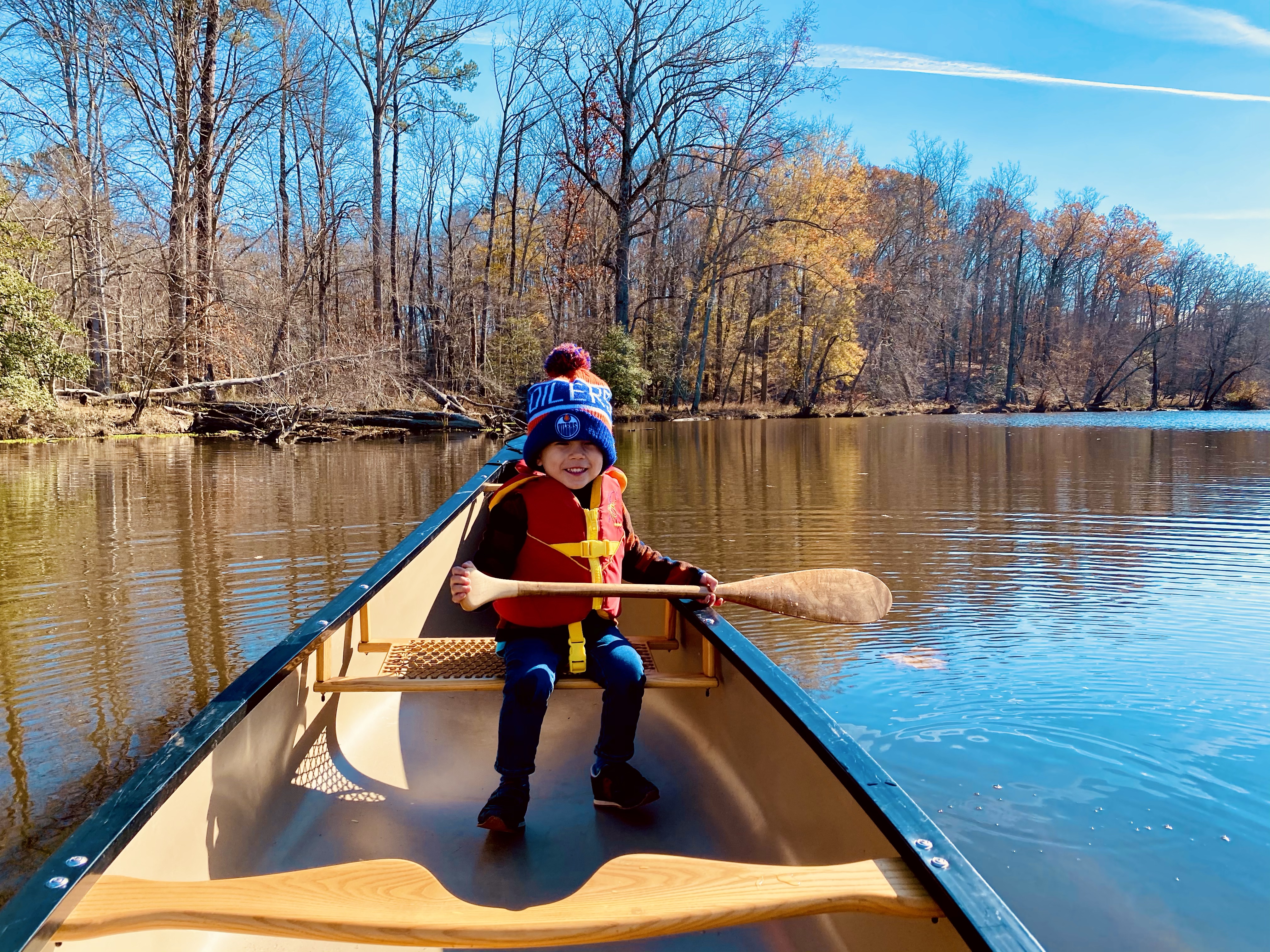
Maiden voyage…..all smiles
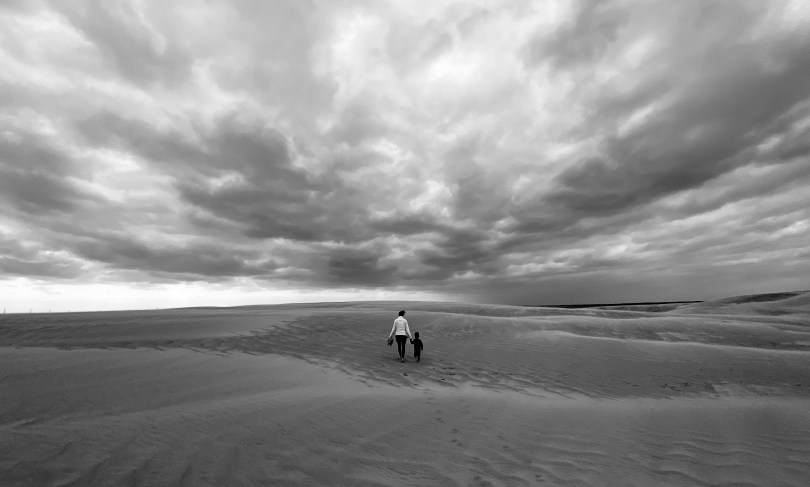
In the middle of the Outer Banks in North Carolina, you would never expect to find the tallest active sand dune on the east coast. At Jockey’s Ridge State Park, you can explore these sand dunes and more. The park covers an area of 427 acres and is the most visited park in the North Carolina park system.
The temperatures can apparently be truly desert-like in the hot summer months. Reaching 110 degrees F and the sand can be up to 30 degrees hotter. Our visit was in late September so there was virtually no one when we arrived. For our son, this was the largest sandbox he’d ever seen and he was thrilled.
* Make sure to bring plenty of water on those hot days. Sunglasses help too even if it’s not sunny, especially on windy days


Summer solstice 2016, we set out to explore Quebec in La Verendrye Wilderness Reserve. I can’t believe it was 4 years ago. I have finally found some time to piece together all of these ancient clips into a video. Hope it provides some entertainment.
It is the largest estuary in the United States and a national treasure…..we need to do everything we can to protect it for future generations to come. Go to www.cbf.org to learn how to get involved or make a donation.


I came across this great canoe video series, following the journey of four young men, as they make their way across Newfoundland and Labrador. There appear to be 13 episodes in total. I thought I’ve been in some buggy areas before in my life, but it is a fraction of what these guys endured. Amazing journey. Enjoy!
“On July 12th, 2019, Noah Booth, Alex Traynor, Dave Greene and Chris Giard will embark on a 35-day canoe expedition where they will paddle, portage and track their canoes 700 kms from the Menihek Hydro Dam to the coastal village of Nain, Labrador’s northernmost permanent settlement. The route is designed to traverse Labrador in its entirety where they will travel through three major ecosystems, and cross two heights of lands.
The key objective of the expedition is to gain a cultural and environmental perspective of one of Canada’s last remaining wilderness frontiers and become the first modern day team to connect Labrador City to Nain in one trip. Throughout, the journey will be captured through film to produce a documentary that will be submitted to film festivals, as well as be promoted through their social media platforms and sponsors. In doing so, they will highlight and pay homage to the historic travellers such as the Naskapi and Montagnais Innu people who have used these lands for generations as ancestral hunting grounds as well as the European explorers such as A.P. Low, William Cabot and most recently Herb Pohl who have mapped these lands through extraordinary exploration.”

 WAY NORTH