Warehouse Landing, Gloucester VA

richmondtowareriver
The Chesapeake Bay is a short 1 hour drive away from Richmond, VA.

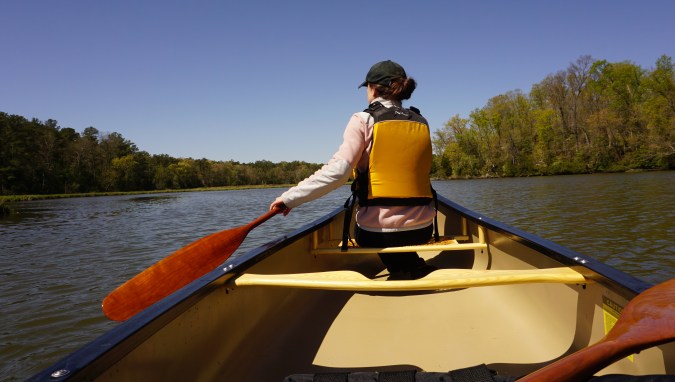
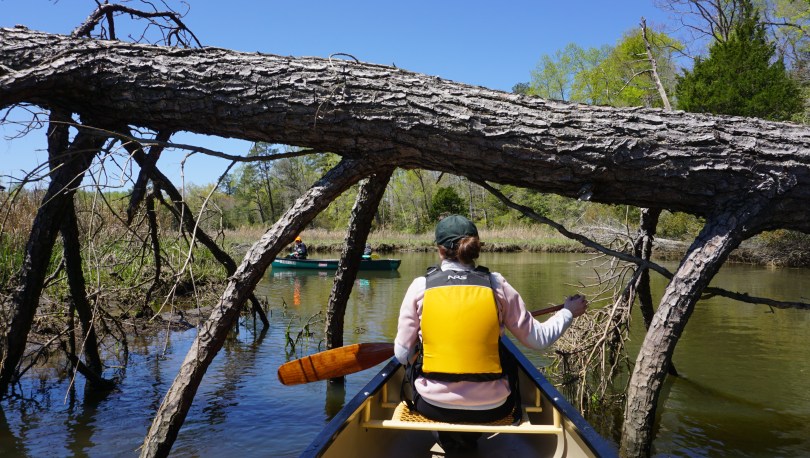
There is never a shortage of waterways to explore in Virginia. In a short 1 hour road trip from Richmond, one can reach the largest estuary in the United States; the Chesapeake Bay. Here, fresh water from over 150 rivers and streams of New York, West Virginia, Pennsylvania, Delaware, Maryland, District of Columbia and Virginia meet the Atlantic Ocean to create a brackish water ecosystem teeming with diverse wildlife and vegetation. There isn’t a better way to connect with this landscape than by canoe. We decided to paddled through the south arm of the Ware River, one of five canoe trails that make up the Gloucester Blueways. The county established these Blueways as a way to encourage visitors to the area and to encourage preservation of these precious lands.

DSC02021
Unloading at the Mobjack Bay

The population of bald eagles and osprey has been healthy in recent years and we had were within sight of them the second we reached the put in. The salty waters of the Mobjack bay was surprisingly clear and calm as we embarked on our excursion.

DSC02026
The launch

A sense of calm and stillness surrounded us as we approached the wetlands. We were protected from the wind by reeds and twists of and turns of the stream. I was stunned by the vast array of wildlife we encountered. From blue crabs, to herons and even a red-tailed hawk, each bend of the river presented a new surprise.

There is certainly something very special about the wetlands. For years the Chesapeake Bay Foundation has been fighting to protect these lands. These regions are especially important in preserving the clarity of the Chesapeake bay. It is the final stop for all of our river and stream runoff from land before it reaches the bay. The major pollutants of the bay are in the form of nitrogen and phosphorus. Such elements are crucial to life, however an overabundance can be detrimental. When these elements are in excess, they contribute to algae blooms which clouds the water and inhibits sunlight that is crucial to the growth of bay grasses. The decline in oxygen from dying plants can cause dramatic pH changes which can kill off crabs, fish and more plants. Today, 300 million pounds of polluting nitrogen reaches the bay each year, over 6 times the amount that reached the bay in the 1600s.

into the wetlands
into the wetlands

While the war effort in cleaning the bay is underway on many fronts. Many believe that the oyster will be the savior of the bay. The eastern oyster is an incredibly resilient species, although years of disease, pollution and over harvesting have caused numbers in the bay to decrease to less than 1% of what it once was. This shift in oyster population has also contributed to the decline in the health of the bay. Oysters are able to filter up to one gallon of water in one hour. They play a vital role in preserving the clarity and hence the habitat of the Chesapeake Bay. In the recent years, the news has been promising with oyster populations making a bounce back and with them, the blue crab population. Both iconic species of the Chesapeake Bay.

I had some time at the end of this trip to reflect on some tripping gear as well. This was my third outing on the prospector, and so far she has been handling like a dream. At only 52 lbs, she’s a breeze to load onto the car and take anywhere. She is responsive and feels comfortable on all different types of water. The comfortable yoke design also makes her almost a joy to portage…but i wouldn’t go that far. I’ve also been quite happy with the Sony a6000 mirrorless camera I’ve been shooting with. I’ve realized that I normally shooting in fairly wide angles at an average of 16mm. Although I haven’t used many other lenses other than my portrait 35mm, I can definitely see the utility in the zoom lenses >250mm in capturing wildlife. The eight bald eagle sightings on this trip convinced me to at least look into some of these lenses.

DSC02025
Mobjack Bay, Virginia

The scorching Virginia summers often steer our canoe trips to the cooler mountain lakes, however this is spring, and anything is fair game. It was actually a refreshing and chilly day as we paddled, at temperatures in the 50s F. Let’s see how long these cool temperatures last. With the north arm of the Ware River and four more routes to explore on the Gloucester Blueways, there’s still plenty to see. Long live the Chesapeake Bay.

Learn more about the blueways here: http://www.gloucesterblueways.org/

Help save the Chesapeake Bay here: Chesapeake Bay Foundation

St Mary’s Wilderness – George Washington National Forest, VA

DSC01814
The trail to the waterfalls follows St. Mary’s river as it meanders through the Blue Ridge. Follow the pink ribbons to reach the falls.
stmarys
A 2 hour drive to reach the well maintained St. Mary’s Road. Approach the trail from the Cold Springs Road.

When presented with free time and the opportunity to explore arises, it can be difficult to decide where to go. The number of destinations seem endless with each place offering something completely different: the Blue Ridge mountains to the west, the coastal tidewater to the east and the Appalachian plateau to the Southwest. I usually end up letting the season and conditions deciding for me. What better place to explore in early Spring than the St. Mary’s Wilderness Area in the Blue Ridge? I read numerous reviews about the area of its beauty and clear river beds. St. Mary’s is designated a wilderness area, and as such, the trails are poorly marked. It appeared that summer hikers frequently got lost on the poorly marked trails and overgrown brush. I hoped to avoid all of this by navigating in early spring, with bare trees and clearer paths.

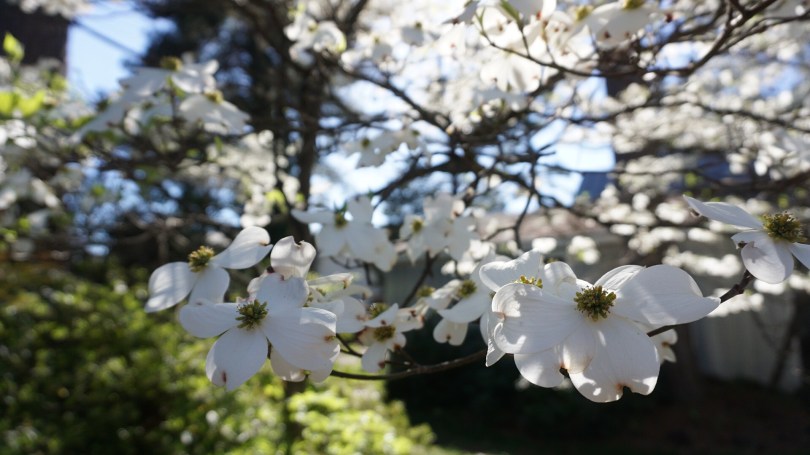
Spring
Spring flox

My cousin from Toronto accompanied me on this outing, marking his first proper hike in Virginia. When we arrived to the trail head, I was surprised to find that the earth was scorched and the trees charred. I later learned that a wildfire just two weeks prior had burned over 800 acres of the wilderness area. St Mary’s spans over 35,000 acres making it the largest Virgina Wilderness area on national forest land. The region was previously a mining ore for manganese and iron until it was abandoned in the mid 1900s. Today it serves as a beautiful hiking and fly fishing trail along the St Mary’s River, complete with a beautiful waterfall at the end.

There are numerous routes to get to the waterfall. The most popular route listed on Hikingupwards.com recommended starting out along the Blue Ridge Parkway. One reviewer discouraged this path, because it was poorly marked and he took numerous detours after getting lost. They recommended an easier way to get to the falls. Off of Cold Springs Rd (Route 608) is St Marys Road. This road is in excellent shape and leads you all the way down to a well kept parking area and the beginning of the trail that puts you right next to St Marys River. From there, you simply follow the river to the falls. Internet win.

DSC01940
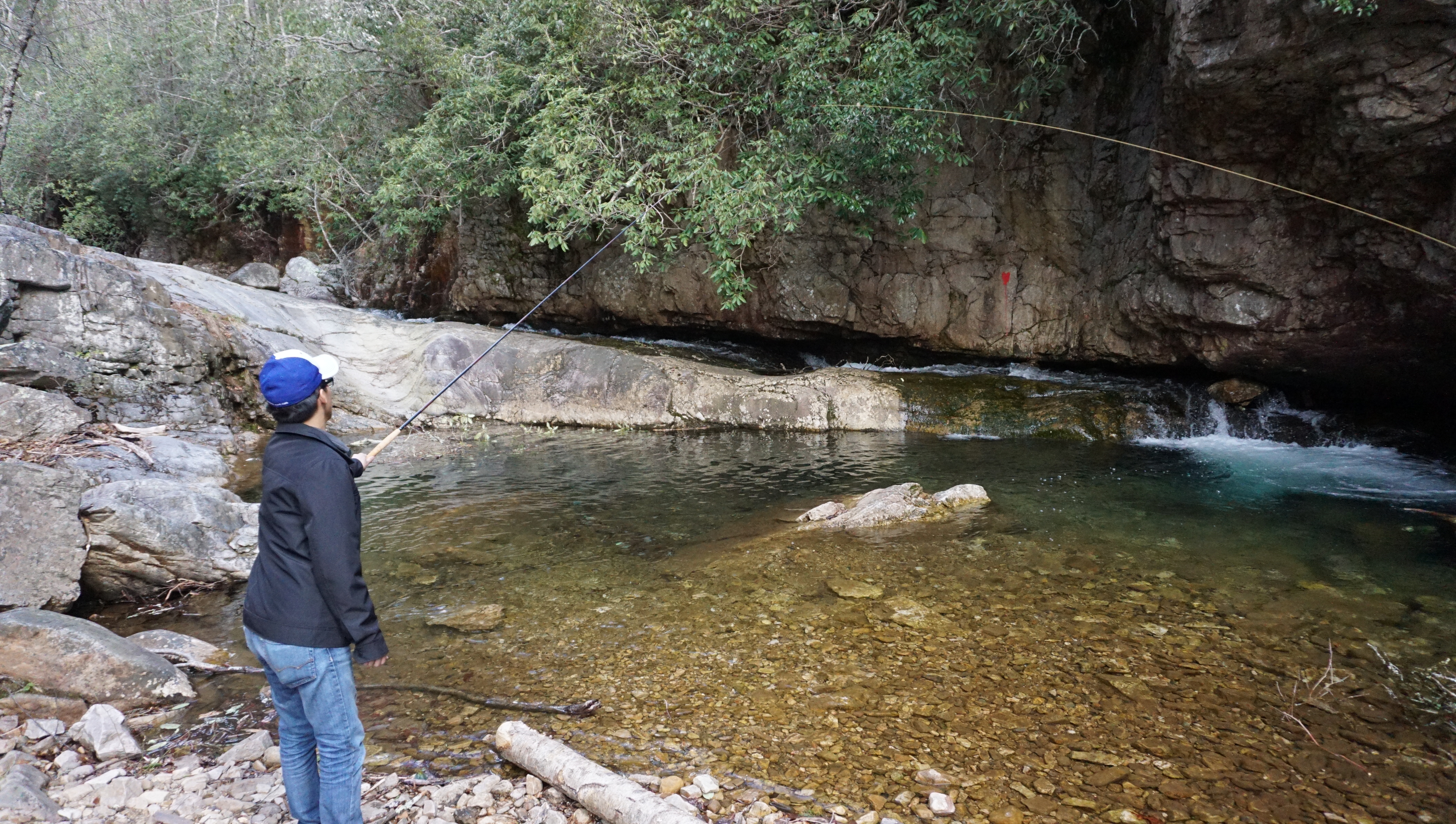
We tried our hand at some Tenkara, a form of Japanese fly fishing that does not require a reel.

The hike twists and turns through a beautiful gorge, providing a unique vista in Virginia. There was lots of rock hopping, and scaling as the trail crossed back and forth over the river five times. We tried our hand also at some Tenkara (traditional Japanese fly fishing). This style of fly fishing uses only a rod, line and fly – no reel. With flask in hand with some Nordic honey wine and packed lunches, we enjoyed the peace of spring time in the mountains.

The Hunt for the Red Prospector

The canoe is a Canadian icon. One model in particular exemplifies the spirit of northern canoe tripping, it is known as the Prospector. The Chestnut Canoe company was based out of the maritime province of New Brunswick and was the leading producer of fine wood canvas canoes at the end of the 19th century. They created numerous models for all types of uses including the cruisers, trappers, freights, Ogilvy’s, pleasure canoes and of course the coveted Prospector.

Chestnut_factory_from_1913_catalog
Chestnut Canoe Company, based out of Frederickton, New Brunswick.

The Prospector stood apart from the rest, with the ability to be used in every setting. Spacious enough to accommodate an expedition, a moderate rocker to respond quickly in rapids, and a shallow arch for stability. Since the closure of the Chestnut Canoe Company in 1979, no other canoe design has been imitated as much as the Prospector.

Although Prospector canoes are still made today by numerous different canoe companies, the Prospector made out of Royalex ceased to be in production since 2014.

richmondtoerie
Richmond, VA to Erie, PA and back in less than 24 hours.

Royalex is a composite material developed in the 1970s.  It is light and very durable, ideal properties for any canoe. It is comprised of an outer layer of vinyl and acrylonitrile butadiene styrene (ABS) plastic with an inner layer of ABS foam. Unfortunately, PolyOne, a plastics company and producer of royalex at that time ended production of this material due to low demand. The last sheets were shipped out in December 2013. When word got out that royalex canoes were no longer in production, these canoes became highly sought after items. Especially by whitewater paddlers who swore by royalex canoes for their durability and lightweight.

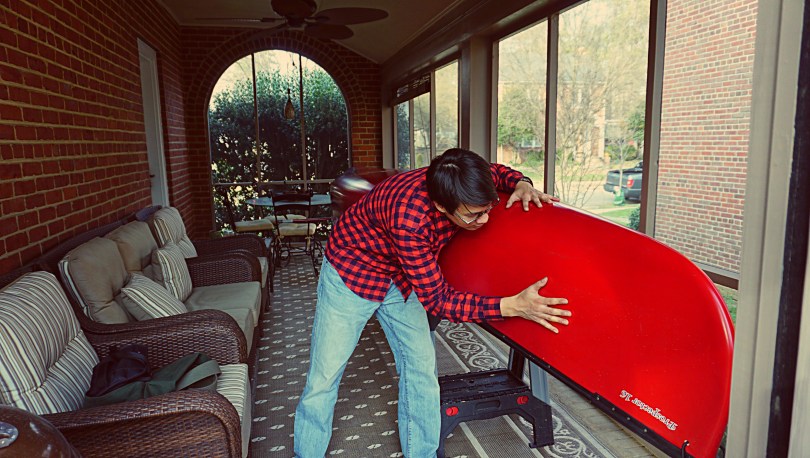
Incidentally, one day while browsing the web, I came across a brand new one at a remote outfitter in New York state. After a series of quick phone calls, I learned it was a brand new 16ft red prospector at 52lbs. Almost half the weight of our Old Town Discovery of 3-ply construction. We decided it was time to act. We were prepared to make the drive from Richmond to New York. Fortunately, the outfitter was making a  trip to Erie, PA for an outdoor show and they would be able to meet us there with the canoe. This thankfully shortened our trip by 1.5 hours each way. On a snowy night on March 4, 2016 at 3:00am, we left Richmond in the hunt for the prospector to bring her home.

DSC01768

novacraft-logo
Nova Craft’s modern logo still features the Thunderbird.

Nova Craft Canoe was founded in Glanworth, Ontario in 1970. The company switched owners when it was purchased in 1986. Despite this change, Nova Craft kept its name as well as its original symbol. The Nova Craft emblem features the Thunderbird. The Thunderbird is an important symbol in several Native American tribes. It is of particular significance to the Haida of the Pacific Northwest as well as the tribes of the Great Lakes. It is said to be a being of supernatural size and power, capable of producing thunder claps with its great wings. This symbol is found on numerous cedar canoes of the Pacific Northwest tribes and usually holds the top position of totem poles.

Some thought we were crazy for driving 14 hours to pick up a canoe. Funny, we thought it would be crazy to not get her. If that’s what it takes to “paddle the truth north” (Nova Craft’s slogan). She’s now back in canuck hands. Welcome home girl.

Voyageur Quest (Algonquin Park) by David Hartman

My favorite adventure, documentary filmmaker, David Hartman recently released this cool promo video he created for a company called Voyageur Quest in Algonquin Park, Ontario. Located in the remote Northwest corner of Algonquin Park, the company offers visitors a chance to stay at a cabin completely off the grid. They offer activities and lodging throughout the year for visitors to experience all that Algonquin has to offer. The video does an amazing job capturing the beauty and atmosphere of Algonquin Park. I have camped in Algonquin Park numerous times in my childhood and recently took a weeklong canoe trip with my brother in August 2014. Itching to go back.

Check out more of David’s work at his website: Hayfire Media.

Johnston Canyon Falls – Banff National Park, Alberta

One of the most popular attractions in Banff National Park is the Johnston Canyon Falls. It is a short hike at less than a couple of miles, but spectacular throughout the entire way. In fact, before even reaching the falls we were fortunate enough to get a moose sighting in Moose Meadow. I was curious as to what brought moose to that particular meadow. I was interested to learn that moose are not grazers, and as such they eat forbs and other non-grasses which are plentiful in this meadow. Frequently they are seen feasting on aquatic plants. This particular moose was interested in our vehicle and actually stopped eating to come check us out. It then peacefully, went on its way. It was a very nice welcome from a resident of Banff National Park.

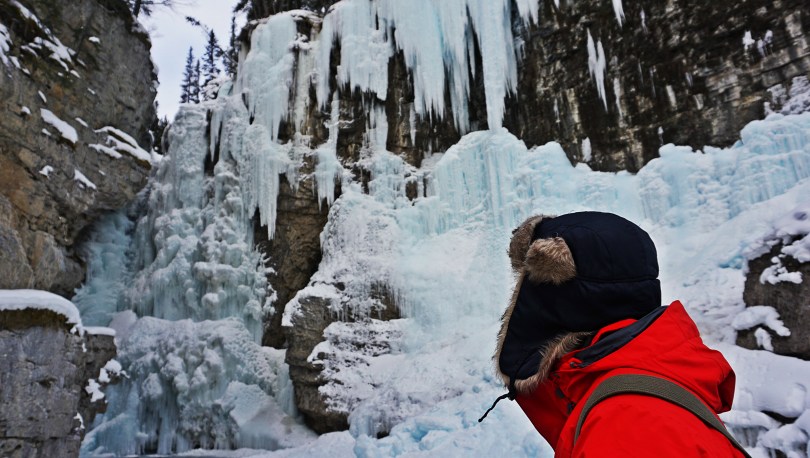
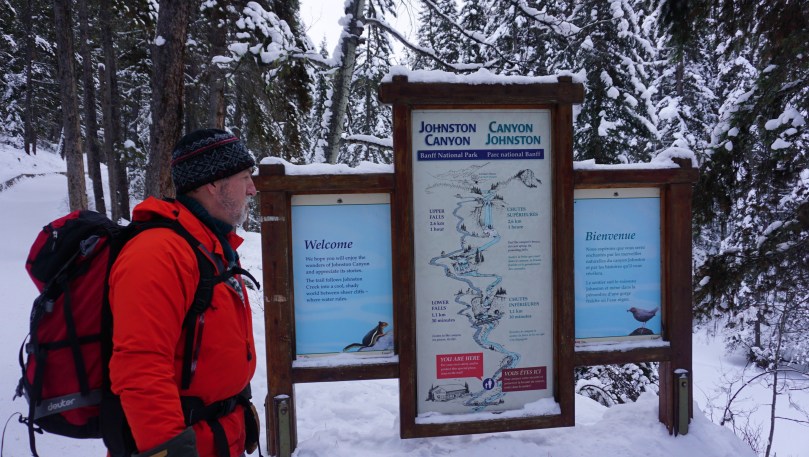
In the summer time, the Johnston Canyon trail is packed elbow to elbow, however during the winter, it is a quiet, icy wonderland. We strapped crampons to our boots to allow for traction while navigating the trail. We followed the Johnston creek as it coursed it’s way through the limestone valley. A steel catwalk system is bolted to the cliffs through the valley for easier navigation and to keep visitors above the water.

The forces of nature are displayed brilliantly in Johnston canyon. The beautiful limestone that encase the valley, reveal a history of thousands of years in its cross sections. The retreating ice glaciers that once covered the region, molded the landscape to what we see today. Trees all around us are literally bent from the many months of heavy snowfall throughout the year. Thick old man’s beard (lichen) draped over the towering firs and the turquoise, glacier water flowed around us, flickering from the ice and sun.

Upon reaching the lower falls, we had the opportunity to navigate the limestone caves to view the falls from the shadows and listen in awe to the echos of the rushing water. After a short break, we continued on to the upper falls where we had some warm tea and granola while watching ice climbers brave the falls. The view from the top was stunning. Beyond the upper falls is a region called the Ink Pots, where apparently seven cold mineral springs can be found in open meadows.

The Path of Grey Owl – a Goh Iromoto film

This film by Goh Iromoto sheds light on the remarkable story of Grey Owl (Archibald Belaney), an Englishman who chose to take on the identity of a member of the First Nations people in Ontario, Canada. He was most noted for his work as a conservationist, protecting animals such as the beaver that were essential in maintaining the forests and landscapes in Ontario. Evidence of his work as a conservationist still remains today in Canada. This video also showcases the beauty of the boreal land in Temagami, Ontario, a place I was fortunate enough to experience on our canoe trip in August 2015. Itching to go back.

Making a Leather Journal

Writing during a trip is always a fulfilling experience. Whether you are noting waypoints on a map, making a quick sketch of the landscape, or jotting down memorable moments, such acts allow you to slow down and reflect during a journey. In my mind, there is only one place to log such entries, an old fashioned hand-bound leather journal. I wanted to make something that was durable, handsome and consistent with the tradition of my field outings. Let’s get to it.

Materials:
vegetable tanned leather
cutting blade
cutting board
leather dye
leather conditioner
leather edge beveler
waxed thread
parchment paper
metal ruler
stitching awl
needle nose pliers
hammer

DSC00465

Step 1: Creating the signatures

The first step in making a journal, is to decide how many pages you want to bound, and then dividing them into signatures (unit of folded pages that will be stitched). For instance, if you wish to have 50 sheets in your book, you might want divide them into signatures of 5, each signature having 10 pages. Different types of paper can be used however I preferred to use acid-free parchment paper for the texture and look of the journal.

Step 2: Preparing the leather

Different thicknesses of leather can be used and this will be entirely up to you. You can purchase boxes of scrap leather from Amazon for less than $25 dollars. For this project, a thick vegetable tanned leather was used to give it the durable and thick appearance I wanted. The leather was cut to leave approximately 1/2 inch of leather bordering all of the pages. Once the leather has been cut, you will notice that the leather can have some fraying of fibers from the cut edges. This is where you will use an edge beveler to clean up all of the edges of the leather, giving it a nice and finished appearance.

DSC00466
template

Step 3: Preparing the leather for stitching

In order to assure that all signatures are sewn at a consistent distance from each other, I created a template. This way, all holes will be exactly where I want them to be positioned on the leather. Also, in the future if I decide to create a leather journal with similar dimensions, I could easily use the same template. Depending on the thickness of the leather, this task can be a little time consuming. I initially made the holes with a stitching awl, and then subsequently widened them with a thicker needle and hammer. Needle nosed pliers were also used to help pull the needle through the holes. Once you are satisfied, the leather can also be softened at this stage. This can be accomplished in many ways. One method is simply to manually flex the leather to give it a more broken in feel. Another way is to use rubbing alcohol on the leather and then add petroleum jelly to penetrate the leather.

Step 4: Staining

This can be accomplished with a variety of different stains and colors. I decided to use a stain from Ecoflow called acorn born. It is important to use an old clean cloth for this step to assure that you rub the stain evenly throughout the leather. If not, the stain will be absorbed more readily in some areas of the leather than others, causing an uneven appearance. This may not be a bad thing, as some of you may opt for this appearance.

Step 5. Stitching the signatures

Stitching was completed using a thick waxed thread designed specifically for leather use. This was a lengthy process considering I had 8 signatures to sew in place.

Conclusion:

In the end, I was overall very happy with the journal. It feels sturdy and strong and the acorn brown stain came out looking fantastic. It is an overall quick process and with the proper leather tools can be a very fun project. I encourage any one who has ever wanted one to give it a shot. This will definitely be accompanying me on my field and canoe trips.

DSC01420