This film by Goh Iromoto sheds light on the remarkable story of Grey Owl (Archibald Belaney), an Englishman who chose to take on the identity of a member of the First Nations people in Ontario, Canada. He was most noted for his work as a conservationist, protecting animals such as the beaver that were essential in maintaining the forests and landscapes in Ontario. Evidence of his work as a conservationist still remains today in Canada. This video also showcases the beauty of the boreal land in Temagami, Ontario, a place I was fortunate enough to experience on our canoe trip in August 2015. Itching to go back.
Writing during a trip is always a fulfilling experience. Whether you are noting waypoints on a map, making a quick sketch of the landscape, or jotting down memorable moments, such acts allow you to slow down and reflect during a journey. In my mind, there is only one place to log such entries, an old fashioned hand-bound leather journal. I wanted to make something that was durable, handsome and consistent with the tradition of my field outings. Let’s get to it.
Materials: vegetable tanned leather cutting blade cutting board leather dye leather conditioner leather edge beveler waxed thread parchment paper metal ruler stitching awl needle nose pliers hammer
Step 1: Creating the signatures
The first step in making a journal, is to decide how many pages you want to bound, and then dividing them into signatures (unit of folded pages that will be stitched). For instance, if you wish to have 50 sheets in your book, you might want divide them into signatures of 5, each signature having 10 pages. Different types of paper can be used however I preferred to use acid-free parchment paper for the texture and look of the journal.
Step 2: Preparing the leather
Different thicknesses of leather can be used and this will be entirely up to you. You can purchase boxes of scrap leather from Amazon for less than $25 dollars. For this project, a thick vegetable tanned leather was used to give it the durable and thick appearance I wanted. The leather was cut to leave approximately 1/2 inch of leather bordering all of the pages. Once the leather has been cut, you will notice that the leather can have some fraying of fibers from the cut edges. This is where you will use an edge beveler to clean up all of the edges of the leather, giving it a nice and finished appearance.
preparing the cut
beveling the edges
template
Step 3: Preparing the leather for stitching
In order to assure that all signatures are sewn at a consistent distance from each other, I created a template. This way, all holes will be exactly where I want them to be positioned on the leather. Also, in the future if I decide to create a leather journal with similar dimensions, I could easily use the same template. Depending on the thickness of the leather, this task can be a little time consuming. I initially made the holes with a stitching awl, and then subsequently widened them with a thicker needle and hammer. Needle nosed pliers were also used to help pull the needle through the holes. Once you are satisfied, the leather can also be softened at this stage. This can be accomplished in many ways. One method is simply to manually flex the leather to give it a more broken in feel. Another way is to use rubbing alcohol on the leather and then add petroleum jelly to penetrate the leather.
Step 4: Staining
This can be accomplished with a variety of different stains and colors. I decided to use a stain from Ecoflow called acorn born. It is important to use an old clean cloth for this step to assure that you rub the stain evenly throughout the leather. If not, the stain will be absorbed more readily in some areas of the leather than others, causing an uneven appearance. This may not be a bad thing, as some of you may opt for this appearance.
acorn brown
staining
Step 5. Stitching the signatures
Stitching was completed using a thick waxed thread designed specifically for leather use. This was a lengthy process considering I had 8 signatures to sew in place.
Conclusion:
In the end, I was overall very happy with the journal. It feels sturdy and strong and the acorn brown stain came out looking fantastic. It is an overall quick process and with the proper leather tools can be a very fun project. I encourage any one who has ever wanted one to give it a shot. This will definitely be accompanying me on my field and canoe trips.
I have always wanted to see Alberta. Ever since my elementary school days, I remember completing research projects and hearing about the great national parks of the Rockies and knew that one day I would have to visit them. I just never thought it would be in the winter. We were fortunate enough to get vacation together and made our way to the great province of the strong and free. One of the best ways to trek through this winter wonderland is by snowshoe. Sarah and I set out to the woods around Lake Louise to have our go at traditional snowshoeing. Our guide, Paul, works at the Chateau Lake Louise, and has been leading trips through Banff for the past 30 years. He was a knowledgable man who had great respect for nature, ecology and the First Nations people. For the First Nations people who originally lived in the area, snowshoeing was much more than recreation, it was a way of life.
Different snowshoes for different environments
Ojibwe snowshoes, note the narrower profile for weaving between trees.
Paul emphasized, “there is no such thing as a perfect tool”. Each type of shoe was designed by different tribes who lived in different environments. The western prairie snowshoes were very wide allowing for the greatest distribution of weight. The people of these regions did not have to worry about navigating through trees and dense forests. The Algonquin and Ojibwe people however, made their shoes longer and more narrow to weave in and out of trees.
Lake Louise
listening to the forest
fir trees
snow angels
on the move
road
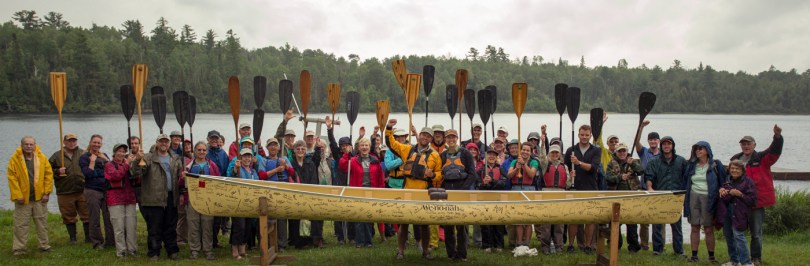
One of 5 bicentennial canoes, this one named “Osprey” undergoing restoration.
The temperature was actually quite warm for the region at about -15 celsius, with fresh snow falling. As we made our way through the trails, I was surprised at just how well the shoes worked. We glided through the forest with ease and comfort. Fir trees towered all around us and we trekked kilometers in peace and quiet with the magnificent sight of the Rockies all around us. I was also surprised to learn that Paul constructed several of his own shoes. These beautiful shoes were not only pieces of art, but more importantly for the First Nations people, an essential tool for survival during the harsh Alberta winters.
In July 2015, we set out to explore the turquoise waters and white quartzite mountains of Killarney Provincial Park. The landscape inspired countless works by Canada’s Group of Seven Artists. This is a video of our trip. Filmed on several different cameras: Sony Nex5, Nikon 5200, GoPro Hero 2, Iphone 5 and 6.
“Dave and Amy Freeman will embark on a yearlong adventure in the Boundary Waters Canoe Area Wilderness in support of the Campaign to Save the Boundary Waters’ efforts to protect the Boundary Waters from proposed sulfide-ore copper mining on the Wilderness edge. The two will travel more than 3,000 miles by canoe and dog team as they explore more than 500 lakes and streams throughout the year. The journey will begin on September 23, 2015, the fall equinox, on the edge of the Boundary Waters in Ely, Minnesota, and conclude with a paddle along the proposed sulfide-ore copper mining’s path of pollution through the Boundary Waters and Voyageurs National Park. In 2014, Dave and Amy traveled by canoe and sailboat from Ely to Washington, DC, on the Paddle to DC as a first step in their efforts to protect the Wilderness.” – savetheboundarywaters.org
Please help show your support for the boundary waters by visiting the website and signing their petition. Mining affects many of our great canoeing regions. This reminds me of the Temagami region in Ontario and the pressure that mining companies constantly exert on our pristine wilderness areas. What’s unique to the BWCA is the special place it holds in the hearts of many of the American veterans. It serves as a healing place for many of these veterans and is the least we can do as a country to protect it for them.
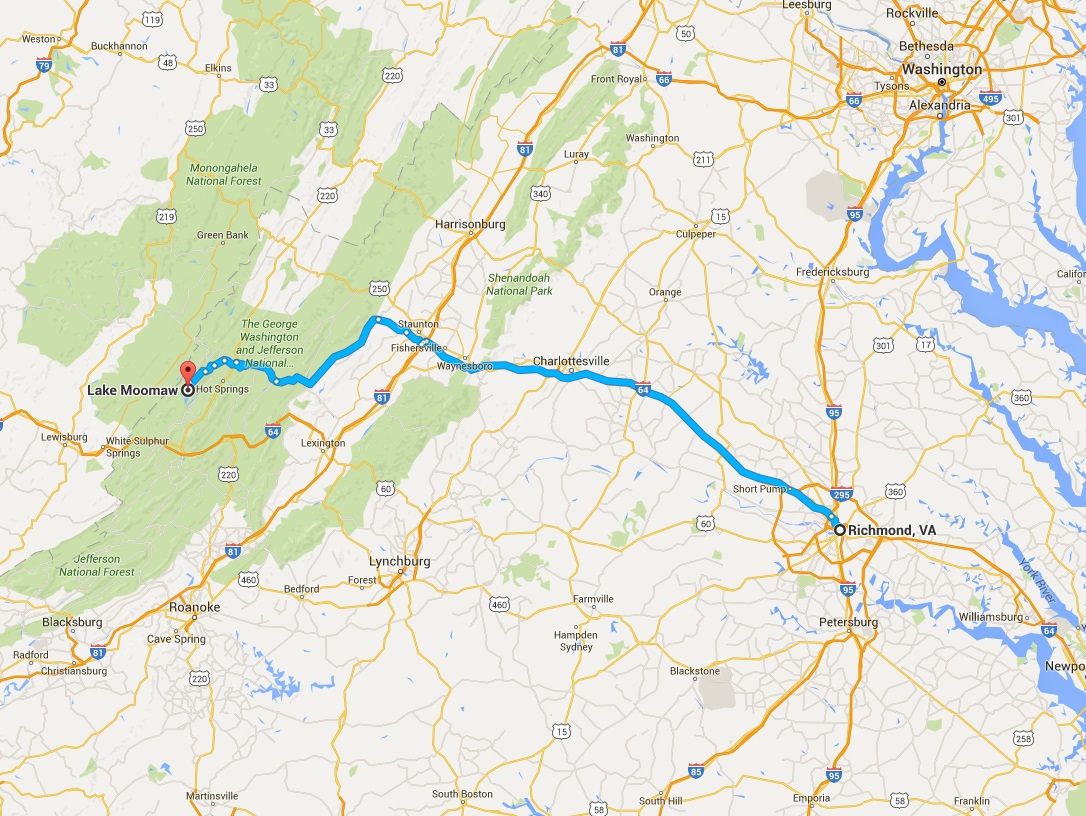
A solid 3.5 hour drive from Richmond, Lake Moomaw is high in the mountains near the West Virginia border.
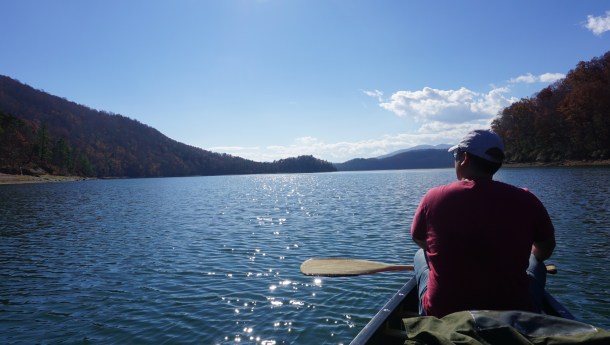
The leaves drifting from the trees in the Virginia mountains, signal the end to another canoe camping season. Min and I decided to go for one final run. It was unusually warm at Lake Moomaw up in the George Washington National Forest with temperatures in the 70s F during the day. It was a quiet couple of days with very little activity on the lake, and as usual we were the only paddlers on the lake. We had our pick of many campsites and enjoyed the peace and quiet. The only the sounds were from of shedding foliage, owls and birds of all types.
Start of the paddle out to our campsite
Wetterlings Hunter’s Axe
Japanese Single Malt
Sunset
After setting up camp, we set out to gather firewood. One of the things I like most about Virginia camping is the abundance of firewood in these deciduous forests. There were countless fallen frees in the area that were nice and dry. The area also appears to be lightly camped and as such we did not have to look far to find what we needed. The Wetterlings Hunter’s axe with it’s wider wedge, made for light work of splitting in combination with my Ray Bears bucksaw. It was also a great opportunity to put my Finnish blade the “Enzo trapper” to use. It is a full tang work horse and can easily baton through wood to make kindling and is sharp enough to produce fine feathersticks.
Gathering firewood
We enjoyed some Japanese whiskey and took in the autumn beauty, Min even had some luck fishing off the coast. Of all the wildlife we heard, I was most surprised to hear the distinct cry of a couple of loons. Initially I thought my ears had deceived me – I didn’t think loons were this far south? However upon further research, it appears that many of them migrate south during this time of the year along the east coast and through Virginia.
foliage
mirror
Scandi grind
Min and his trophy
campsite
stars
Min was nice enough to prepare all of the meals for the trip. We ate some delicious chicken breasts with rice and beans for dinner. Min actually pre-cooked the chicken so all we had to do was heat it with the rice in the cooking pot. There’s nothing quite like a warm meal on a chilly night by the campfire. We ate under the stars with breathtaking visibility. The photos I took on this trip are from a sony a6000 that I’m still learning to use. In the morning for breakfast, we had egg white omelettes with green peppers and onions. Cooking with the Trangia alcohol stove is incredibly easy and has reduced preparation time drastically.
heating the embers
reflector oven in action
The stove weighs practically nothing and the fuel burns efficiently. We used to cook by campfire however soon learned that cleaning the soot off pots and pans took way too much time, not to mention the constant tending to the fire to assure a steady heat. The Svante Freden reflector oven from Sweden is also a must on canoe camping trips. It has been a trusty companion and we used it to to prepare some hot cornbread using a recipe courtesy of Ralph in Ottawa, Canada (much appreciated!).
cornbread
bacon, eggwhites, green peppers and onions
sunrise
tent
To me, Lake Moomaw holds the title of a true Virginia gem. While there are several campsites in Virginia with lakes, only here can you get the backcountry experience of paddling to your site and setting up camp, far away from others. I can now say that I’ve camped here in 3 of the 4 seasons, spring, summer and now fall. Fall just might be my favorite. Great way to end the season.
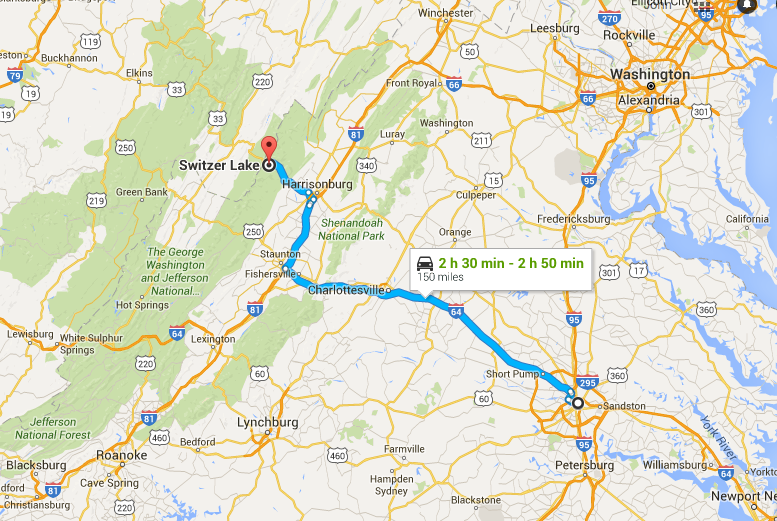
A closer drive than Lake Moomaw, but less secluded
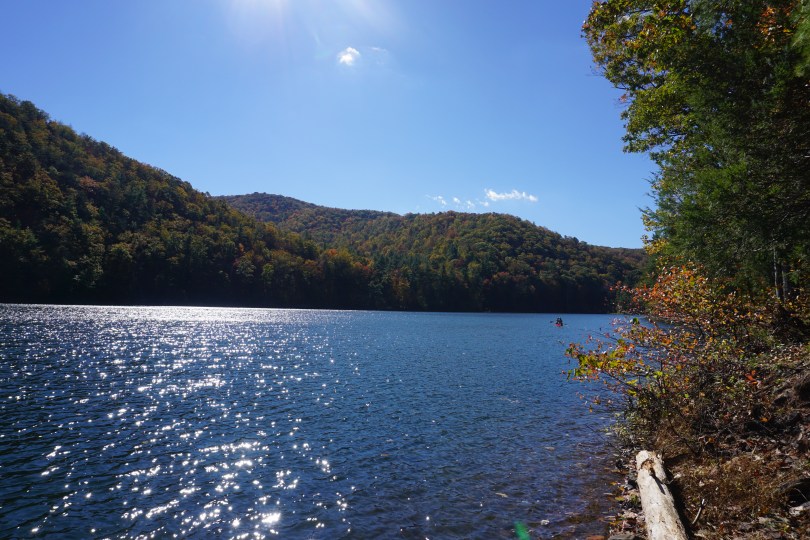
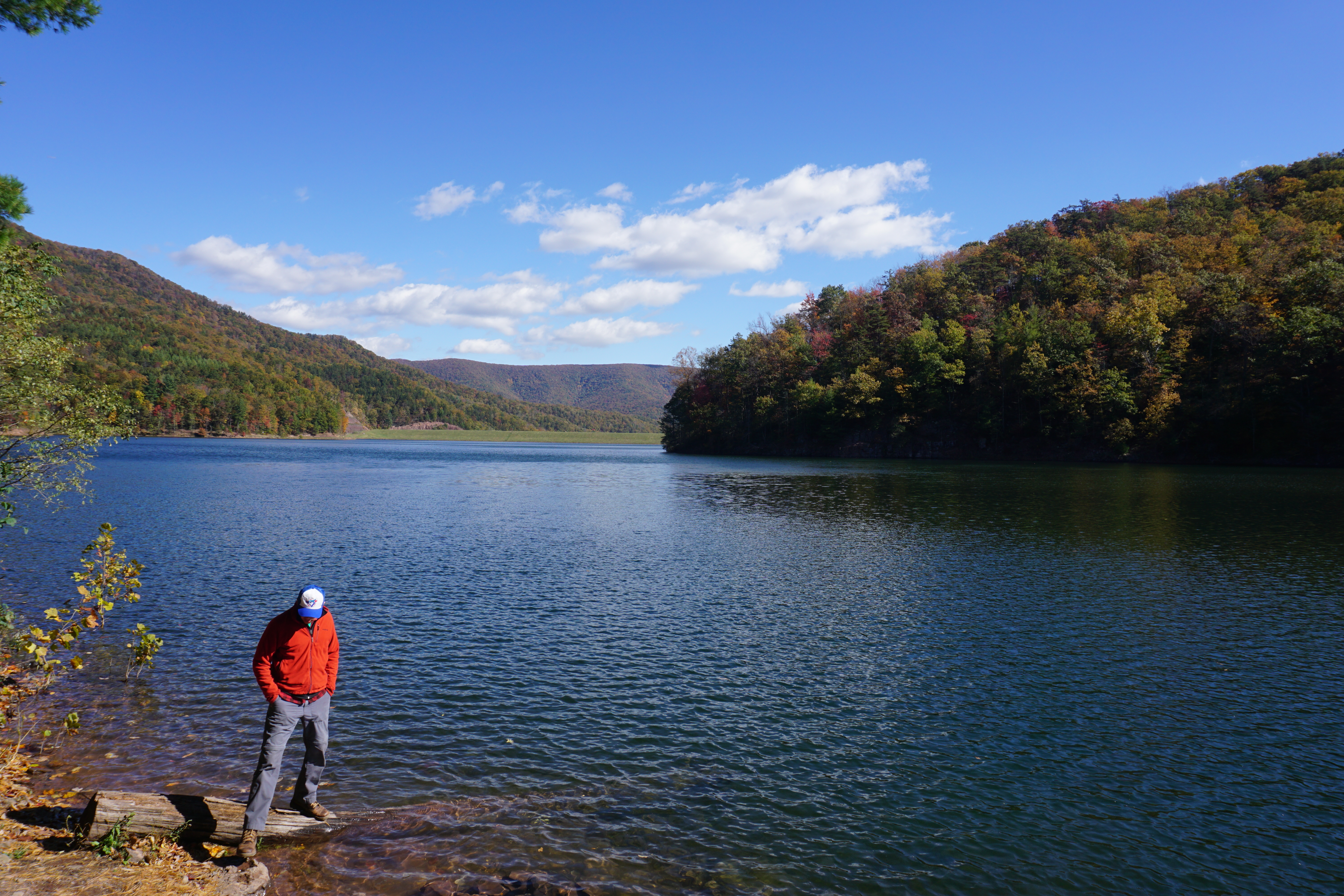
On the border of Virginia and West Virginia, at 2362 ft above sea level, lies the beautiful, Switzer Lake (aka Skidmore Dam, Skidmore Lake). The 118 acre lake serves as a water supply reservoir to the town of Harrisonburg, Virginia and watershed for the George Washington National Forest. When I heard that the lake did not allow gas motorboats, I wanted to go to check it out. We had actually planned for an overnighter but decided against it when the temperatures dropped.
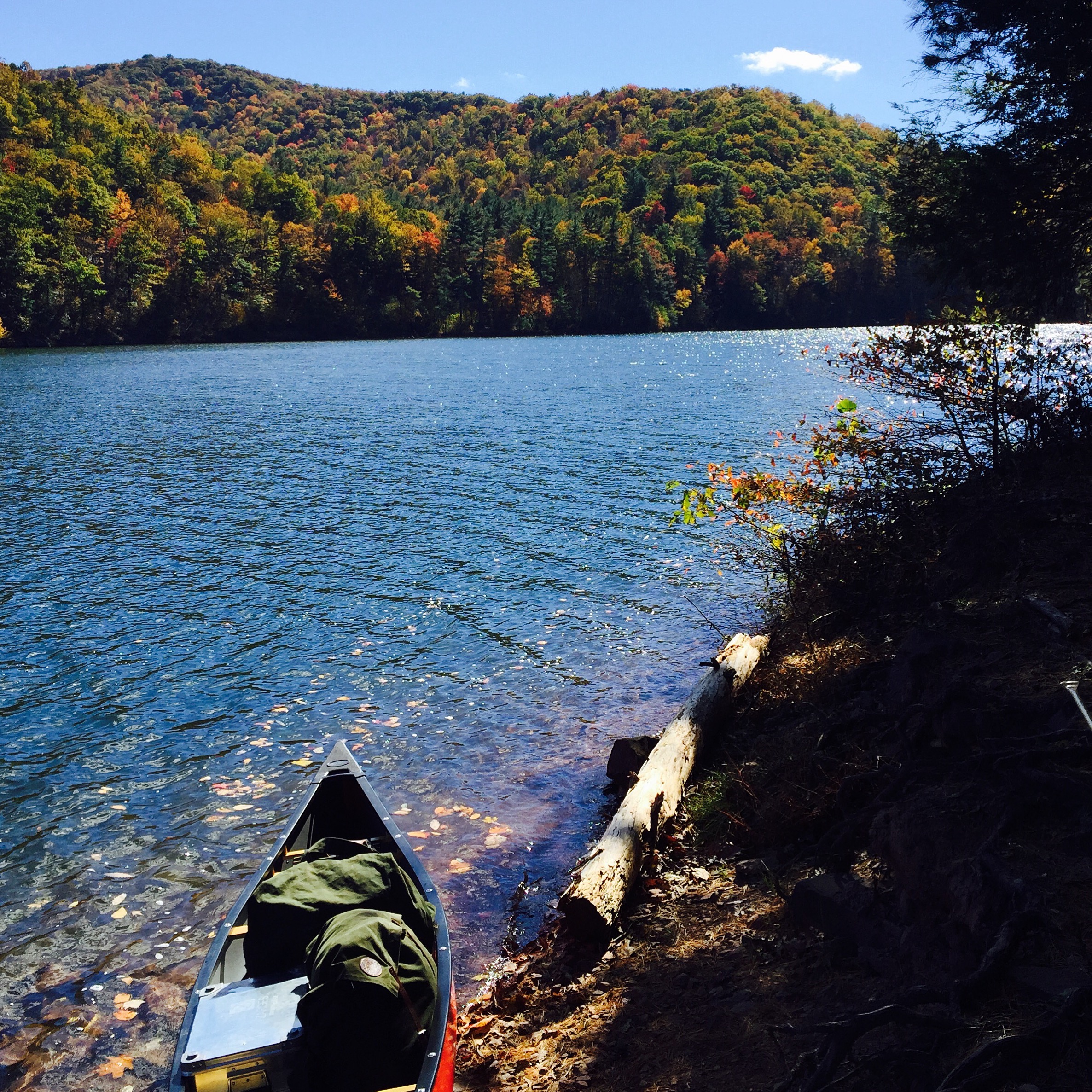
It was significantly cooler in the mountains at approx 45F. We also forgot to load our food cooler in the car….. a small detail. Nevertheless we made the most of the situation. We met some nice folks from Louisiana who gave us their stack of fire wood after exchanging camping stories and canoe trips. We made a huge fire and heated some naan on the stones. It was a windy but beautiful day with the leaves at near-peak colors and the clear lake, sparkled in the sun.
battling headwinds
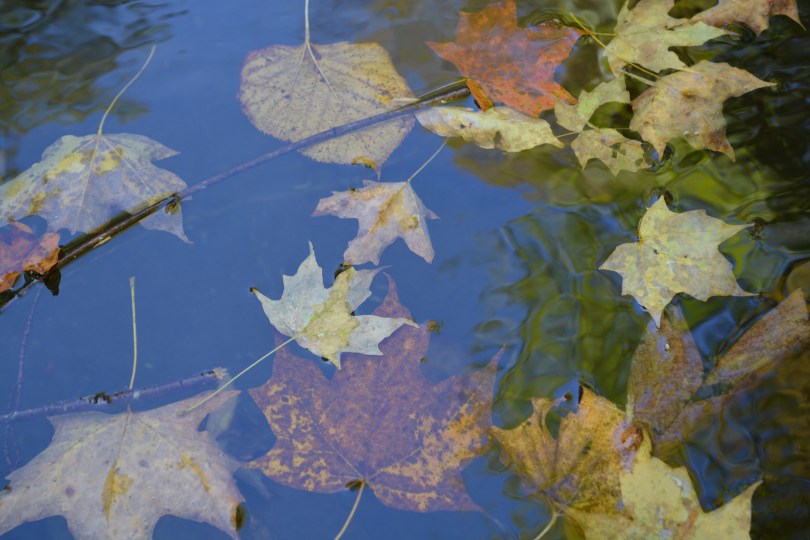
maple
paddling solo
fall
clear waters
For those who plan to camp here, Switzer Dam appears to be a much more popular camping location than Lake Moomaw (located in Bath County) due to the ease of access to the campsites, most of which are drive-in camp spots. The lake is also only 30 minutes away from James Madison University, and is a popular place to hang out. The lake is stocked with brook trout and the surrounding rivers and streams in the area also have healthy populations to fish.
fury
I have heard conflicting stories about whether camping is allowed immediately next to the lake. I think the best way to find out is to call ahead and ask which areas are permitted. There are several campsites situated in the forest, just a tad farther from the lake that appear to be safe spots to camp.
Since this is not an official camp ground, Lake Switzer doesn’t have the benefits of regular site maintenance. So it’s up to us to keep this place clean. It kills me when I find beer cans, tin foil, fishing line etc at campsites. Remember to pack out whatever you bring in!
The morning air is crisp, and the leaves are beginning their color change, the first day of autumn is officially here. Min and I set out to our familiar backyard, Shenandoah National Park. Instead of scaling the mountains and searching for high altitude vistas. We sought out watering holes, cascades and native brook trout that lived in these crystal clear, mountain streams.
The route: From the parking area, we took a left up the Cedar Run trail and crossed the fire road to descend down White Oak Canyon Trail.
Our trip took us past Madison, VA close to Old Rag Mountain, however this time through the Weakly Hollow Road. From there we parked our cars, and headed to the intersection between Cedar Run and White Oak Canyon trail. Instead of going the traditional route straight up White Oak Canyon, I’ve found out from many reviewers of this hike, that the best way to go, is up the Cedar Run trail. It eventually connects with a fire road to close the loop with a descent down the White Oak Canyon Trail. The total circuit would be 8 miles. I definitely recommend this method of approaching the trail for anyone thinking of doing this hike, the climb up Cedar Run is gradual as opposed to the vertical climb up White Oak Canyon. This route also allows you to descend down the fire road instead of climbing it where there really is not much to see.
It was a perfect day for a hike, a cool 65 degrees F in the morning and sunny. The water level was relatively low and some of the of the creek beds were completely dry. Nonetheless, there was still plenty of water to enjoy the beautiful falls. We saw plenty of brook trout in the these streams as well.
Salvelinus fontinalis (brook trout) are a native fish to the Shenandoah Mountains.
Brook Trout (Salvelinus fontinalis) are part of the Salmonidae family and more specifically, a type of char. Other members of this group include arctic char and lake trout. As such, brook trout require water temperatures less than 20 degrees celsius to flourish due to the higher oxygen content. In the mountains, the native fish live relatively short spans of about 3 years, although some may live up to 6 years. Typically, brookies found in the streams grow to around 6-12 inches, larger sizes can be reached if they make it to a lake where food is abundant. They spawn during mid to late fall. Brook trout are amazing fish. I am always in awe at how they are able to survive in such low waters and through times of drought and flooding. Year and year again, they return and swim in the streams of the Blue Ridge Mountains.
The loop took us a solid 5 hours with a swimming break in a pool in a small canyon. The water was absolutely freezing but we knew that this was probably the last chance we would have this year before it gets too cold. As cold as it was, the water felt amazing, to swim with the brookies was also an awesome experience. Some of the watering holes even have natural water slides to enjoy during the hotter months.
small waterfall
streams
a deep pool along cedar run trail
acorn
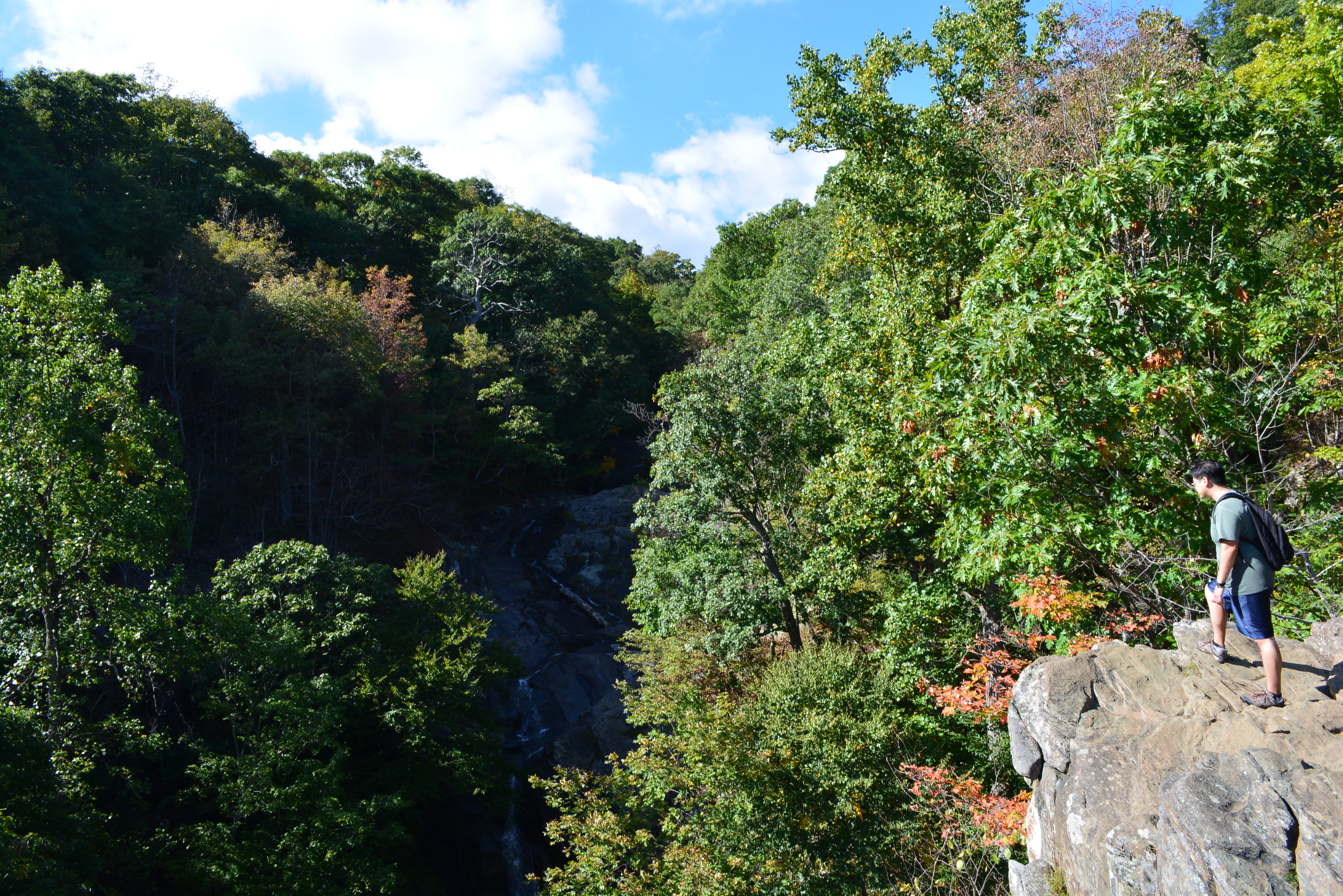
rock cliff
cascades
cairn
Overall, an enjoyable hike and highly recommended as a place to cool off in the summers. If I were to return, it would be in the spring or early summer months with higher water levels and with my tenkara rod in hand.












 WAY NORTH