Bear Church Rock – Shenandoah National Park, VA

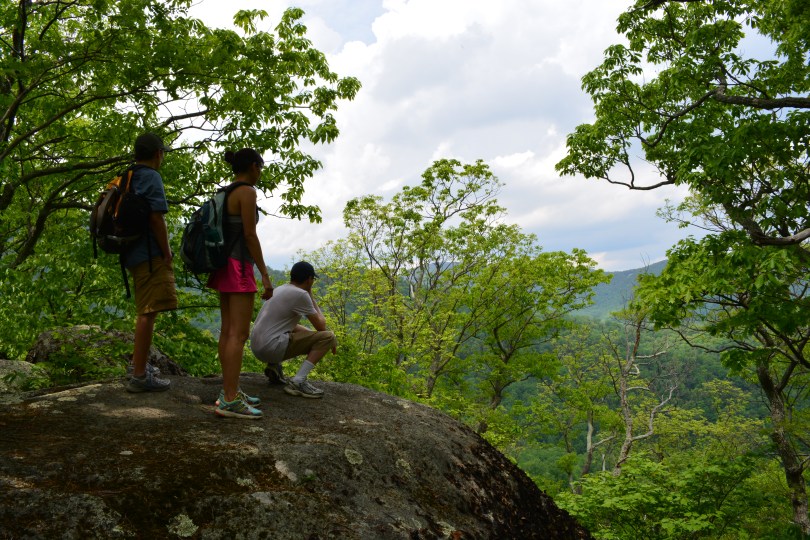
I was starting to wonder if I was ever going to make it out to the mountains before spring ended. We got our chance on May 16, 2015 when our cousin from Toronto came to visit. It was his first time to Virginia and this would be his   his first hike through the Shenandoah mountains. It was a perfect day for the Bear Church Rock loop (8.5 miles) which initially starts on the Graves Mill trail before steeply climbing the mountain along the Staunton river trail. We included a detour to check out the Jones Mountain Cabin owned by the PATC (Potomac Appalachian trail Club). It was a hot day with some overcast mixed with bursts of sunshine and spring rain. The showers peaked as we reached the top of the mountain to cool us off. Heaven.

The Voyageur – Knife Making

For the longest time, I’ve wanted to create the most important tool in bushcraft. The knife. There are an endless style of knives out there, however I found myself drawn to scandinavian steel and grind. Norway, Sweden and Finland are a few of the countries that have a long standing tradition in superb bladesmith with companies like Helle, Mora and Enzo. Up until this point, I have used my Morakniv as an all purpose knife, however I wished to own one with a figured handle. Instead of purchasing a knife, I decided to make one.

DSC_0160
Carbon steel blade, forged in Karesuando, Sweden.

Choosing the steel. In the simplest sense, steel is combination of iron and carbon. There are numerous different types of steel with different properties. Different alloys can be added to provide these properties. When it comes to forging a blade, the key distinction is whether you want a simple carbon steel blade or a stainless steel blade. The stainless properties come from the addition of chromium to the iron and carbon. The chromium provides rust resistance and flexibility but at the sacrifice of the hardness of the blade. To qualify as stainless, the overall composition must be at least 10.5% chromium. Stainless steel is the choice for several folding knife makers such as Victorinox, because of the low maintenance required with this material. Carbon steel on the other hand, is more prone to rust and corrosion, however many prefer this steel in bushcraft because it is harder and can hold an edge for a much longer time if properly maintained. It is also an easier steel to sharpen in the field. I could go on and on about the different steels that are available for knife making but to keep it short, I decided to go with carbon steel, particularly from Sweden.

Karesuando, Sweden: The most northern town in the country is known for producing superb Scandinavian blades.
Karesuando, Sweden: The most northern town in the country is known for producing superb Scandinavian blades. Photo courtesy of  Stephen Hudson. http://stephenhudson.net

Karesuando is the most northern town in Sweden, it is known for producing superb blades. I purchased mine from Thompson’s Scandinavian Knife Supply . An excellent supplier of anything knife related including stabilized wood, pins, and bolsters. They have a variety of blades to choose from.

Choosing the wood. This was an easy choice for me. Curly birch. A wood that in my mind exemplifies the culture of canoeing in Ontario. When purchasing the wood, it is key to choose “stabilized” wood. This means that it has been dried thoroughly and is no longer prone to movement. The cost of the wood would also vary depending on how much figure is present.

Chiseling the outline of the tang, was a simple process and completed by hand and chisel. I like the Karesuando blades due to their thicker tangs in comparison to the Moras and Helle blades. This particular blade had a drilled hole designed for pin placement however in my case, I was going to be using a hidden wooden peg instead of the usual polished brass pin. This peg would work to secure the steel to the handle and prevent slipping of the blade.

Two separate types of glue were used to mate the two halves. The most common method of fixing steel to wood is by using epoxy resin. For the wood-wood contact however, it was gorilla wood glue all the way. I clamped the pieces and let it sit for 24 hours.

Next came the difficult task of actually shaping the handle. I decided that I was going to do this by hand. It was a laborious process of carving, filing and sanding. My influence for the handle came mostly from existing Helle models such as the Temagami and the Eggen. While many Scandinavian knives lacked any sort of finger groove, I knew that I wanted a fingerguard.

When I was finally satisfied with the end result, it was time to sand it and put a finish on the handle. Ideally, you’d want the handle as smooth as possible before putting on any coats of oil or finish. The sandpaper should have a grit of at least 400. In this case, I wanted a simple finish that would bring out the grain and figure of the wood. I stuck with tried tested and true boiled linseed oil. After several coats, I then proceeded to apply layers of beeswax for further protection and to seal it.

In the end, I must say that I was overall happy with the result. The voyageur’s  handle fits comfortably and the blade is fastened securely. The use of machines would definitely make the process faster and easier however I wanted my first one to be completed by hand.

Dolly Sods North – Mongahela National Forest, West Virginia

In the Allegheny Mountains of West Virginia, lies the Monongahela National Forest. The Dolly Sods (open mountain top meadow) Wilderness occupies a small portion of this area. It is one of the highest points in West Virginia and as a result the vistas are unlike any other on the East Coast. The rocky landscape, spruce forests, and sphagnum bogs is a scene normally found in Canada. Needless to say, when I heard about this place, I knew I had to experience it. I finally got the opportunity on March 22, 2015. I set aside the first three days of my vacation to explore Dolly Sods. I went with Min, an old college friend and the one who actually introduced me to the Old Rag Mountain hike in Virginia. I have been on numerous camping trips in all forms: drive in sites, canoe portages and off-road but never a backpacking camping trip where I would have to carry everything in. I knew that this one was also particularly going to be challenging with temperatures in the 19-22F range requiring bulkier clothing and heavier packs. We averaged just over 45lbs per pack.

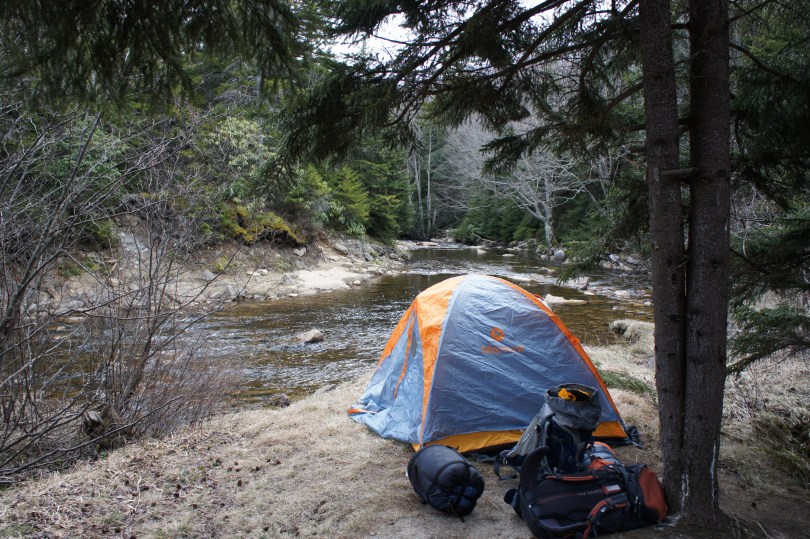
The forecast predicted three days of clear skies however we took this with a grain of salt; the mountains were prone to abrupt changes. We started our trek that Sunday morning on the Bear Rock Trail. Walking away from our car and into the howling wind, we knew we were in for a tough trek. We were the only ones in the whole area, not another human in sight, and no other cars parked. Our progress was slow as we marched through boggy meadows and icy rocks. The spruce forests were like little oases, a place where clear streams ran and the cold wind broke. We met our first stream and took a short break to appreciate the pristine camp site.

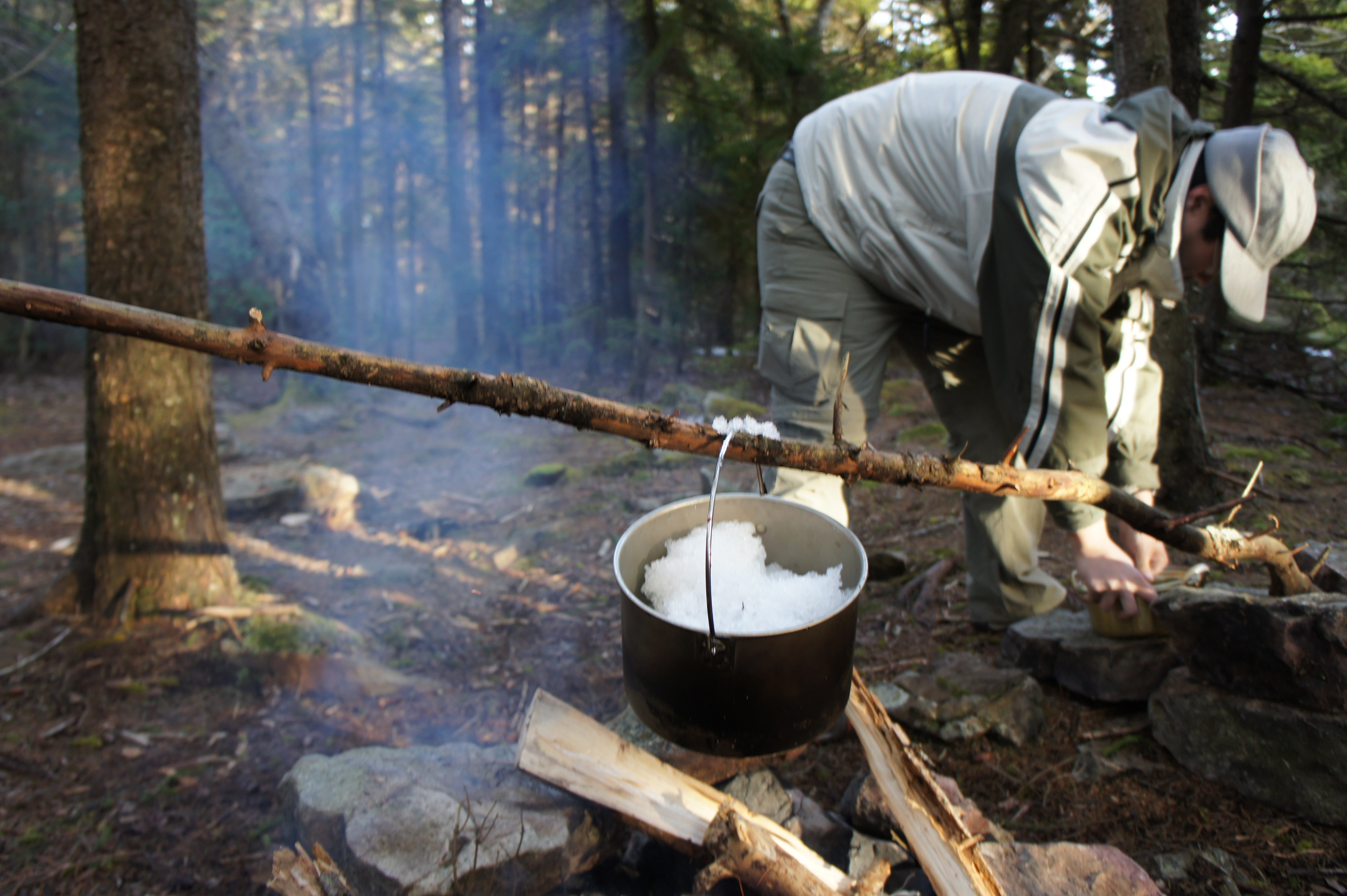
We knew it was too early to set up camp, so we pushed on through the meadows and bogs. By 4:00pm, we decided it was time to start setting up camp in one of the spruce forests. The creek in these forests had unfortunately frozen over and we were too far away from the next flowing water source to make it in time before nightfall. We decided to set up camp and melt the snow and filter out the sediment as our water source. This was made possible with an axe and folding bucksaw. In such a dense forest, these tools went hand and hand, allowing us to process the numerous downed spruce trees. It appeared that wind and the elements caused several to snap at the base, we quickly limbed the trees and got a large fire going to warm our wet socks and prepare dinner. To clarify, we DID NOT chop any down. This is a pristine wilderness area and we hope that everyone who visits pays the same respect to the Dolly Sods.

SONY DSC
With all of the streams frozen in the forest, we melted our snow and filtered out the sediment to get clean drinking water.

We woke up early the next morning to make up for lost ground the previous day. We found that in some parts, the trail was surprisingly difficult to find. The presence of rock cairns made the job easier left by previous hikers. We traveled across beautiful vistas and proceeded through a rock scramble where we rested our backs.

SONY DSC
Sheets of ice layered over the clear springs

It was a good thing we decided to camp where we had the previous night because the next water source was miles away. We navigated our way up a creek with fresh flowing clear spring water. It was certainly a welcome sight.

One of the highlights of the trip was crossing Stone Coal Run, the largest body we encountered since crossing Red Creek at the beginnning of our journey. We took a break and drank as much as we could and filled up our water bottles. As a method of filtration, I prefer my Platypus. The bag holds 2L and is able to filter all of it within minutes. It has served us well in the past and is particularly useful at a campsite with abundance of water. We filtered about 60L while in Algonquin Park without any issues.

Around this area, were some prime camping spots, all unused. We pushed on to head towards the red creek crossing. It was here where we decided to camp for the night. Completely secluded with tons of fallen spruce trees to process. We washed up and set up our camp.

SONY DSC
While the forest axe was certainly heavy with a 2lb head, Min was determined to bring it. I’m glad because it allowed us to split wood and have a fire hot enough to bake bannock. No trees were felled during this trip.

At this point, we were both pretty much spent. We decided it was time to go to town on our food. We cooked and ate several meals, including: curry and rice, Min’s korean noodles, bannock, and a lot of snacks. We were grateful for the running stream to provide us with ample drinking and cooking water. It was truly an oasis.

Learning from our previous cold night, we took no risks and layered on all clothing before climbing into our sleeping bags. We slept straight through the night without any disturbances. The next morning however, we awoke to 2 inches of snow.

SONY DSC
We woke to 2 inches of powdery snow

Our next leg involved crossing the stream and continuing on home. This was surprisingly difficult with the snow covering most of the trail in the dense forest. There were several occasions when we had to set down our packs and scout in different directions until one of us found the trail. At the sight of the main road, we breathed a sigh of relief, our feet were wet, cold and sore and our backs ached. On the walk down the main road, we ran into the only person we saw during this entire trip. He was a young guy who carried very little gear. To our surprise he told us that he was hiking across the country. He had made his way through Delaware and DC already. He decided to take 9 months off and make a solo trip on foot. Forest Gump style I guess.

At the arrival of the Bear Rock Trail sign, we knew we made it. The trip was a hard one and our bodies were pretty much done. The views and scenery were  simply amazing. I must give credit to the people of West Virginia and the forest rangers, this was one of the best kept wilderness areas I have ever been to. The camp sites were immaculate and I did not see signs of garbage or debris anywhere, this made the experience so much better. Overall, our trip to the Dolly Sods was everything I hoped it would be and much more. I’ve read about the area and seen photos and videos of the Dolly Sods but nothing compares to seeing it with your own eyes. I would go back in a heart beat, preferably when it gets a little warmer.

“NINE RIVERS” – a 1000km canoe expedition

This is my favorite canoe expedition documentary. Check out their website to learn more about the members: http://ninerivers.ca. “Nine Rivers follows four men on a month-long, thousand kilometre canoe journey through the Canadian shield. Share the hardships and splendor of the North on this journey to Hudson Bay.”

A film by Dave Hartman, Matt Perpick & Adam Biehler.


“We belong to it” – a film by Goh Iromoto

After watching this amazing video today by Goh Iromoto, I knew I had to share. It features the legendary Ray Mears as he paddles his way through Northern Ontario in Wabakimi Provincial Park. I have always respected and admired Ray Mears and have learned a great deal from his books and videos. Definitely got me excited for the upcoming paddling season. Enjoy.

Grayson Highlands – Mouth of Wilson, Virginia

Jefferson National Forest lies in the Southwest corner of Virginia and home to the Grayson Highlands State Park and Mount Rogers Recreational Area. It is also home to the highest mountain in Virginia. It is one of the five locations in the United States where you can find the spruce-fir forests. One of the few remaining habitats of the Fraser Fir, found only at high elevations (above 5000 ft).

Algonquin Park – Ontario, Canada

Watch the documentary of our trip to Algonquin Park (above)

algonquinMy brother and I last paddled the lakes of Algonquin Park over 20 years ago. One day, we decided it was time to return. While designated a provincial park, Algonquin definitely feels more like a national park. Every year, people from all over the world come to Algonquin to canoe, camp and fish in these pristine waters. The size of the park is immense, at almost 3000 square miles, it is larger than Canada’s smallest province, Prince Edward Island. For an American reference, it is larger than the states of Delaware and Rhode Island combined.

On the southeast coast, in Richmond, VA, we spent weeks planning our trip, looking at camping gear, watching Kevin Callan YouTube videos, and reading books on Algonquin Park. I don’t think we’ve ever been this excited for any other trip in our lives. The thrill of adventure was invigorating and kept us energized during long days at work. On September 6, 2014, after a 14 hour work day, we made our way north to Ontario. I took the first leg through the night, in the old Honda CRV powered on red bulls and AMP.

We arrived at the Portage Store in Algonquin Park with only half an hour left before the store closed. Thirteen hours of travel and it came down to the last half hour before they stopped renting out canoes – typical Le Brother style. We rented out a Souris River Canoe Prospector 16, a kevlar canoe.

The sun was already setting as we paddled across Canoe Lake, and Little Joe Lake. The cries of the loon welcomed us home as we paddled across glass-like waters. Not a cloud in the sky, nor a breath of a wind.  The small, red flickers of distant fires marked the Canadian shield around us. It appeared that most of the campsites on Little Joe were already occupied. We were worried that we would have to travel much further to the next lake of campsites. As we passed around a bend of forest, we found the last campsite hidden on Little Joe Lake. Both of us were far too tired to get a fire going. We heated up some stew in the Eureka bug shelter and turned in for the night.

The following morning, we woke up fully energized. After a nice breakfast of bacon, eggs and bread, we set forth for our first full day in Algonquin Park. We traversed beautiful portages, streams, beaver dams, and massive lakes to reach Little Otterslide Lake as the sun was beginning to set. We spotted a couple of old men camping who practiced some Canadian hospitality and asked us if we wanted to join and eat dinner with them at their campsite. I’m sure they would’ve had cool stories to share but we politely declined and paddled on to our own rock paradise campsite overlooking the beautiful lake. This was probably my favorite campsite of the trip. We baked some pizza for the night, which looked much better than it tasted. As we cleaned dishes by the lake, frogs and turtles approached us because of our headlamps. A pretty magical night on Little Otterslide.

The sun was out in full force the next morning. We utilized this to our full advantage and swam in the cold but refreshing waters. We washed off the grodiness of a 13 hour road trip, and 2 days worth of paddling and portaging. We picked up and headed off for Big Trout Lake at about 3:00pm. It was a late start to say the least and we knew we were in for a long night. We made our way through amazing marshlands. We traveled deep into the night and used headlamps and navigate our way through the swamps. We had some tough portages during this leg but the arrival to Big Trout Lake was epic.

We paddled out onto the biggest water we have seen yet. We traveled by moonlight which was shining incredibly bright across the still lake. Not a single ripple for kilometers ahead of us. Such moments are religious. Remarkably, we were able to find an island campsite in the dark and unpacked our gear. As I took off my water shoes, I went to brush off some bark on my feet. It did not come off so easily. This confirmed my fear….it was a leech. We grabbed some matches and burned off the sucker.

The next morning we were able to enjoy a full day of rest. No traveling today. It was time to refuel and take in our surroundings. We were able to make a large dent in our food. We fried potato pancakes, baked pies, chopped fire wood and we tried to fish unsuccessfully. Before I knew it, our time at Big Trout Lake had come to an end. At this point, we were half way into our trip and were now on the return loop. It always impresses me how much one can accomplish in a day of camping. I feel like so much happens in one day and no day is like the one previously. No schedules to follow, no traffic and no people. Your lifestyle pace is suddenly changed. You are no longer in control of the day, but you build your day around nature. The weather, the animals you encounter and the elements. It is a soothing experience.

The sky was overcast and rain fell upon us as soon as we started paddling. As night came, the storm descended upon us. We were forced to pull off the lakes because the water was far too choppy and we risked capsizing. We set up camp in the middle of a storm, our headlights were dimming and the wind ferocious. As we staked our tarp poles into the dirt, the gusts of wind would blow them clean off. We lashed them to spruce roots instead. As we continued the fight to tie the tarp, the wind picked up and the storm intensified. We breathed a sigh of relief when the tarp was finally up. Next, we set up the tent right underneath. By this point we were both cold and shivering. We slipped into the tent and took off all of our wet clothing. To be dry again was one of the most satisfying moments I have felt in a long time. Amazing how one can feel after being dry. We felt ready to put on some dry clothes, and face the next obstacle ahead of us. We fired up the snowpeak stoves, and made some delicious sphagetti; such a simple but satisfying meal.

The next morning we woke to explore our surroundings in the daylight. The campsite was a beautiful one under spruce trees and a clean flooring of pine needles. We set out to make a fire to dry our clothing. We ate some chicken tikka masala and rested for the day. We originally planned to paddle that day, but the weather was still overcast and the waters still choppy. We opted to stay an additional day.

The next morning we started the final leg of our trip. It was a big day of paddling culminating in a 2500 m portage. We were rewarded for our efforts. At the beginning and end of this tough haul, we saw a moose eating in some reeds. The perfect goodbye to our time in Algonquin Park.

Upon arrival to the portage store, we felt a sudden sadness as we pulled the canoe out of the water and onto the deck. The park gave us so much in the 7 days we traveled and unforgettable memories. We packed up our gear and found a hotel in Huntsville, Ontario to spend the night. As much as we missed the park, a hot shower and a warm bed was incredible. We spent the next day exploring the town of Huntsville, eating sausages from the hot dog vendors and chatting with the locals. We found an old laundromat to do some laundry in order to have some clean clothes to wear. We then ventured back into the park to pick up some gifts for friends and family from the souvenir shop. We lingered at the portage store to enjoy burgers and poutine before officially departing.

It is easy to see why people from all over the world come to Algonquin year after year. There is a certain magic to it that you can already feel when you’re at the park boundaries. The sheer size of the park and the endless possibilities of adventure that lay ahead is more than enough to create an atmosphere of excitement. The cry of loons that echo in the background, and the gorgeous sunsets particularly stand out in my mind. The place is unlike any other, the sight of canoes on every car, and groups of campers pouring over maps and prepping their gear, each party with a unique adventure in store for them, waiting to be fulfilled.

Dan River – Eden, North Carolina

In May of 2014, we stumbled upon the beautiful Dan River of North Carolina. We landed on the river by pure happenstance….sort of. We originally planned to return to Lake Moomaw however on the morning of our departure, we learned that they did not provide overnight canoe rentals. We then scrambled to find outfitters in the Richmond area. That’s when we came across Three River Outfitters in Eden, North Carolina. Apparently traffic on the river had been very slow due to a recent coal spill in the month earlier. The Eden community was working to restore the area and attract paddlers once again. We were the only ones on the river and it was fantastic. One of the most unique parts about the Dan River was a lone island of clean, beachy sand where we set up camp. As we cooked dinner with our toes in the sand the stars shining above us, we couldn’t help but think that our poor trip preparation once again paid off.

See a video of our trip here