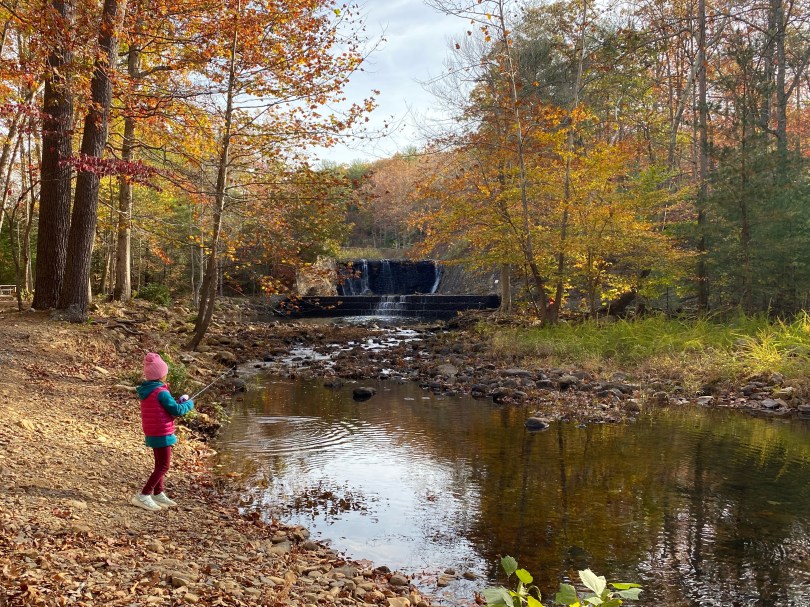
Douthat State Park – “Tonic for the Mind, Body and Spirit”

Date: 10/24/25-10/26/2025, Temperature: Highs of approx 60F Lows approx 33F, mostly sunny.
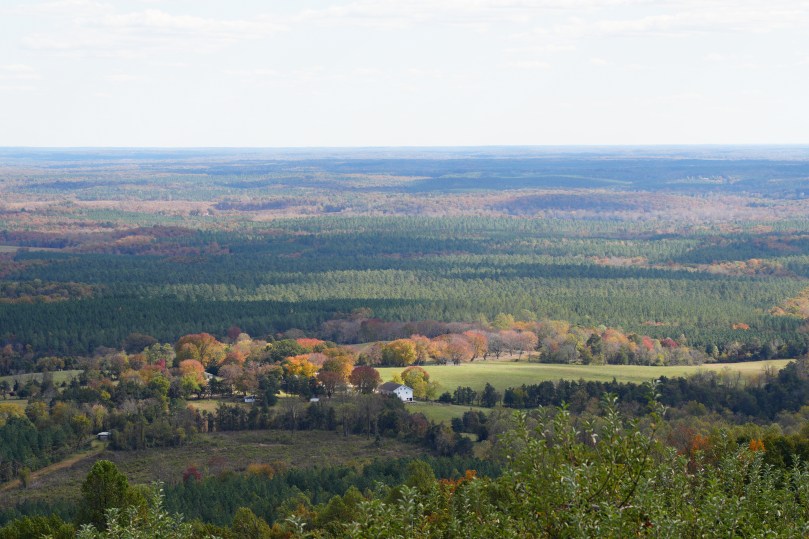
The view from on top of Carter Mountain Orchard, in Charlottesville, Virginia. A good pit stop for apples, apple cider and donuts.

“Virginia State Parks are a tonic for the mind, body and spirit”. This creedo is printed on Virginia State Park trail guides, and I couldn’t agree more. I’ve heard so many great things about the Virginia State Park cabins but I have never actually stayed in one. They are also known to book up very quickly so I reserved a cabin at Douthat State Park about a year in advance. Situated near the Virginia and West Virginia border, Douthat, is one of Virginia’s oldest state parks, featuring miles of fishing streams, a 50 acre lake and loads of trails.

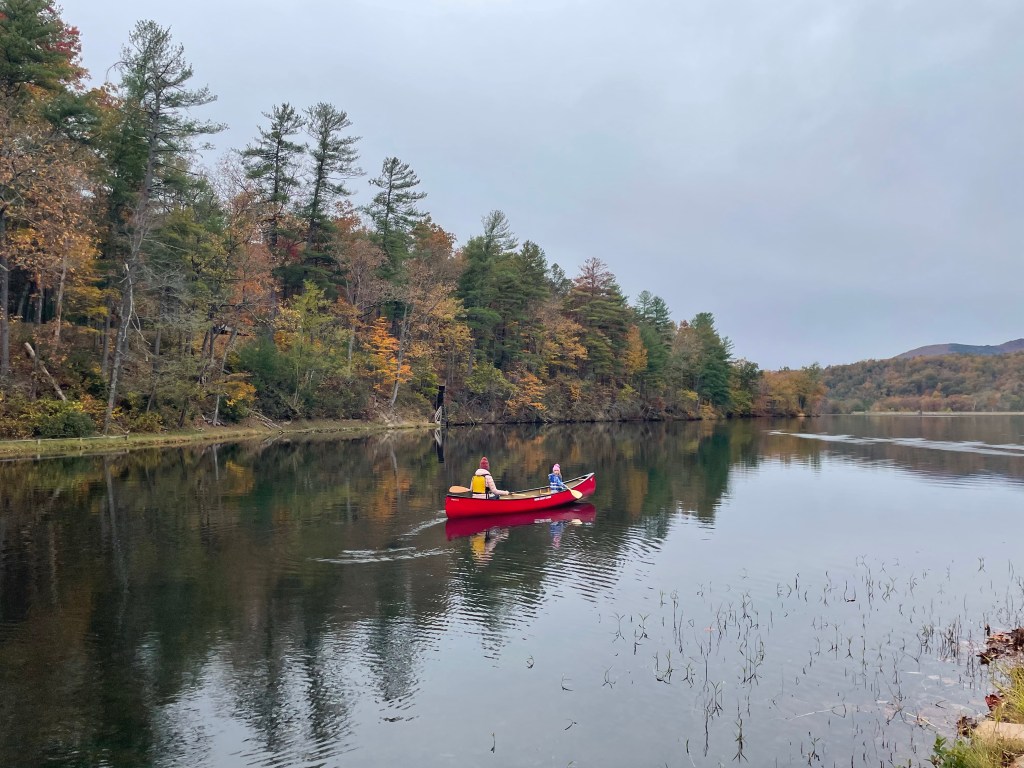
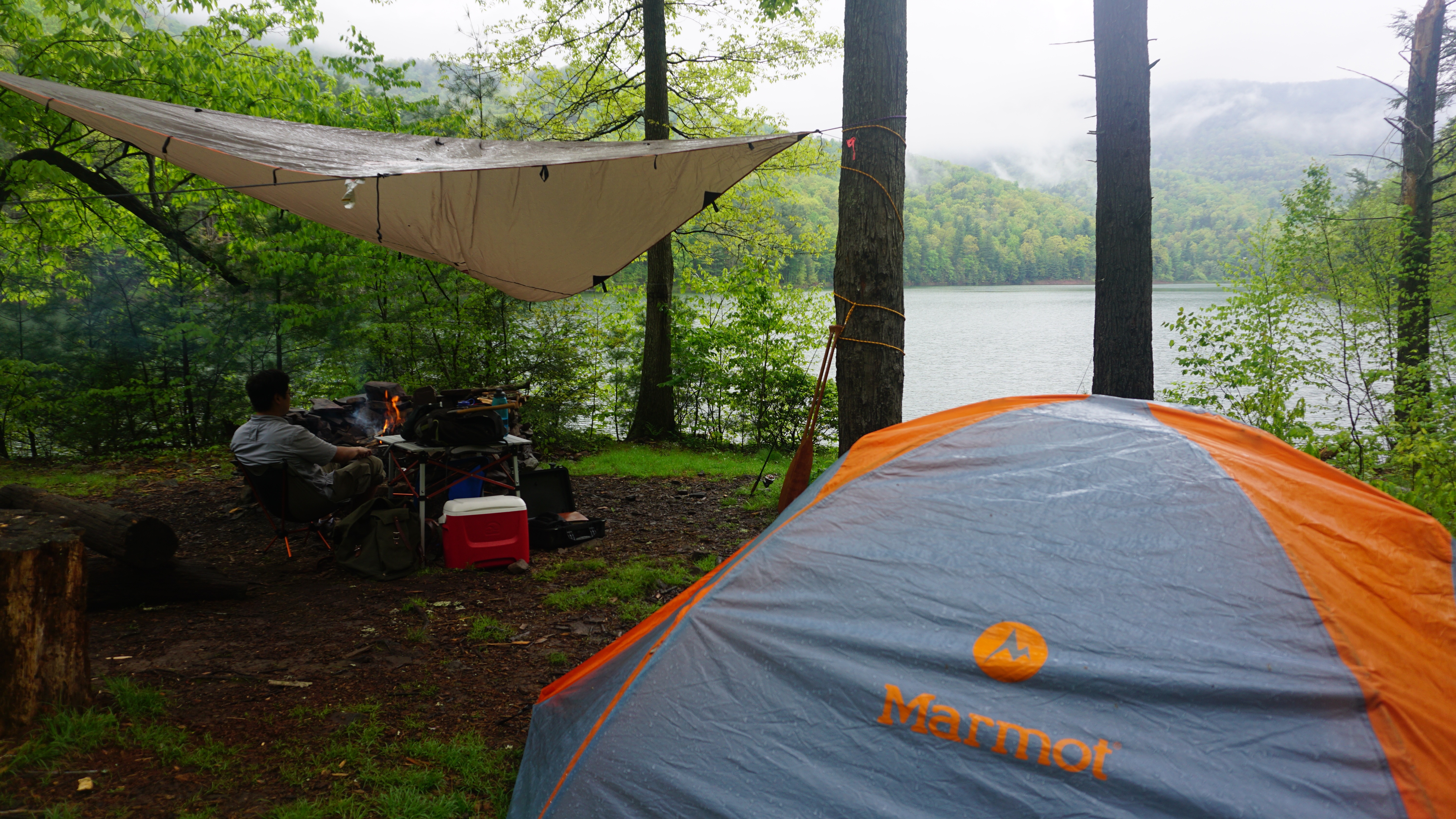
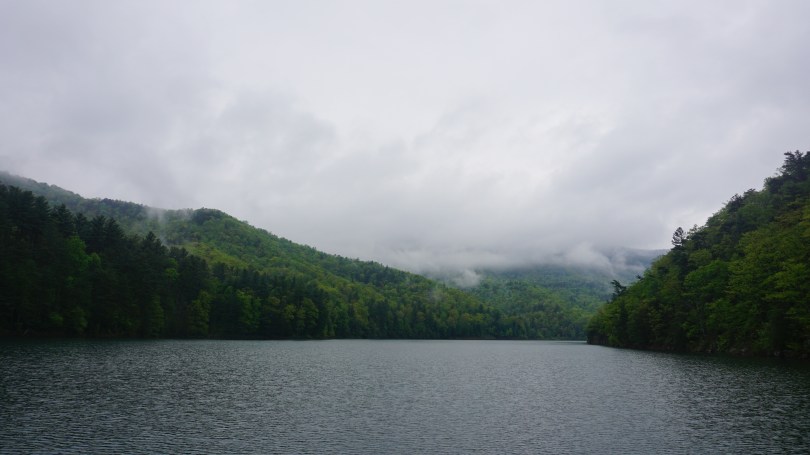
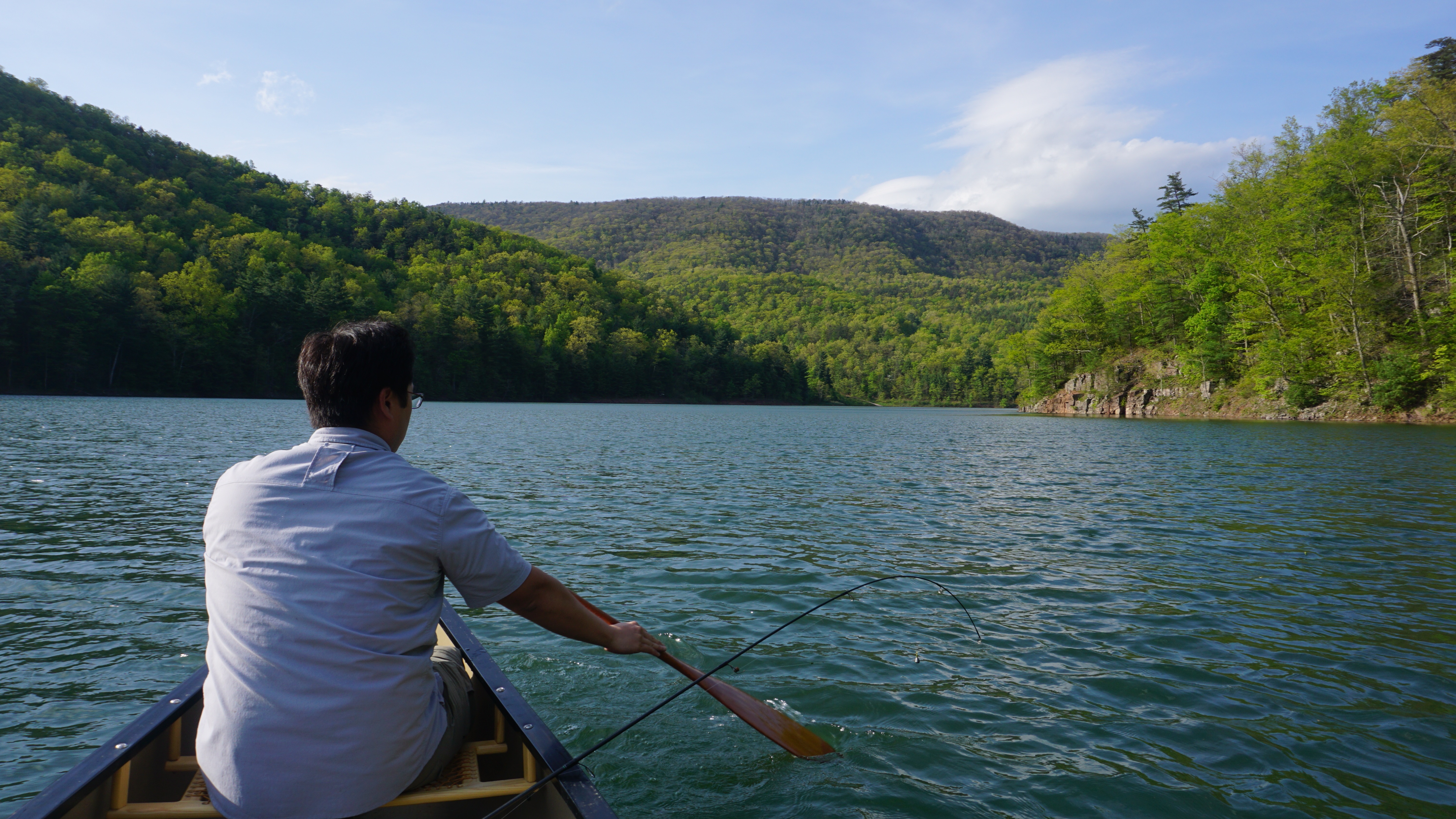
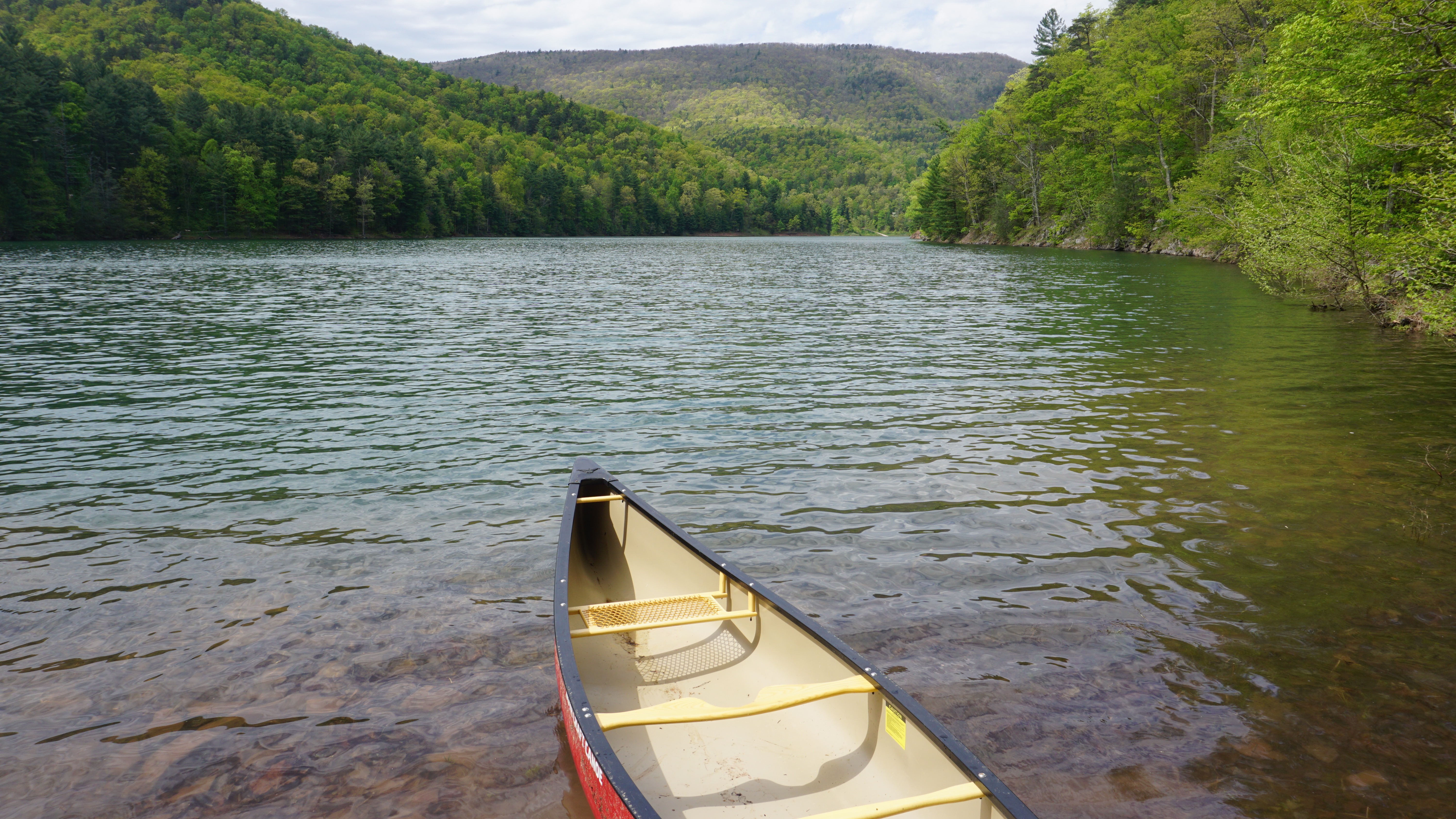
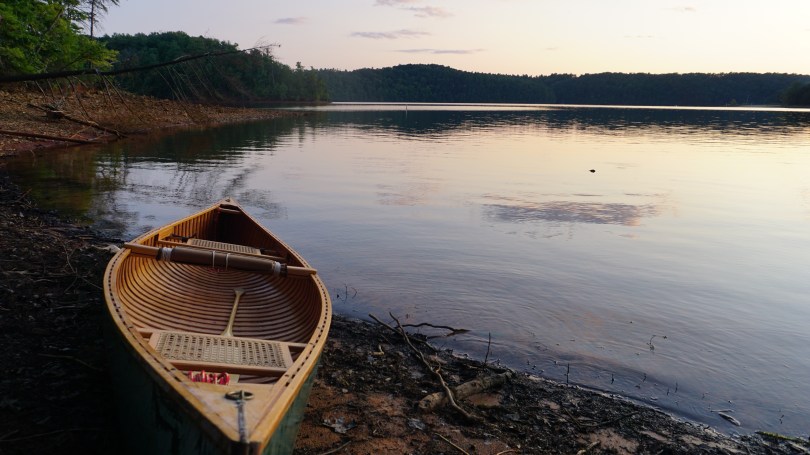
The jewel of Douthat State Park is a clear, 50 acre mountain lake. The lake is fed by a Wilson Creek, a park of the mighty Jackson River watershed. We brought along our Nova Craft Prospector canoe to paddle the glassy waters. It’s remarkable how noisy day to day life can be. You don’t really notice such a thing, until you sit on an empty lake, hearing a woodpecker rap on a tree, miles away. I do think such experiences are important to our soul and nervous system, to help reset and get away from the bustle of day to day life. As someone who sees dozens of patients per day, it is such a welcoming feeling.

The kids particularly loved the trout fishing streams at Douthat State Park. They are stocked with rainbow trout, and the kids spent hours just casting and reeling. The leaves were at peak color change, the wind was sharp and crisp and the falling leaves around us made for such a mesmerizing backdrop. It hadn’t rained in several days so the water was particularly clear. The slim outline of the trout were visible underneath the shadows cast but moving leaves. This perpetuated the excitement of the children.
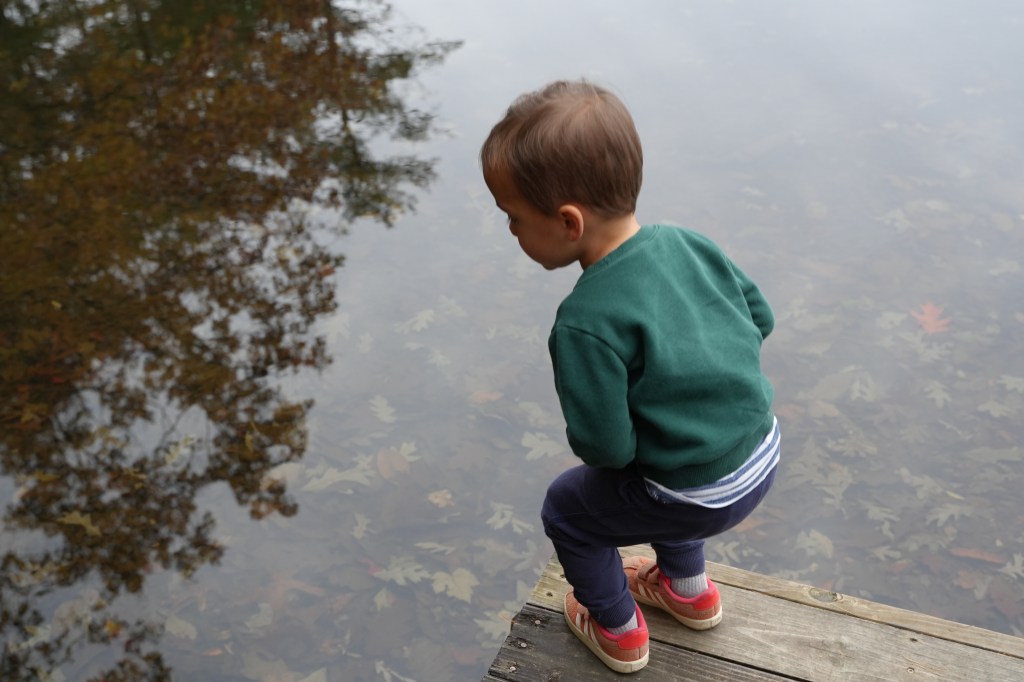
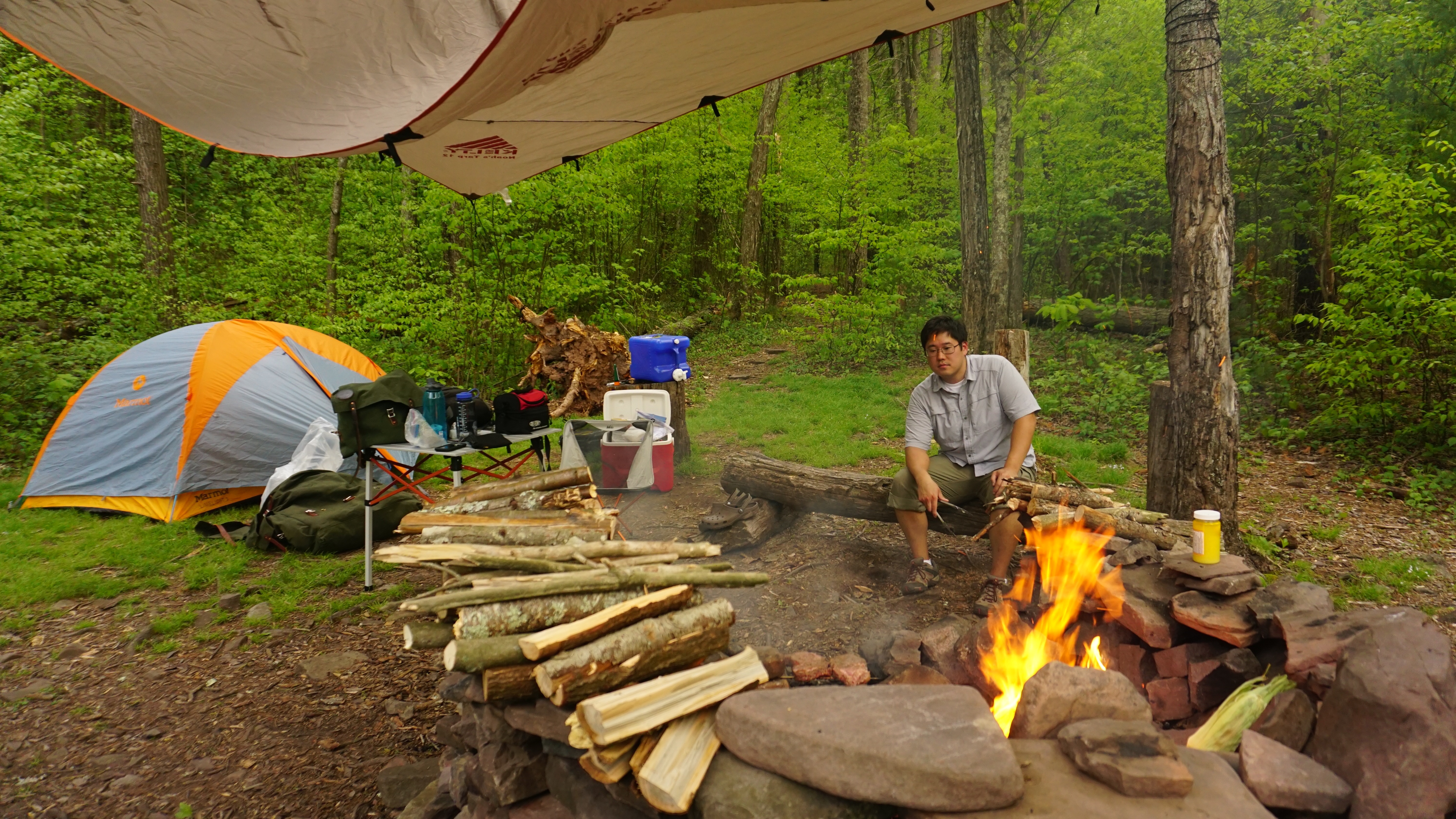
We spent time exploring the trails, bike trails, cabins, and the well stocked camp stores. The kids also loved the cabin as well. Douthat State park was thoughtful enough to provide a bundle of firewood waiting for us at the cabin. I suspect that most visitors don’t use all of their wood, because there was an accumulation of it at our cabin. We put it to good use, especially when it dipped near freezing at night. I brought my old Wetterlings axe to split it into kindling. I can’t believe I’ve had that axe now for over 15 years. Still working just as good.

The cabins do not have wireless internet or cellular service, and this is a great thing. We filled our time, reading, painting, photographing the landscapes, enjoying the wood burning fireplace and playing board games.

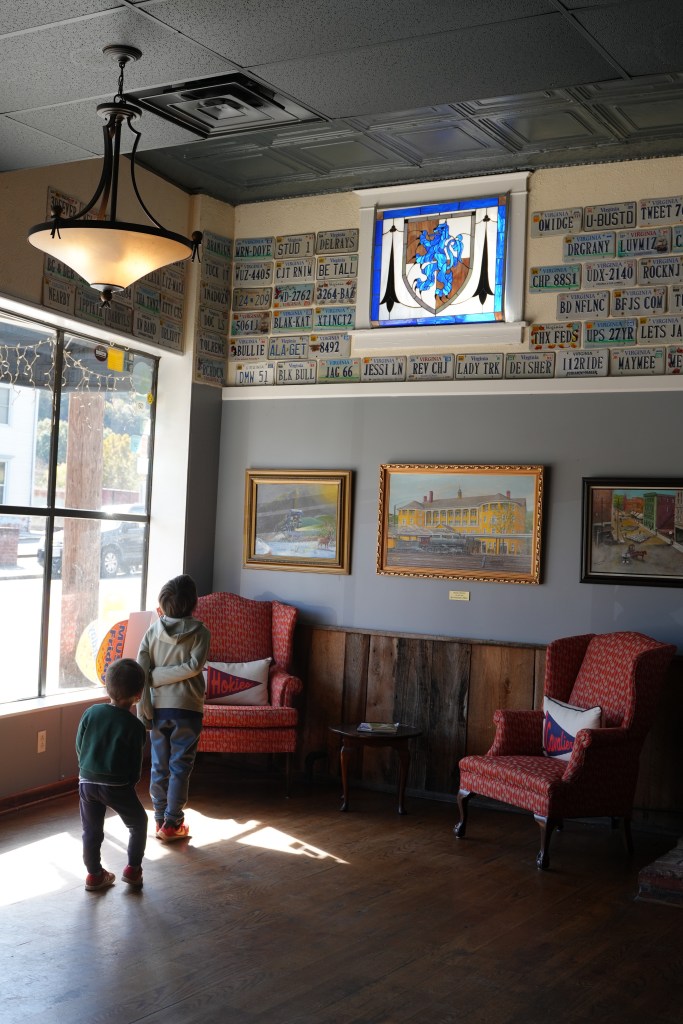
Exploring small towns in the Virginia mountains, is always time worth well spent. Douthat State Park is only 15 minutes away from Clifton Forge where we had lunch at Jack Mason’s tavern and picked up some local provisions. Their warm food and dark ales were especially welcoming on a chilly fall day. On the way home, we stopped in Lexington, Virginia for coffee and picked up some books at the “The Bookers”. THis quaint book store is like a scene out of Harry Potter, the books were stacked up to the ceiling and in every which direction. Very cool book store.

Douthat State Park is simply beautiful. The park is well laid out, the facilities are accessible and clean and the cabin was stellar. There are plethora of activities to partake, trails to hike, streams to fish, paths to bike, a lake to paddle, not to mention the excellent visitor center and camp stores and structured activities – an outdoor enthusiast could easily spend a week here. Thank you to the Virginia Department of Conservation and Recreation and to all the staff at Douthat State Park.

Wishing everyone a safe and happy holiday season ahead!

Photos taken with Sony a6700 (tamron 17-28mm lens)

Visit the Douthat State Park Website here: https://www.dcr.virginia.gov/state-parks/douthat

Back Country Canoe Tripping – Lake Moomaw, Virginia.

Earth Day Weekend 2024 – I’ve had my eyes set on this weekend for months now. I wanted to take my two oldest kids (ages 4 and 6) and my parents backcountry canoe tripping in Virginia and this was the perfect time of year to do so. The mosquitoes and biting flies would not be out yet and the day temperatures would be comfortable.

While I dusted off my old canoe camping gear and sorting through my wannigan (camp kitchen box), I couldn’t bring myself to believe that it had been 7 years since my last canoe camping trip! (Philpott Lake). It appears I entered a time warp when my oldest son was born. I initially started this blog to document canoe trips – these trips were the fuel for all of it – and I was so glad to get back to it. I was lighting up with excitement as I came across old gear that I was bringing back out to show my son. We loaded our royalex canoes, a Nova Craft Prospector and an Old Town Camper.

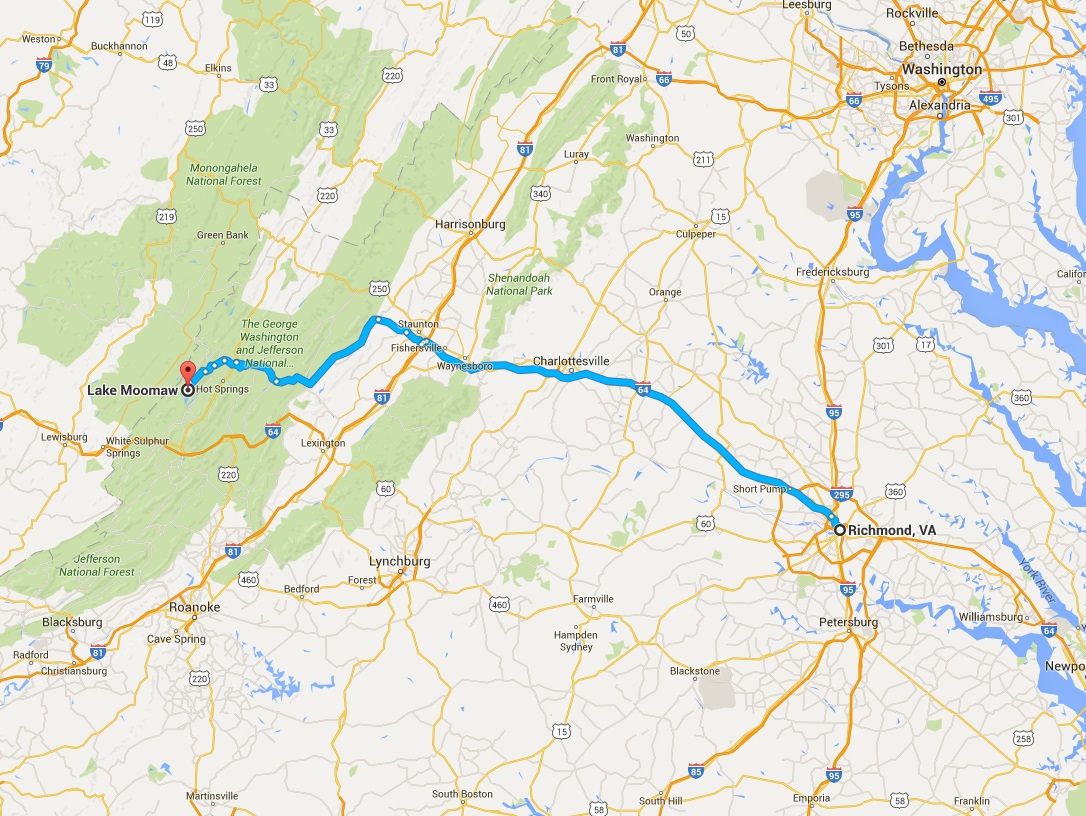
We packed everything on a Friday, so we were ready to roll by Saturday morning. Trip members: mom, dad, son, daughter and my oldest brother. We were an eager and hearty crew. Our destination? Lake Moomaw in Bath County, Virginia. This would be my 4th time canoe tripping here and I couldn’t think of a better place to introduce someone to the splendor of canoe tripping than this magnificent lake.

BELOW ARE LINKS TO MY THREE PREVIOUS CANOE TRIPS TO LAKE MOOMAW, BATH COUNTY VIRGINIA.

4/2014 First time to Lake Moomaw
6/2015 – Second trip to Lake Moomaw
11/2015: Third trip to Lake Moomaw

Day 1: Sunny, 63F high, low 44F

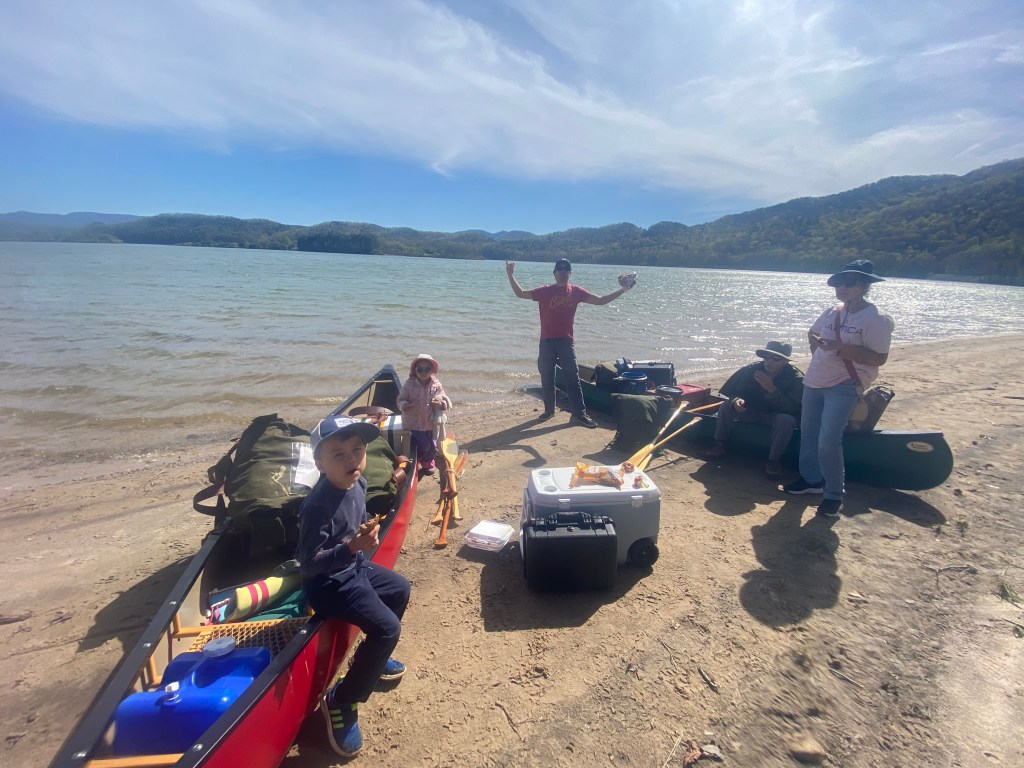
Loading up the canoes on Lake Moomaw. In Bath county, Virginia.

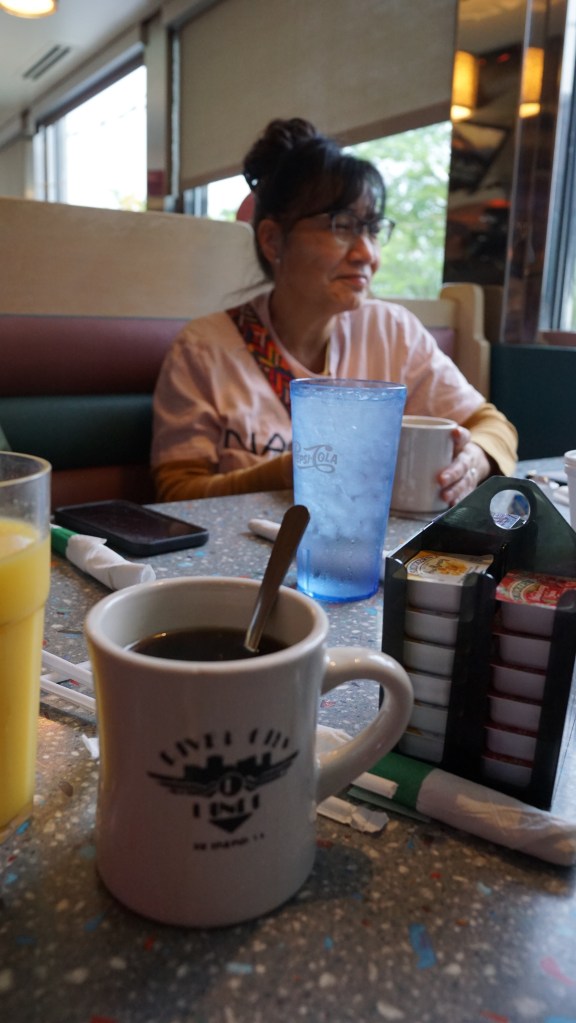
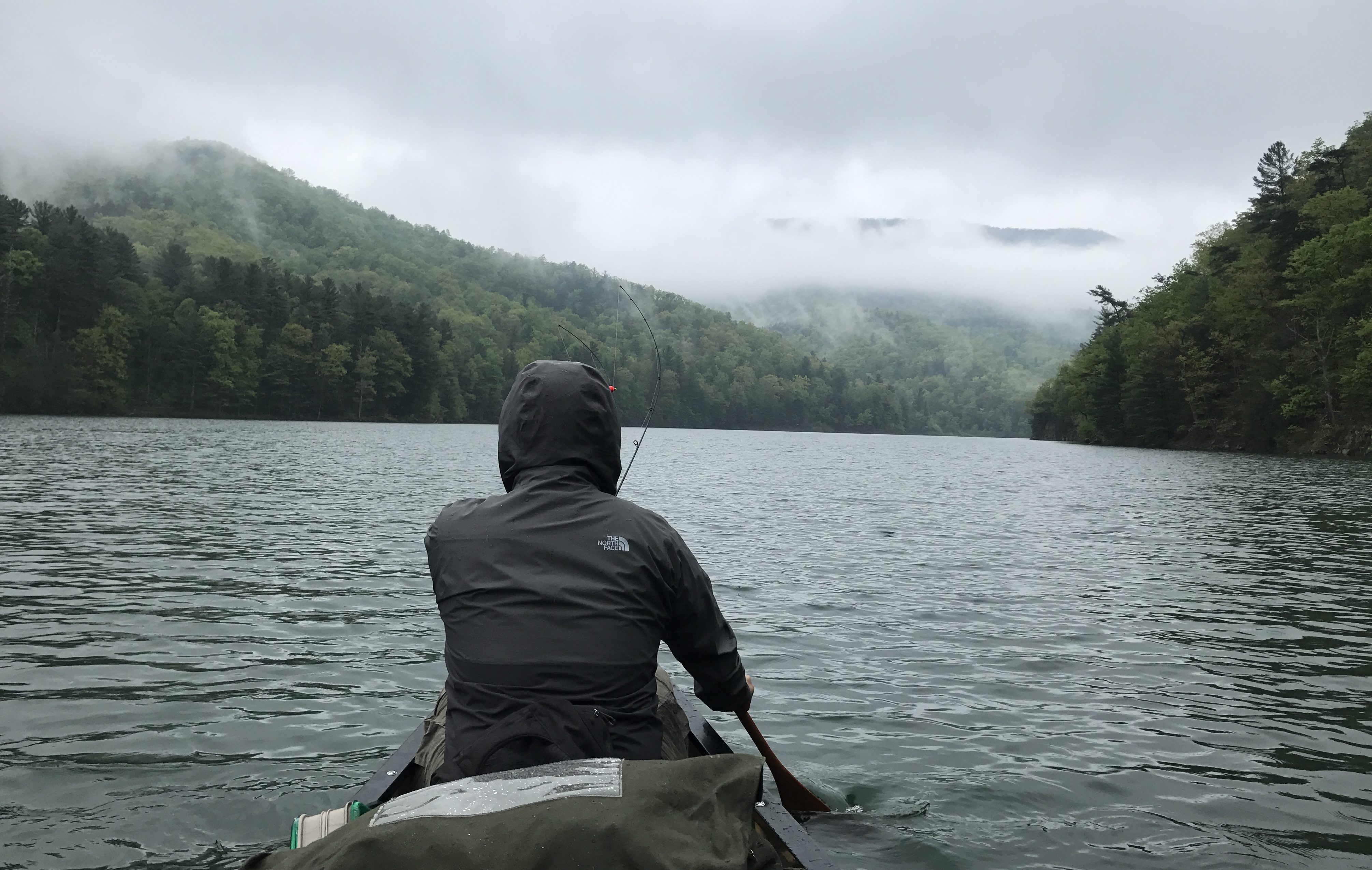
We started our Saturday morning by meeting up at a diner for breakfast before hitting the road. Our canoe tripping tradition. It was a beautiful day and the drive through bath county was spectacular. My brother and I were a little weary from packing and prepping the past couple days, but the sight of the empty lake rekindled our souls. We loaded everything up into the canoes, and set out against some mild wind towards Greenwood point. We got to our campsite at approximately 4:00pm so we did have some time to set up our campsite before dark. Camp chores: setting up tents, hanging clothes lines, gathering firewood, surveying the area, digging a camp potty and prepping dinner. We ate, chilled and breathed easy, we were finally there.
Day 2: Cloudy, High 52F, low 32-38F

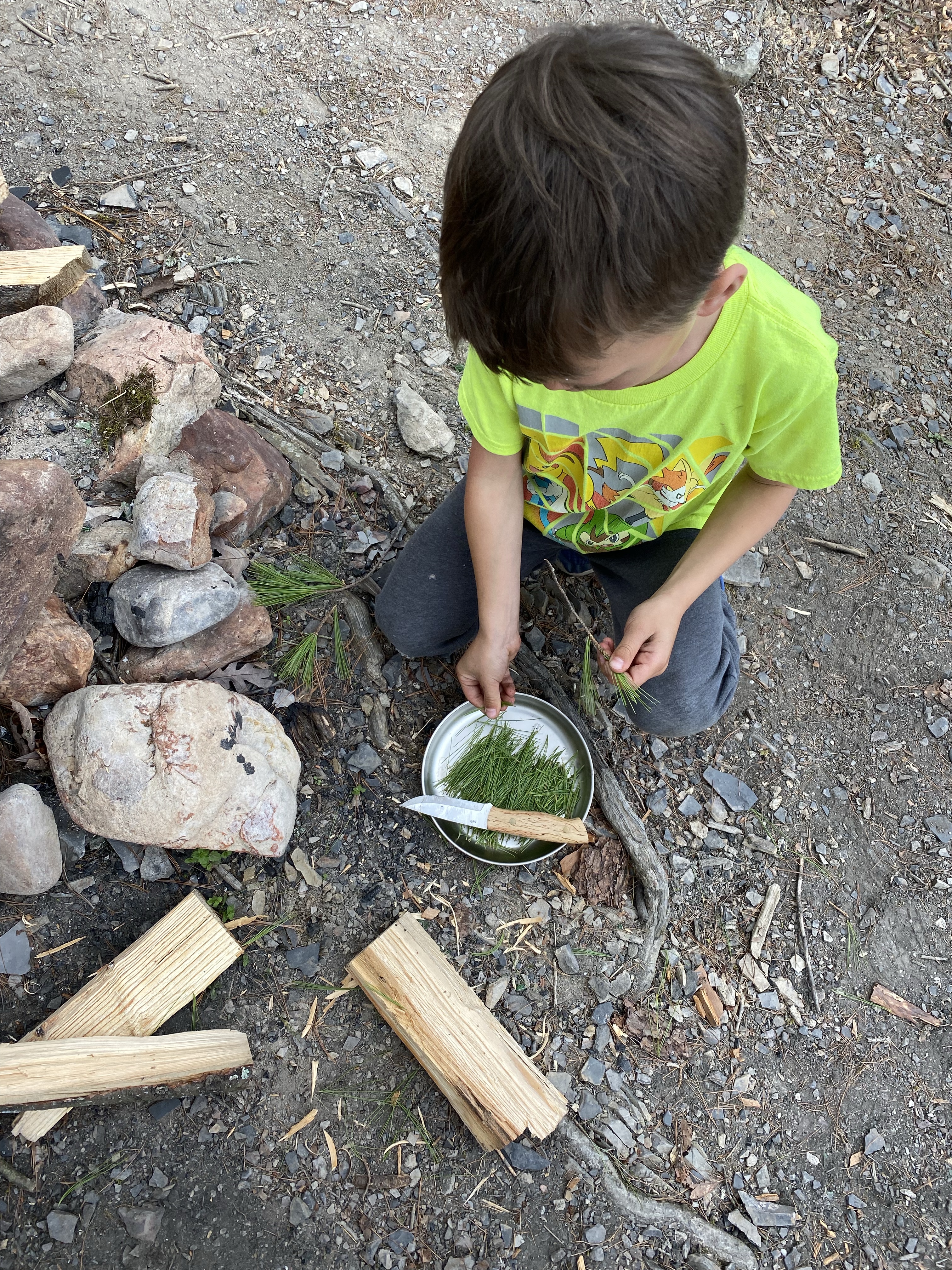
We took our second day pretty easy, we fished the waters, ran the kids through some paddling lessons, and hiked and explored the forest. The campsite is beautiful, as it is surrounded by white pine, leaving a very clean looking campsite. The forest was beautiful with moss carpeting the forest floor and rays of sunshine cutting through the trunks of the trees. We spent time exploring Greenwood Pt and we also did some watercolor painting and made some pine needle tea. The night brought on some wicked cold.

Day 3: Earth Day High 60F

Our last day there was beautiful. It was Earth Day. Thank you mother earth for providing us with such a beautiful lake and land to explore and enjoy. I was so glad that this trip actually happened. With everyone’s hectic schedules and availabilities, somehow the stars aligned for us all to go. It was beautiful and reminded me why I started this blog in the first place. Happy Earth Day Everyone!

Camping on the Chesapeake Bay

On the south shores of the piankatank where it opens up onto the Chesapeake Bay, we pitched our tent and settled in for my sons first overnight in a tent away from home.

All of Mathews County was draped in a thin layer of fog. The ground was damp the from morning dew and a chill was in the air reminding us that autumn was here. Such things did nothing to damper the spirits of a 3 year old boy. He galloped through the large field and marveled at the vastness of the bay. He stared at the migrating ducks as the made their way down south. He watched the sailboats from afar as they came in and out of view through the fog.

He had been raving about this camping trip for weeks and it was finally here. He would get to spend a night in a tent away from home and under the stars. We got to work setting up our gear and started a fire with the damp wood around us.

As we setup our site, the unmistakable call of a loon filled the air. I was surprised to see several loons in the bay fishing. They must be on their way south, because I have never seen them in this area before.

We spent the day chopping wood, catching crabs and fishing. Minh was familiarizing himself with a lot of the camping gear. We were joined by my parents and brother in the late afternoon at which point we added more wood to the fire as the night skies surrounded us. I could sense my sons excitement as the darkness surrounded us and only the glow of the fire would illuminate the campsite. He had no trouble sleeping in the tent and slept like a rock.

The next morning we were greeted with the sun! He was eager to get back out and fish. We also took a stroll down the road to see some of the neighbors cows. This trip was also a great opportunity for me to play around with the my new telephoto lens, a sigma 100-400mm for Sony alpha cameras. So far it’s been a blast to shoot with. After I took some photos of the cows, we went on some walks around the area and then packed up and headed home. He did not want to leave. He fell asleep in car immediately, and upon awakening, he asked me with eyes barely open….”when are we going canoe camping?”


Philpott Lake – Bassett, VA

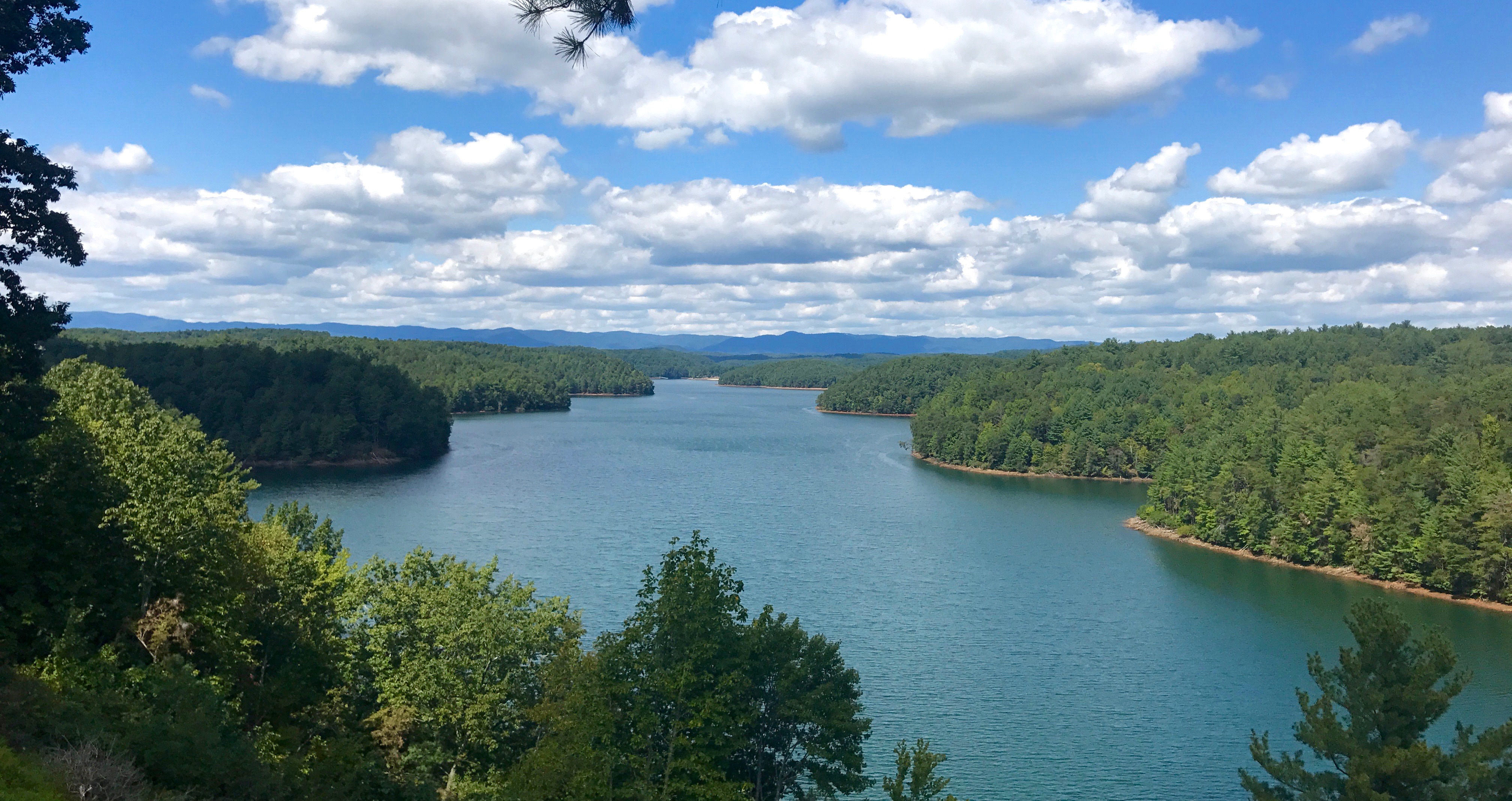
For those that are interested in canoe camping, Philpott Lake in southwest Virginia just may be the best place to learn. This massive 3000 acre reservoir spans across three counties (Henry, Franklin and Patrick counties) and was constructed by the U.S. Army Corps of Engineers (from 1948-1952)  in order to help control flooding from the Smith River as well as generate hydroelectric energy and serve as a place for recreational activities.

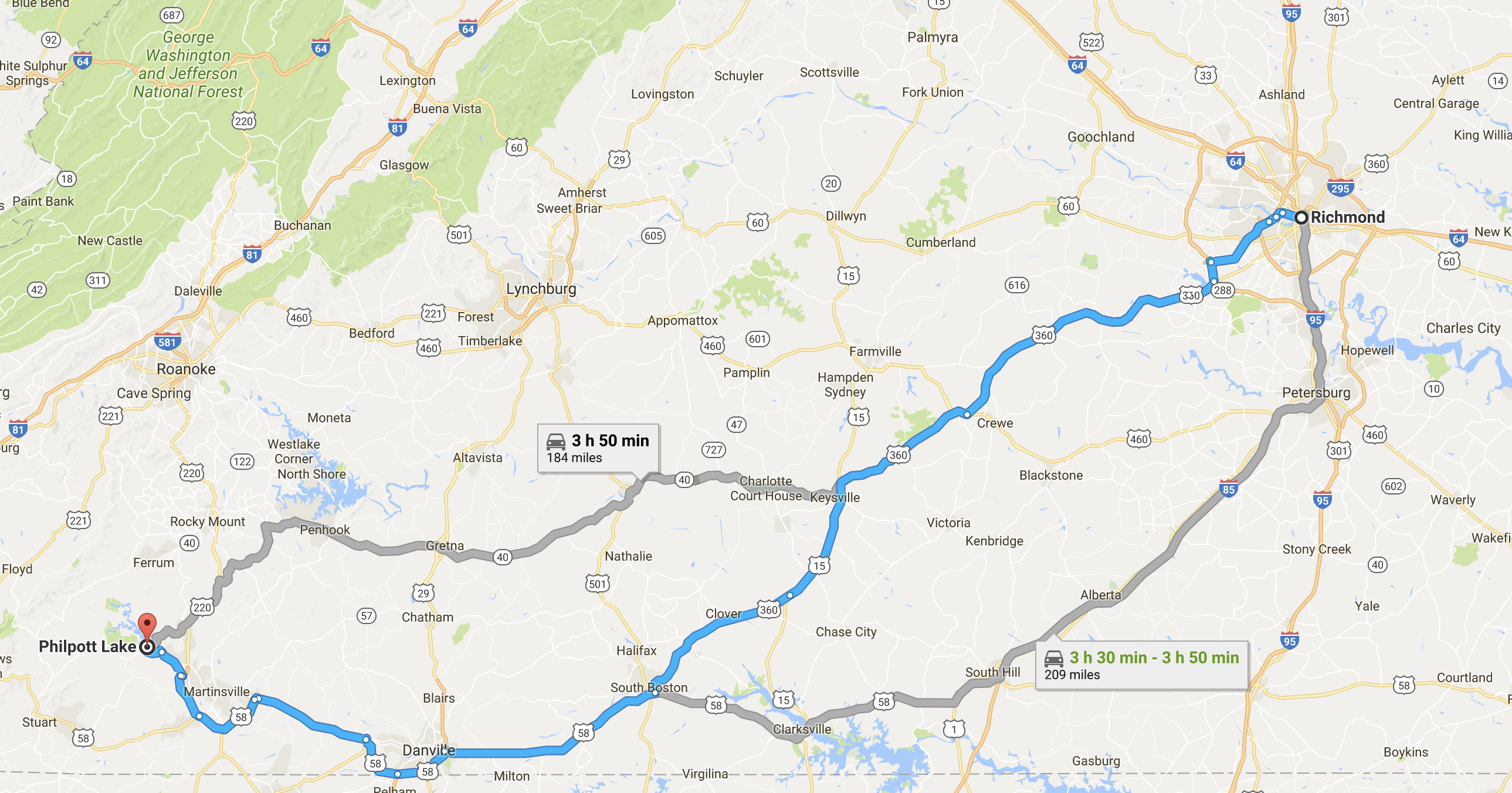
We took to the road on a Thursday morning with clear, blue skies. It was an easy, and flat 3.5 hour drive from Richmond to the town of Bassett, Virginia. Upon arrival to the lake, we were impressed with how clean and organized the park seemed to be. We stopped by the visitor’s center to ask for some maps and it reminded of very much of a welcoming center you would see at an Ontario Provincial Park. There were stuffed animals on display, with fish species charts that covered the walls. From the visitor center, we were at a great vantage point and had a beautiful view of the Philpott Dam and Lake, sparkling blue in the sunlight. We were eager to paddle these waters.

We would be camping on Deer Island, a spot where visitors can visit if they wished to do some primitive camping. In order to get there, we got back in the car and drove to the Salthouse Branch Launch Point. Here we met a friendly ranger and paid our $20 per night camping fee. We reassured us, that if we would need anything at all throughout the night, that there would be a ranger on call 24/7. We parked the car right next to the beach and launch site and began unloading our gear. Once again, this is a very well kept lake, and the launch site had every facility we could have asked for, clean bathrooms and showers, picnic tables, and water fountains. We loaded our gear off a small dock next to the public beach and set out for the quick paddle to Deer Island (less than 0.5 miles). There wasn’t a single soul camping on Deer Island so we took our time circling the land until we found a suitable campsite…..#20. The campsite was immaculate without any signs of garbage. Once our camp was set up and the firewood had been cut, I went in for a refreshing dip.

While we were camping in Virginia, my brother Brian had been on a week long road trip up north in Manitoba, Canada. He was driving home to Virginia and would be joining us at Philpott Lake before we all head back to Richmond together. He was exhausted from spending days on the road. At midnight, we paddled back out under a full moon and cut through the fog on the water back to the Salt House Branch Landing. We helped him load his gear and we brought him back to the campsite. The orange glow of our campfire guiding us home.

He was tired and covered in camping scars, after run ins with poison ivy, black flies and mosquitos. He was certainly happy to be back in Virginia, where they were literally no mosquitoes at our campsite. We were not complaining but we were wondering why there were no bugs. I wonder if this is due to the fact that Philpott is a man-made lake. The elements that make a natural ecosystem where mosquitoes would thrive are not there. I have no idea, but we are not complaining. No need for a bug shelter or even bug spray for that matter.As we cooked him some dinner, he shared tales of his adventures up north, we listened intently by the fire and our group once again reunited. The last time the three of us were together was one year ago, when we paddled our way through La Verendrye Wilderness Reserve, in Quebec.

Brian solo camping at Kwasitchewan falls, Manitoba.

In the morning, we paddled out to the access point for a luxury shower at the Salt House Branch beach. This was truly glamping. The washrooms at Philpott Lake, just like everything else was very clean. This was something I could get use to on canoe camping trips. It turned out to be a very lazy day for us. Brian was exhausted from his road trip, so we took it easy and explored the surrounding forest. We made fires from pine sap, cooked and relaxed. No ambitious goals, just us and the lake. Before we knew it, the sun was coming down, and the forest was cooling off. We went on more night canoe paddles and explored the other launch sites. We met a friendly ranger and a police officer and spent some time talking to them. The ranger was clearly interested in our canoe camping ensemble and asked where we were from. Turns, out that he had been to Ontario…. many times. He hunted and fished in the backwoods of Ontario near and was very familiar with Algonquin Park. Small world.

In summary, Philpott Lake is a clean, beautiful, and fun place for anyone interested in primitive canoe camping. It is the perfect place to learn all of the motions involved in canoe camping. The short paddles to the campsites make it very feasible for all ages, and the access to clean facilities make it seem like clamping. There are rangers and campers around so there is also plenty of support. The rangers patrol throughout the night at the access points to keep everyone safe. On a scale of intensity, this experience fits in between car camping, and canoe back country camping… although much closer to car camping. I would love to come back to try our hand at fishing the famous Walleye populations in this lake, perhaps in the spring time.

*As always, for all visitors and campers, please remember to pack out whatever you bring in. Please keep this beautiful lake clean for all to enjoy and for future generations to come.

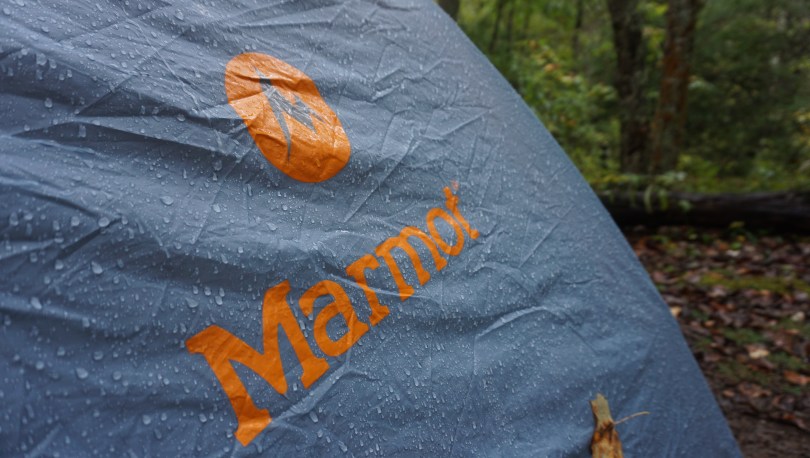
Marmot Limelight 3P Tent – Review after 11 years, 31 nights

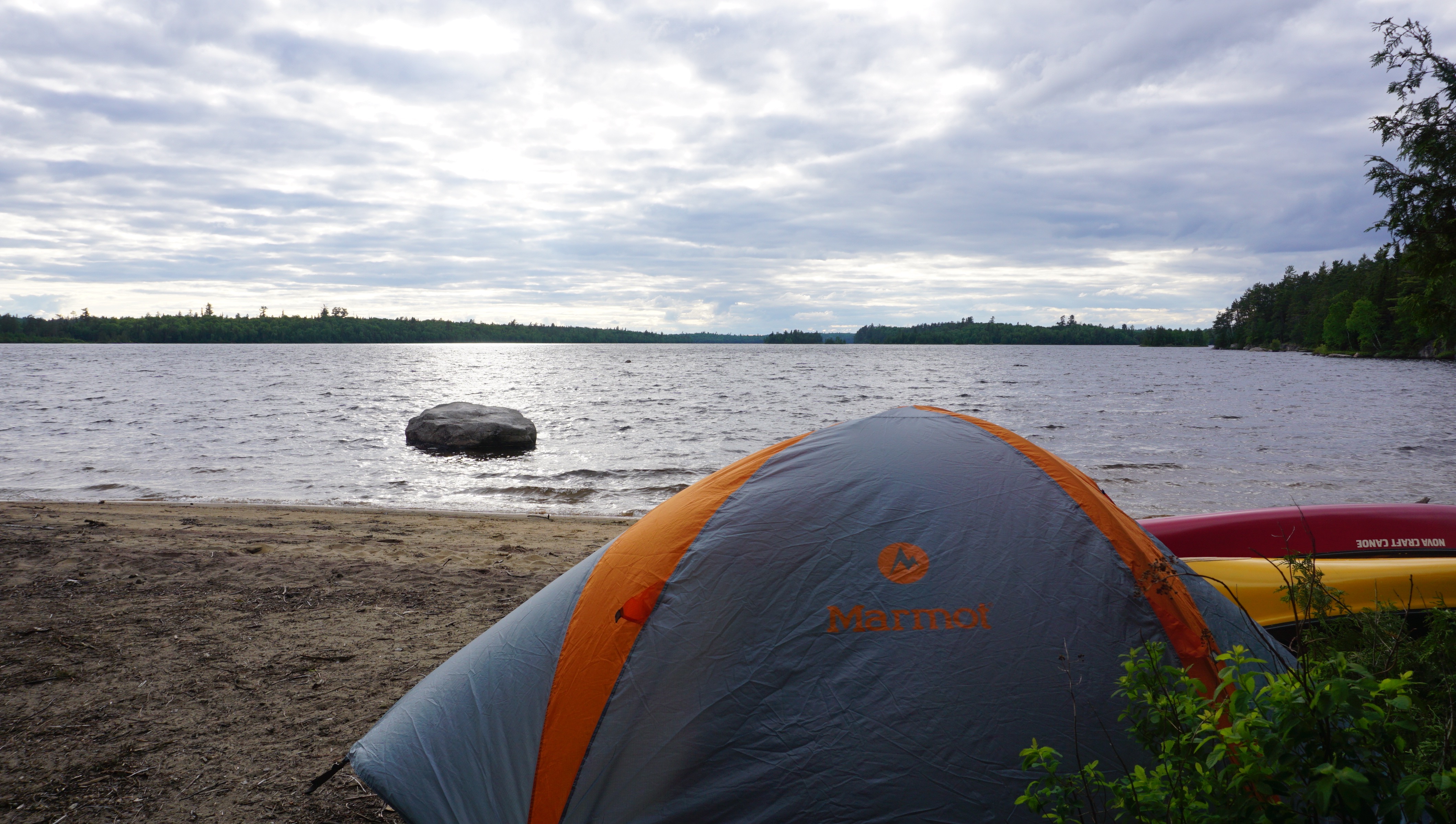
Once in a while, you come across camping gear that is so good, you can’t imagine tripping without it. This has been my experience with the Marmot Limelight 3 person tent. I bought this tent at REI for a trip out to the Grayson Highlands (southwest Virginia) in the spring of 2013. Over the past 11 years, it has been with me on several canoe and backcountry trips; from torrential downpour in the boreal forests of Ontario, to the frosty snows of West Virginia, this tent has held up to the elements and more.

Design: For the amount of space and durability that this tent provides, the limelight is fairly light, weighing in at a packed weight of 6lbs, 11 oz.  There are certainly lighter tents out there for backpacking, but the ruggedness of this tent makes it ideal for canoe tripping. It is designed as a three person tent, although I would say it comfortable fits two adults. It provides 42.6 square feet of space with dual doors for easy access. The vestibules on the rainfly add another 10 square feet of covered space at both entrance points. Mesh panels, allow for good air circulation to prevent condensation. A footprint is included to protect the tent against, rocks, sticks, etc.  The aluminum poles are light and durable and snap together with no fuss. Over the years, they have taken on a slightly different shape, but this does not hinder its performance.

Setup: One of my main draws to this tent was the set up. It can be set up in less than 5 minutes. Enough said.

Maintenance: As with any piece of camp gear, taking care of your equipment will allow it to last for much longer and serve you when you need it most. As with most synthetics, your main enemies are moisture and UV light. Airing out your tent to completely dry before storing it back into its bag will add years to its life by preventing mold which can rapidly break down the tent’s fibers. Many campers will actually keep their tents and sleeping bags outside of their storage bags when they are not using it in order to prevent moisture accumulation.

SPECS

Best Use Backpacking, Camping
Average Min Weight 5 lbs 15 oz; 2692 g
Average Packed Weight 6 lbs 11 oz; 3032 g
Warranty Lifetime
Vestibule Area 10 sq ft
Sleeping Capacity 3
Seasons 3
Seam Sealed Taped Seams
Pole Type DAC Press-Fit
Packed Size 22″ x 8″
Number of Poles 3
Other Stuff Sack, Gear Loft and Footprint Included
Material Walls: 68D 100% Polyester Ripstop
Floor:70D 100% Nylon PU 3000mm
Fly:68D 100% Polyester Ripstop 1800mm
Interior Storage Gear Loft and Interior Pockets
Interior Height 46″ (at highest point)
Freestanding Yes
Floor Dimension 93″ x 66″
Floor Area 42.6 sq ft
Doors 2
Clips or Sleeves Clips

Excursions with the limelight.

Algonquin Park (2014) – 6 nights

The limelight on an island in Big Trout Lake, Algonquin Park 2014

Killarney Provincial Park, Ontario, Canada. (2015) – 2 nights

Setting up camp, on an island in O.S.A Lake, in Killarney Provincial Park, Ontario (2015)

Temagami, Ontario 2015 (2015) – 3 nights

We encountered lots of rain on our trip to the Temagami wilderness area in Ontario. The limelight kept us dry during 3 days of rain.

La Verendrye – Quebec, Canada (2016) – 4 nights

Our camp, atop La Verendrye wilderness area in Quebec, Canada (2016)

Dolly Sods Wilderness Area, West Virginia –  (2015) – 2 nights

The unpredictable weather at high altitudes brought us snow in the Spring time in Dolly Sods, West Virginia.

Lake Moomaw – George Washington National Forest, Virginia (2014, 2015, 2016, 2024) -5 nights

Morning autumn mist at lake moomaw

DSC09106

Grayson Highlands, Virginia (2013) – 1 night

The maiden voyage with the limelight in 2013

Dan River, North Carolina (2014) – 1 night

Beach camping on the Dan River in North Carolina

Switzer Lake, George Washington National Forest – Virginia (2017) – 1 night

The morning after the rain on switzer lake, george washington national forest

St. Mary’s Wilderness Area, George Washington National Forest – Virginia (2016) – 1 night

Drying the dishes after dinner in St. Mary’s Wilderness Area, George Washington National Forest.

Chesapeake Bay, Gloucester – Virginia (2020, 2021) – 2 Nights

dsc02133

Home – 1 night

img_0020

CONCLUSION: Overall, this tent simply works. It has survived rough, canoe trips in Ontario, the scorching heat of Virginia summers and the freezing snow of West Virginia. It does what a tent is suppose to do – allow you to spend as much time outdoors without worrying about your gear. It provides me with reliable shelter and a place to sleep so that I can focus my energy elsewhere.  It is light, sturdy, rainproof, and easy to assemble. Over the past 11 years, the limelight 3P has undergone some updates but until this one fails me, I’ll be tripping with it for years to come.

Return to Switzer Lake – George Washington National Forest, VA

Switzer (Skidmore) lake is one of my favorite places in Virginia. This sparkling, blue lake is located high up in the Virginia mountains of George Washington National Forest at over 2000 ft. The reservoir serves as the water supply for the city of Harrisonburg and is also stocked with brook trout. It is the perfect place to paddle in some of the clearest waters in Virginia.

DSC06118

My friend Min and I have not canoe camped since Quebec in the summer of 2016 and we were itching to get out there. We planned a simple overnighter, despite the impending rain that was forecast to hit hard on our second day. No matter. Rain does little to keep us indoors these days. My brother and I have survived torrential downpours in the backcountry of Ontario in Temagami and Algonquin Park. From these experiences, I’ve learned that the rain can actually bring many positives experiences to a camping trip. For one, there is always an awesome cloud display in the mountains afterwards.  You are also presented with the opportunity to test the quality of your tarp setup in a situation that counts. Ray Mears once said if you wait for good weather to camp, you end up missing half the opportunities to get outside.

DSC06084DSC06108DSC06130

DSC06135

Our last trip to Switzer Lake was in the fall of 2015, where we spent a day exploring the lake and surrounding areas by foot and canoe. Two years later, I can say that the region has changed very little. The roads have received a marked upgrade. They have been flattened and well paved, even now very suitable for a sedan to navigate comfortably.

We head out on a weekday morning when we knew the campsites would be empty. This lake can be particularly busy during the weekend, so don’t expect peace and quiet. The area is frequented by numerous outdoor enthusiasts, mostly students from the nearby James Madison University campus.

Upon our arrival, we spent some time searching for a place to camp and settled in after an hour of searching. We got to work collecting dry, dead wood, setting up the tarp for impending rain, and fishing and exploring the area. One of the most useful pieces of cooking gear up north is the simple grill grate which can be easily rested between rocks so you can have steaks anywhere you go. Once our fires were hot enough and we created a large enough ember pile, we put on some steaks and corn and listened to the sounds of the forest as we ate. Perfect. The rain eventually did come at around 8:30pm, however it came in intermittent showers and we were more than prepared with our tarp and tent. The rain scared away the last kayaker on the lake so we had the whole area to ourselves.

While you might not get the true, backcountry canoe camping experience in Virginia, Switzer Lake comes pretty darn close. There are also many advantages to camping here versus the Canadian backcountry. First and foremost, the bug situation is infinitely better at this time of year. May and June are peak black fly and mosquito seasons in Ontario and make canoe camping pretty much unbearable without bug jackets. High up in these mountains, the bugs were scarce and we came out with hardly a scratch. We saw numerous frogs, butterflies, caterpillars and hawks. I also sleep a little easier in the Virginia woods knowing that the black bears are generally much smaller. Overall, this place offers a canoe camping experience that can certainly hold it’s own.

*A word of caution, to those interested in camping, I have heard of several who have received fines for camping immediately next to the lake. Apparently it is not allowed, however there are numerous campsites just a short walk deeper into the woods away from the lake. I would call the local forest office before planning a trip here to find out which camping sites are open to use. 

IMG_2587

DSC06165

*As always, for all visitors and campers, please remember to pack out whatever you bring in. Please keep this beautiful lake clean for all to enjoy and for future generations to come.

Camping in St Mary’s Wilderness – Raphine, VA

stmarys
St Mary’s Road is very well maintained, with a parking area before the trail head.

Virginia offers a truly diverse landscape to camp. From the sandy beaches of the eastern shore and Chesapeake bay to the blue ridge mountains and highlands to the west. Without a doubt, one of favorite places to camp, is next to a gently flowing stream in the mountains. I was recently on my one week vacation and I knew that at least one of these days would be reserved for some camping. My friend Min and I originally planned on camping at Ramsey’s Draft in the George Washington National Forest however we were unable to find any suitable campsites near the entrance. Ramsey’s Draft is a beautiful wilderness area I have explored previously, where giant hemlock trees once towered by a wild trout stream. The only problem was the hike to Hiner Spring and the campsites was several miles. We planned this trip as a relaxed camping trip, with minimal hiking and mostly focused on just cooking and fishing. So, we cut our losses and booked it for St. Mary’s Wilderness, a place where I knew there would be excellent camp sites along a river bed. We left the canoe at home this time and trekked in the old fashioned way – on foot. The first day was perfect, warm, sunny and dry. It took us only about a half hour to hike in to the first campsite. It was a perfect site situated at the river’s bend and allowed us easy access to clean mountain waters.

This grill, used on canoe trips served as a handy tool to cook steak.

One of the most exciting parts of camping in my opinion is setting up basecamp. There are numerous factors that go in to creating a comfy home in the woods, albeit just a temporary one. The heart of the campsite, the fire pit is the most important part. Building a structurally sound pit that allows for cooking and efficient heat dispersion is a skill that I still build upon. Always remember to take in account, the wind direction, the location of your tent in respect to the fire pit as well as position of your seats around the fire so you are not downwind of the smoke. Finding a suitable location of your tent is also important. Flat ground can be difficult to find in the forest. It is never a pleasant way to sleep when you are sliding down an incline in your tent. Sometimes, you’ll also have to clear a suitable grid, void of sharp rocks, sticks that may damage your tent. Also keep it out of the way of any standing, dead trees that could potential topple in a heavy storm. The pathway to water is one that has to be safely mapped so it can be accessed at all hours. Access to firewood is also important and Min loves collecting and processing firewood, it is something he takes great pride in. A folding saw, and axe are two crucial camp tools that allow a members to live comfortably. It gives you the ability to topple dead standing trees, and also quickly prepare a stack of firewood to last days.

After developing a strong base of embers from the fire, we stabilized the portable grill into the fire pit and cooked up some delicious steaks. It cooked perfectly, and we served it with some baked potatoes. As the darkness set it, we threw more wood on the fire and spent the night chilling and catching up about our jobs, families and friends. In the middle of fall, I was surprised to say it felt comfortable in St. Mary’s Wilderness. We were in short sleeve shirts in the middle of the night. Camping in the valley provided us with protection from the wind and we were sitting in low 60s F weather.

We slept well that night, however awoke to rain starting at 6:00am. It continued as an autumn shower without any signs of stopping. We packed up our gear and decided to head home. It had been a long time since i had been caught out in the rain, camping in Virginia and although it can be a pain, there is certainly a beauty to it. All around us, we could hear the drops, beating on trees and plants, as leaves drifted in the forest all around. The river beds were fast to fill, especially since we were in the valley. The water was teeming with wildlife, brook trout, frogs, and countless crawfish made their appearance. The rain seemed to awaken the forest. Just goes to show you that if you only camp when the weather is nice, you’re missing half of what’s out there.

Lake Moomaw in the Fall – George Washington National Forest, VA

A solid 3.5 hour drive from Richmond, Lake Moomaw is high in the mountains near the West Virginia border.

The leaves drifting from the trees in the Virginia mountains, signal the end to another canoe camping season. Min and I decided to go for one final run. It was unusually warm at Lake Moomaw up in the George Washington National Forest with temperatures in the 70s F during the day. It  was a quiet couple of days with very little activity on the lake, and as usual we were the only paddlers on the lake. We had our pick of many campsites and enjoyed the peace and quiet. The only the sounds were from of shedding foliage, owls and birds of all types.

DSC00134
Start of the paddle out to our campsite

After setting up camp, we set out to gather firewood. One of the things I like most about Virginia camping is the abundance of firewood in these deciduous forests. There were countless fallen frees in the area that were nice and dry. The area also appears to be lightly camped and as such we did not have to look far to find what we needed. The Wetterlings Hunter’s axe with it’s wider wedge, made for light work of splitting in combination with my Ray Bears bucksaw. It was also a great opportunity to put my Finnish blade the “Enzo trapper” to use. It is a full tang work horse and can easily baton through wood to make kindling and is sharp enough to produce fine feathersticks.

We enjoyed some Japanese whiskey and took in the autumn beauty, Min even had some luck fishing off the coast. Of all the wildlife we heard, I was most surprised to hear the distinct cry of a couple of loons. Initially I thought my ears had deceived me – I didn’t think loons were this far south? However upon further research, it appears that many of them migrate south during this time of the year along the east coast and through Virginia.

Min was nice enough to prepare all of the meals for the trip. We ate some delicious chicken breasts with rice and beans for dinner. Min actually pre-cooked the chicken so all we had to do was heat it with the rice in the cooking pot. There’s nothing quite like a warm meal on a chilly night by the campfire. We ate under the stars with breathtaking visibility. The photos I took on this trip are from a sony a6000 that I’m still learning to use. In the morning for breakfast, we had egg white omelettes with green peppers and onions. Cooking with the Trangia alcohol stove is incredibly easy and has reduced preparation time drastically.

The stove weighs practically nothing and the fuel burns efficiently. We used to cook by campfire however soon learned that cleaning the soot off pots and pans took way too much time, not to mention the constant tending to the fire to assure a steady heat. The Svante Freden reflector oven from Sweden is also a must on canoe camping trips. It has been a trusty companion and we used it to to prepare some hot cornbread using a recipe courtesy of Ralph in Ottawa, Canada (much appreciated!).

To me, Lake Moomaw holds the title of a true Virginia gem. While there are several campsites in Virginia with lakes, only here can you get the backcountry experience of paddling to your site and setting up camp, far away from others. I can now say that I’ve camped here in 3 of the 4 seasons, spring, summer and now fall. Fall just might be my favorite. Great way to end the season.

Switzer Lake – George Washington National Forest, VA

Screen Shot 2015-10-18 at 9.32.19 PM
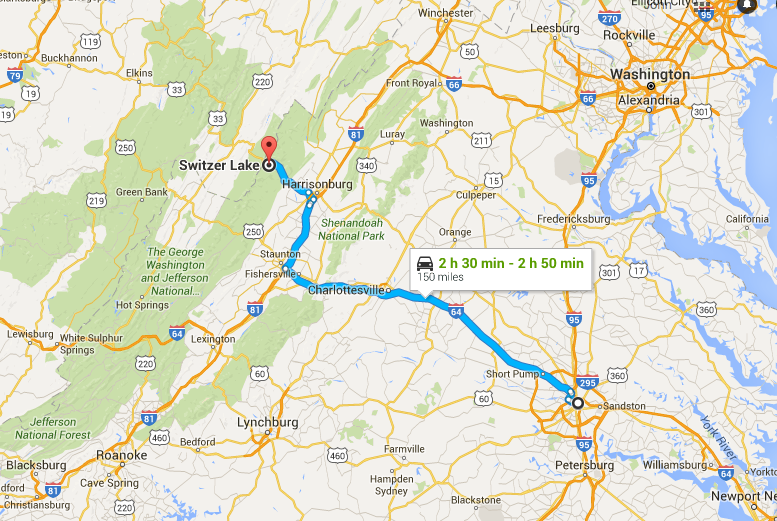
A closer drive than Lake Moomaw, but less secluded

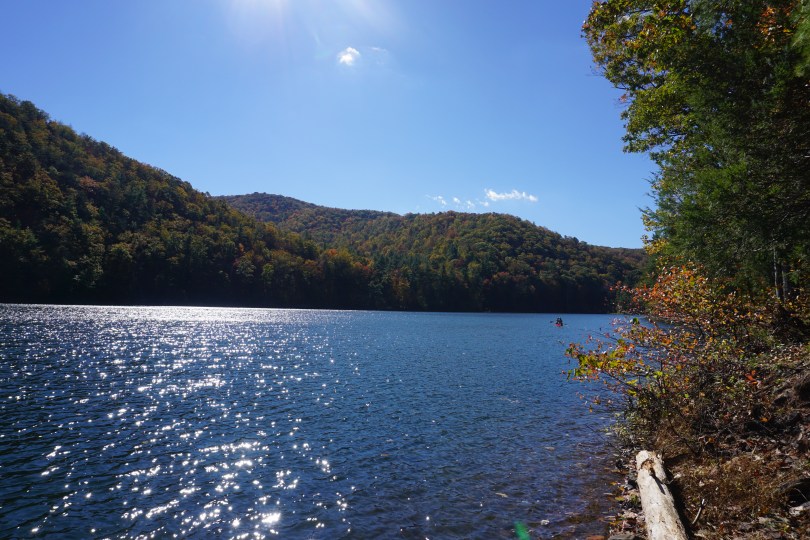
On the border of Virginia and West Virginia, at 2362 ft above sea level, lies the beautiful, Switzer Lake (aka Skidmore Dam, Skidmore Lake). The 118 acre lake serves as a water supply reservoir to the town of Harrisonburg, Virginia and watershed for the George Washington National Forest. When I heard that the lake did not allow gas motorboats, I wanted to go to check it out. We had actually planned for an overnighter but decided against it when the temperatures dropped.

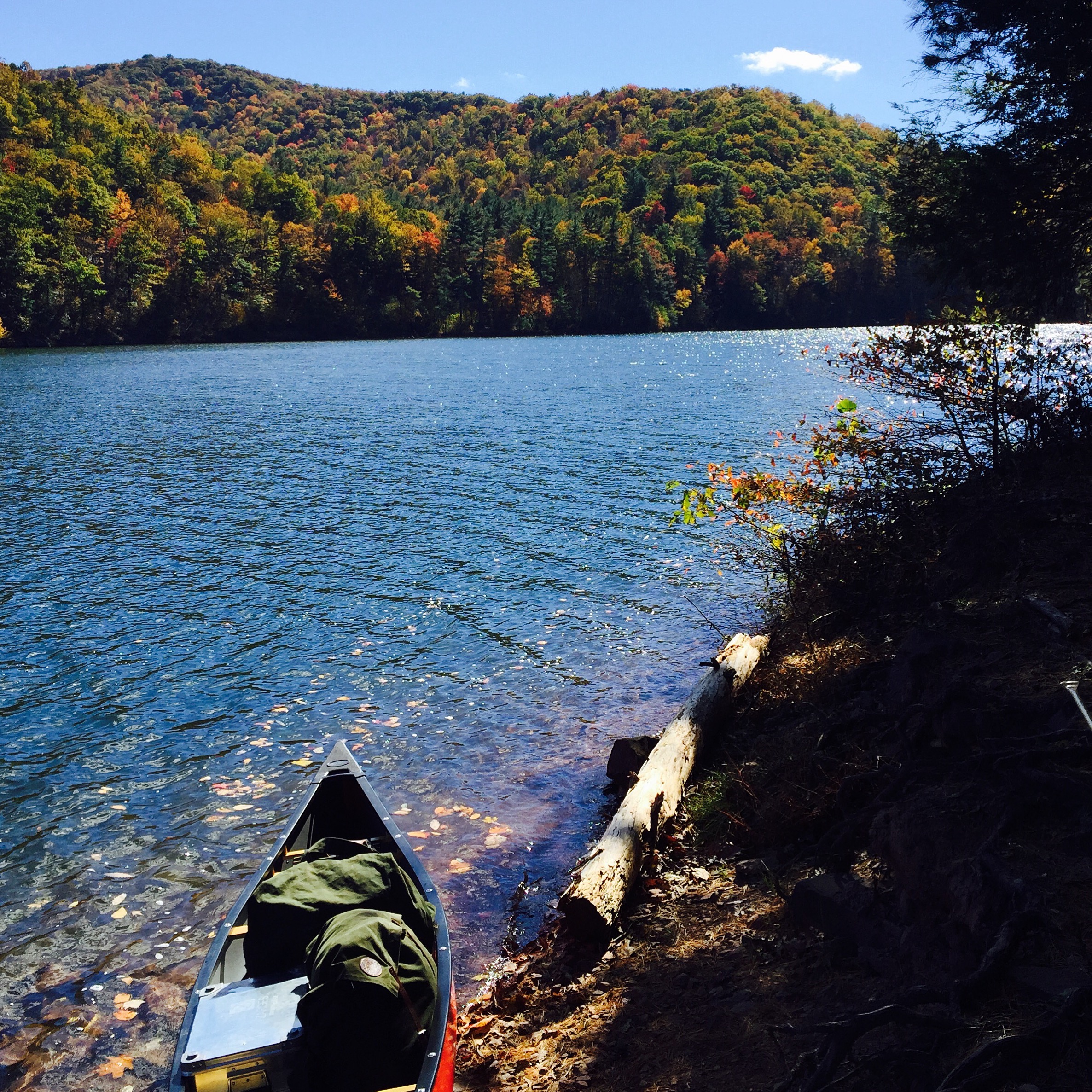
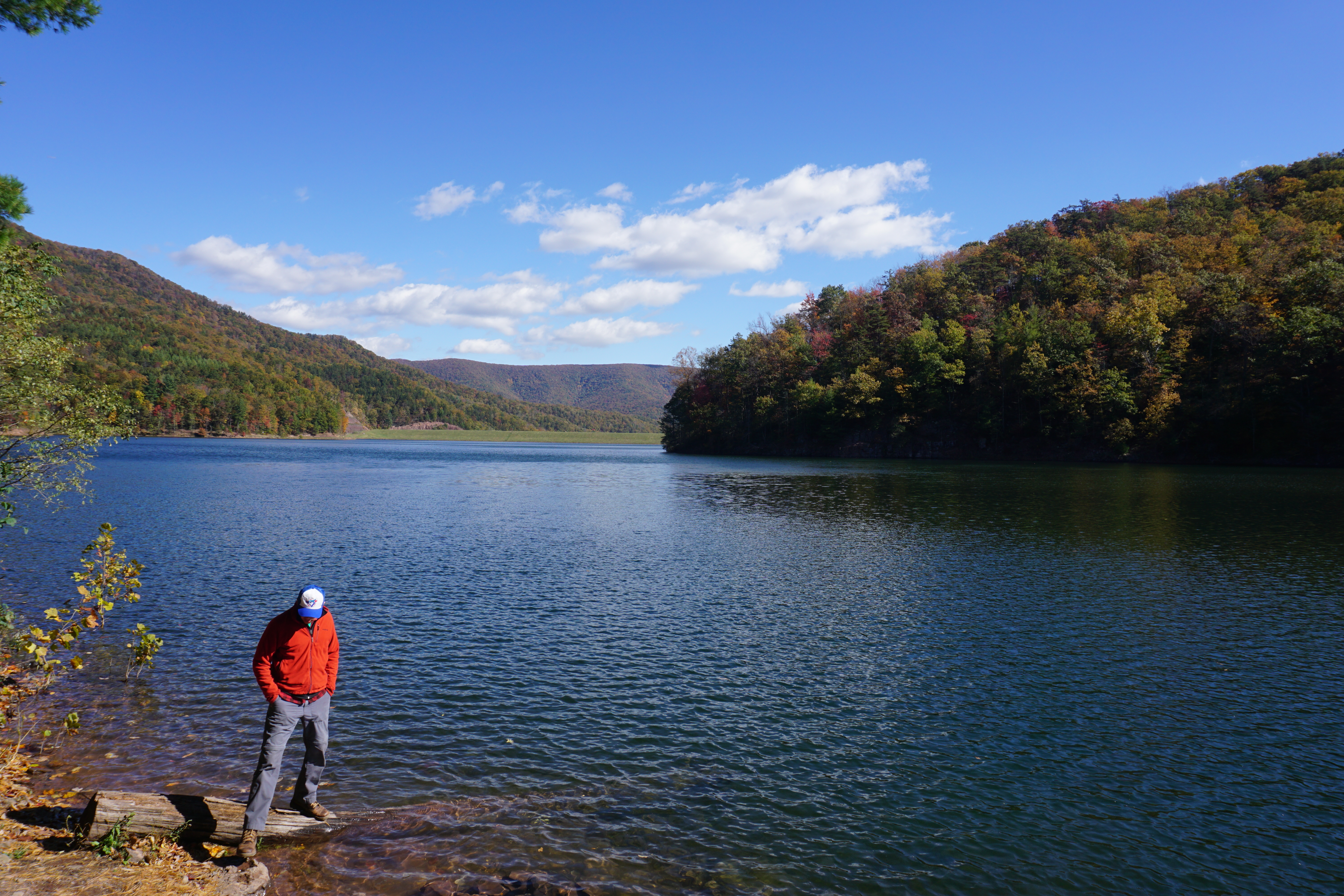
It was significantly cooler in the mountains at approx 45F. We also forgot to load our food cooler in the car….. a small detail. Nevertheless we made the most of the situation. We met some nice folks from Louisiana who gave us their stack of fire wood after exchanging camping stories and canoe trips. We made a huge fire and heated some naan on the stones. It was a windy but beautiful day with the leaves at near-peak colors and the clear lake, sparkled in the sun.

For those who plan to camp here, Switzer Dam appears to be a much more popular camping location than Lake Moomaw (located in Bath County) due to the ease of access to the campsites, most of which are drive-in camp spots. The lake is also only 30 minutes away from James Madison University, and is a popular place to hang out. The lake is stocked with brook trout and the surrounding rivers and streams in the area also have healthy populations to fish.

I have heard conflicting stories about whether camping is allowed immediately next to the lake. I think the best way to find out is to call ahead and ask which areas are permitted. There are several campsites situated in the forest, just a tad farther from the lake that appear to be safe spots to camp.

Since this is not an official camp ground, Lake Switzer doesn’t have the benefits of regular site maintenance. So it’s up to us to keep this place clean. It kills me when I find beer cans, tin foil, fishing line etc at campsites. Remember to pack out whatever you bring in!

campsite