
During the lingering cold months, I dream of sunsets like this one to get me through cabin fever. Paddling season is right around the corner. (Photo taken in La Verendrye Wilderness Area in Quebec, Canada 2016.)
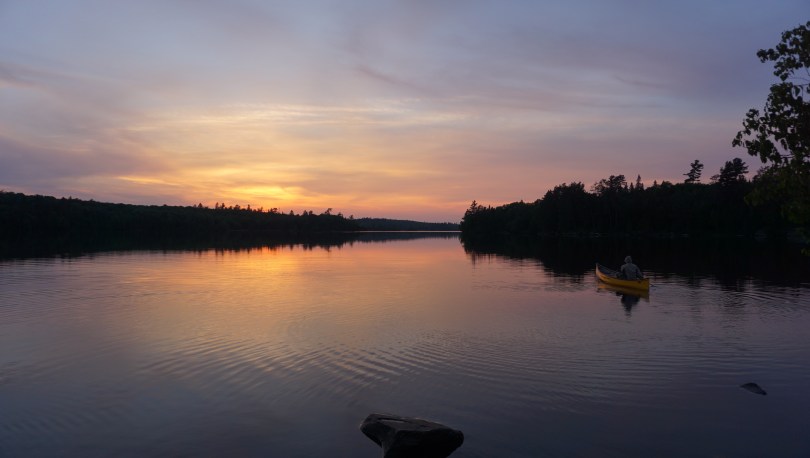
During the lingering cold months, I dream of sunsets like this one to get me through cabin fever. Paddling season is right around the corner. (Photo taken in La Verendrye Wilderness Area in Quebec, Canada 2016.)

The paine mountains of Chilean Patagonia.
If you have 26 minutes, check out this beautiful film by talented documentary film maker Goh Iromoto.
“If it is love that binds people to places in this nation of rivers and in this river of nations then one enduring expression of that simple truth, is surely the canoe.”
This film captures the human connection and bond created by Canada’s well-known craft & symbol, the canoe. Through the stories of five paddlers across the province of Ontario, Canada – a majestic background both in it’s landscape & history – the film underscores the strength of the human spirit and how the canoe can be a vessel for creating deep and meaningful connections.
Filmmaker’s Note:
I started paddling around the age of 7, and thanks to the canoe, I’ve made some lifelong friends and connections, not to mention memories and stories, that I’ll never forget.
I wanted to show how several other paddlers similar to me have created strong intimate connections alongside the canoe. It really gave me great joy to see how rich the mosaic of stories I encountered were. Whether they were young or old, or from various cultural backgrounds, individuals were taking the traditional Canadian vessel and seeking new meaning with it. For me, the diverse paddlers I met represented a Canada that has grown and evolved since its birth 150 years ago – and something that I was able to stand proud of today.
I’ve continued to paddle my whole life and plan to do so for a very long time. Seeing and hearing these stories made me appreciate and realize how important the canoe is to my life. To all the paddlers out there (and to those who want to start!), this film is for you. Keep on paddling.
Thanks Goh Iromoto for making this awesome film!

The canoe plays a pivotal role in the history of Canada. It was the vessel that allowed the voyageurs to utilize the rivers as highway systems for trade and expansion. It was the canoe that built Canada into the country it is today. In the modern era, it serves as more than just a recreational vessel, but a symbol of Canada, and our heritage. I wanted to share this trailer of an upcoming film, scheduled to be released on 2/6/2017 called “The Canoe” by Goh Iromoto, which investigates the relationship of the canoe with the Canadian people.
“This film captures the human connection and bond created by Canada’s well-known craft & symbol, the canoe. Through the stories of five paddlers across the province of Ontario, Canada – a majestic background both in it’s landscape & history – the film underscores the strength of the human spirit and how the canoe can be a vessel for creating deep and meaningful connections.”

“Guided profiles the gentle spirit of Maine wilderness guide Ray Reitze, in his element amidst the whispering pines, singing crickets and croaking frogs of the North Maine Woods. Ray shares his philosophy of how to live in harmony with the outdoors to the next generation of guides, grappling with his own mortality as he transitions from the physical world of guiding to a more spiritual understanding of nature and our ephemeral place in it.”
A cool video I came across, with some beautiful shots of the wilderness and canoe culture in Maine. Definitely looks like a place I’d like to paddle one day.

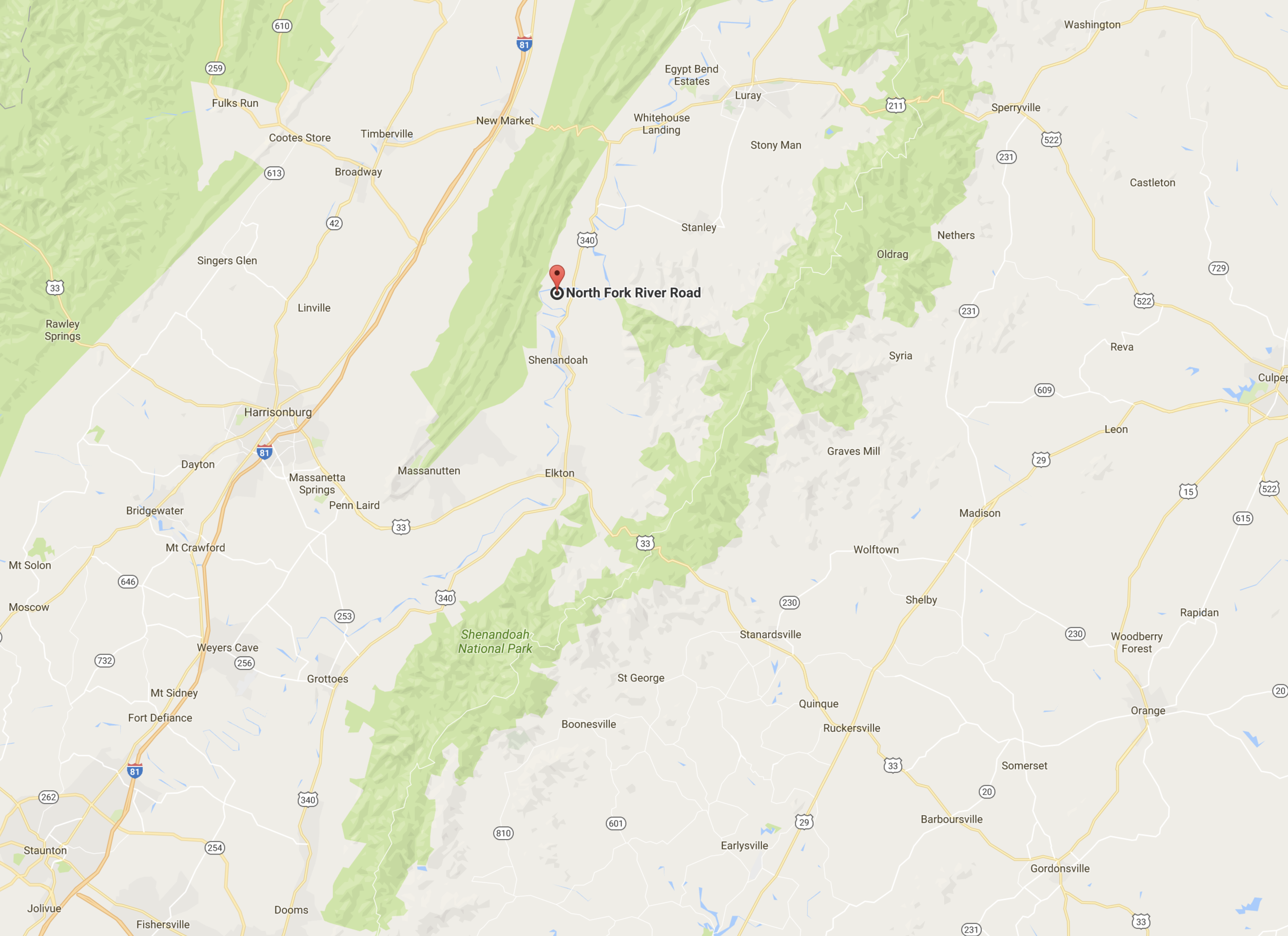
We spent Christmas in a cabin along the Shenandoah River, just west of Shenandoah National Park. The weather was warm enough to paddle, so we paired up siblings and went head to head in canoe races up and down the river. It was rare for all of us to have a holiday break together so we naturally had to make the most of this occasion. I had never been to the town of Shenandoah (population 2354 in 2013) before this outing. And as we drove through this sleepy town, it was hard for me to imagine that this place served a key role during the civil war. There were three iron ore furnaces around this town which smelted raw iron into pig iron. Apparently in the days before the war, this pig iron was shipped down the Shenandoah River to Harpers Ferry in West Virginia. During war time, these goods were transported by wagon to Gordonsville, VA and then subsequently by rail to Richmond where it could have been used at the Tredegar Iron Works. Both of these Virginia mountain towns now are peaceful and quiet as can be. I was especially impressed by Gordonsville’s display of Christmas Lights. It was certainly a welcoming sight while driving through the winding, dark and foggy roads of the mountains.


I just realized that I have not been able to produce any new videos of canoe trips this year. I have several projects in the works right now but they have yet to be polished. I’ve been very happy overall with the performance of the Sony a6000 both as a still and video camera. Lately I’ve been experimenting with different lenses and shutter speeds in videography and have been able to catch some pretty decent footage. For our trip in Quebec, I also brought along an external audio recording device to see how the audio quality would compare to the native mic. Here is a demo reel of random shots I was able to capture in 2016.
2016 Demo Reel: by John Le
As the holidays come to a close and a new year around the corner, I look back at how much time I was able to spend with family and friends and the total number of nights I camped outdoors. While it was a good year for paddling and hiking, the total number of nights I spent outdoors, totaled just five. Four of those nights were in the La Verendrye Wilderness Reserve of Quebec, Canada and the other night was spent camping in St. Mary’s Wilderness. I’ve made up my mind….in 2017, I’m going for double digits. Happy New Years to all!


Maple Leaves in Forest Hill Park.
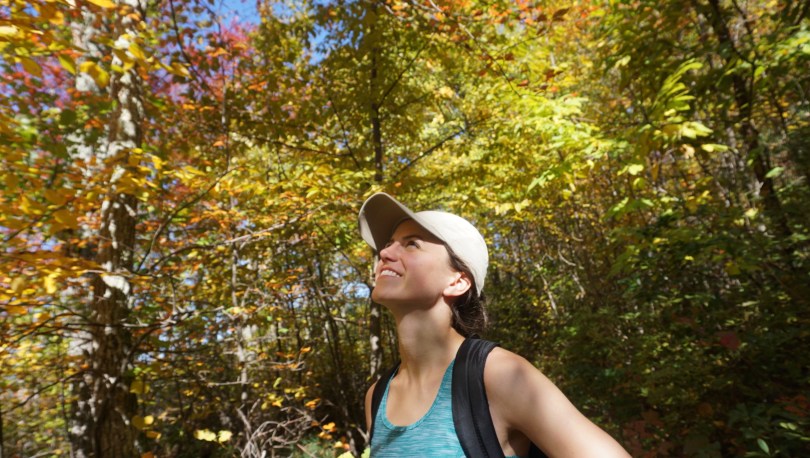

Fall is the busiest time along Skyline Drive and the Blue Ridge Parkway in Virginia, and it’s easy to see why. The crisp mountain air and the gorgeous colors have us strapping on our hiking boots as much as possible. This last impromptu hike was actually suggested by our friends. They are preparing for a trek through Patagonia and wanted to get some good hikes in to build endurance. They suggested a trail I had never been on, the Rip Rap Trail Loop in Shenandoah National Park. A strenuous 9.8 mile that starts at Wildcat Ridge, then meets up with the Rip Rap Trail to finish the loop. We entered the park through the familiar Rockfish Gap Entrance and parked in the Wildcat Ridge Parking Area.

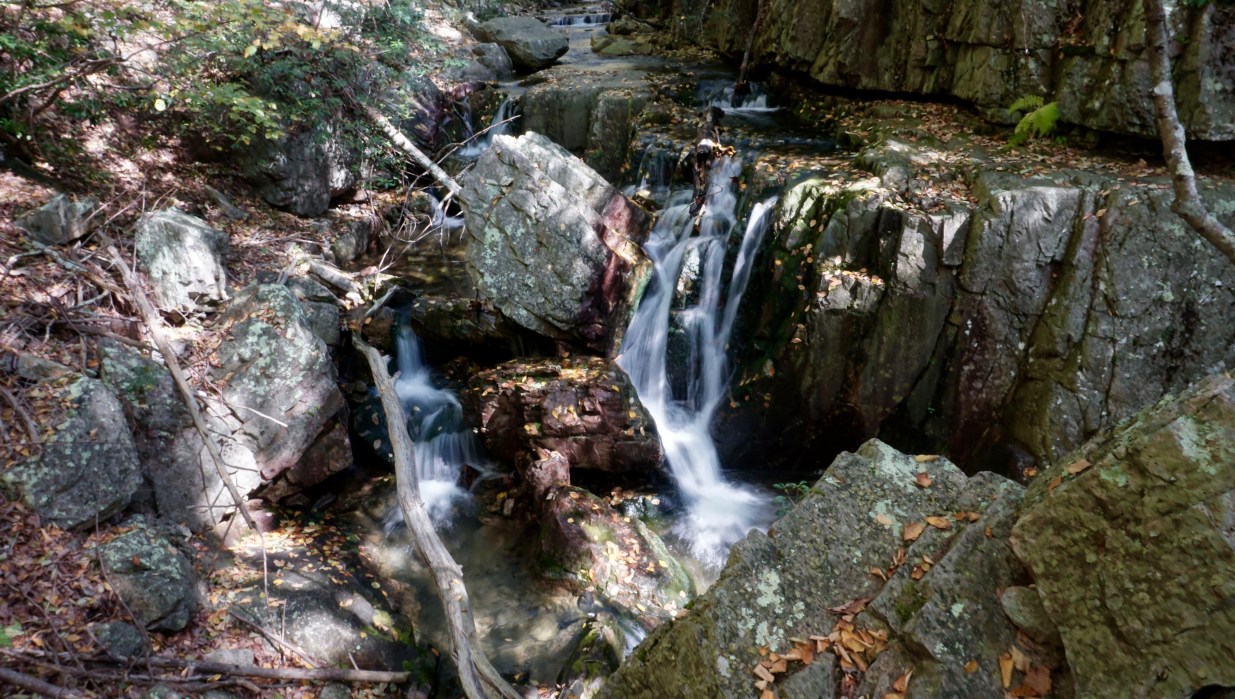
The initial trail is a moderate descent down into the valley where we traveled along side the mountain stream known as Meadow Run. We crossed the streams several times and before beginning our ascent up to Chimney Rock. I would say that the first half of this hike is much prettier than the second half. I am partial however to hiking along the gentle streams as they meander through the valley. This hike is known for it’s beautiful watering hole at the bottom of the valley where two streams merge into one 50ft long watering hole. I’ll try to come back one day in the summer to camp and swim at this location. Peak fall colors seemed to arrive later than ever this year, attributable to the much warmer temperatures we have seen over the past years.

I often worry about how climate change will impact the fragile environment around us. This would mean hotter summers, longer mosquito seasons, a harsher environment for the brook trout that thrive in cold mountain streams. In Canada the effects can already be seen with ticks on the rise, as they are able to establish more stable populations in the increasingly warmer climates.
For those that have not seen it, Leonardo DiCaprio released his documentary “Before the Flood” last week. It highlights climate change and the barriers we face as a planet in addressing this pressing matter. I highly recommend this film to everyone. I thank DiCaprio for his efforts in raising awareness about global warming, an issue that affects us all.
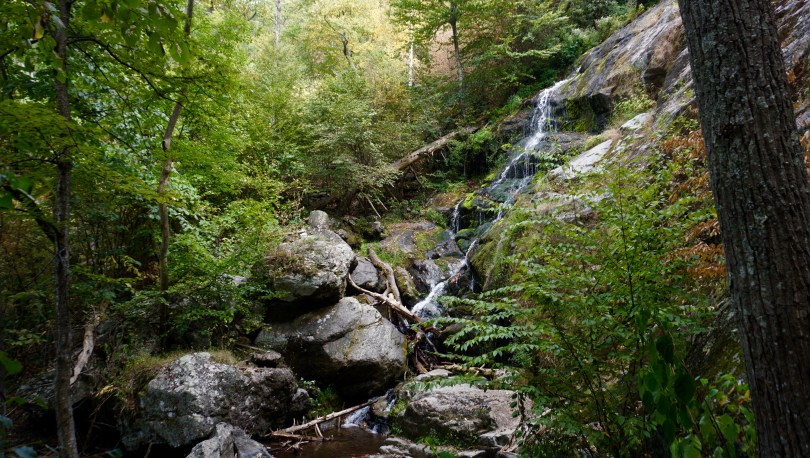
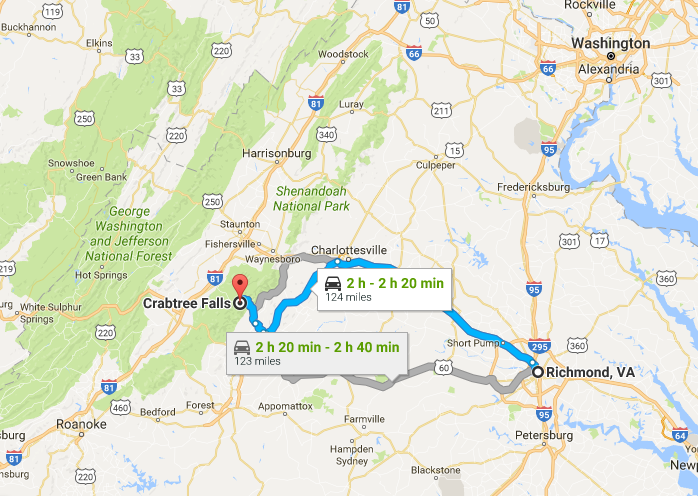
The changing of the seasons is always a special time in Virginia. Although the summers can be uncomfortably hot and humid, I’m always sad to see it go. Before the official end of summer, we traveled out to the Blue Ridge Mountains in George Washington National Forest to hike Spy Rock, near Montebello along Route VA 56 West. The hike is of moderate difficulty at 3.2 miles and we paired it with a quick run up Crabtree Falls, the tallest waterfall in Virginia.


In the mountains, the climate was noticeably different; it was at least 10 degrees cooler and the earliest hints of yellow and orange leaves signified that fall was already here. The trails at both hikes were packed filled with people as we expected on a pretty Saturday. We parked at the Montebello Trout Hatchery because the main parking lot was already full. This gave us a nice opportunity to examine the rainbows, browns and brook trouts that were being raised. While only the brook trout is native to Virginia, the browns and rainbows are a popular trout species to raise since they grow to massive sizes and promote a healthy fly fishing culture in the Virginia mountains.

The hike up Spy Rock took us along a rocky road for the initial segment until it intersected with the Appalachian Trail to take us to the top of Spy Rock. The view atop is impressive, allowing a full 360 degree view of central Virginia. We ate a quick lunch and made our descent and back into the car along VA 56 to Crabtree Falls. We then ascended the first mile up Crab Tree Falls to view the lower falls. The water was slow flowing at the end of summer but still a magical sight. On the way home we visited the Albermarle Ciderworks for a cool drink and dinner in downtown Charlottesville. I am sad to see summer go but excited for all the things fall has to offer: camping, changing colors, harvests and of course the start of the holiday season. Cheers to Summer 2016.


 WAY NORTH