The Return to Lake Moomaw

On June 13, 2015, the temperature in Richmond was 92 degrees F. We needed a place to escape the heat. This was our chance to make the return to Lake Moomaw out in the mountains of Virginia, where it was 15 degrees cooler with lows in the 60s at night. Brian worked the night previously so we left late that Saturday afternoon. For this trip, I rented an Old Town Discovery canoe 15’8″ from Riverside Outfitters in Richmond. We typically get our canoes from the VCU Outdoor Adventure center however all of theirs were taken. This trip pretty much convinced us that we need our own canoe to avoid the hassle of rental and returns.

 After a quick lunch at the Galley, we hit the road. The drive into the mountains was peaceful. We were hit with intermittent mountain rain showers as the clouds came and left.  We could already feel the cooler air as we approached the boundaries of the national forest. We passed through gorgeous passes with streams that looked perfect for Tenkara.
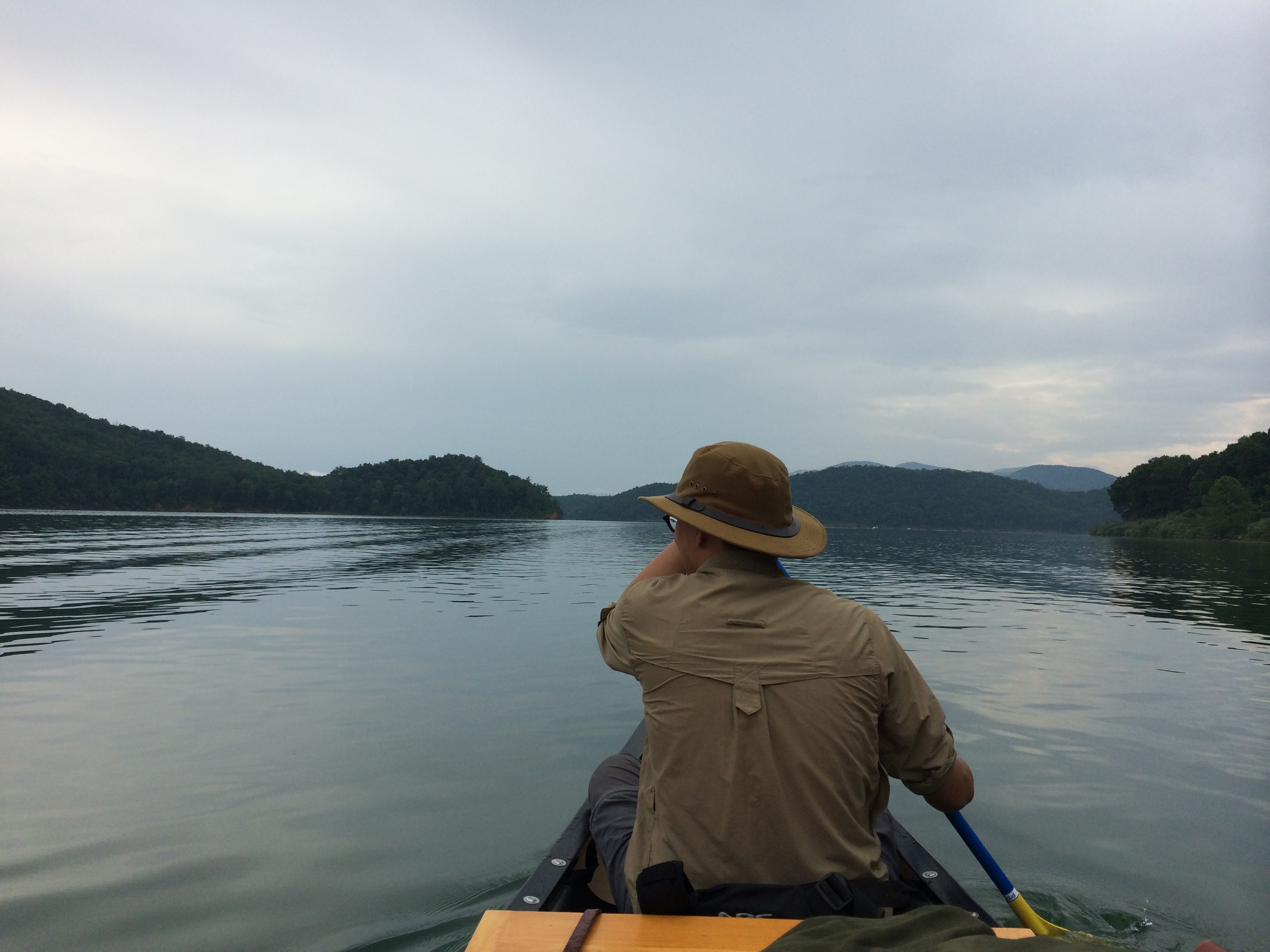
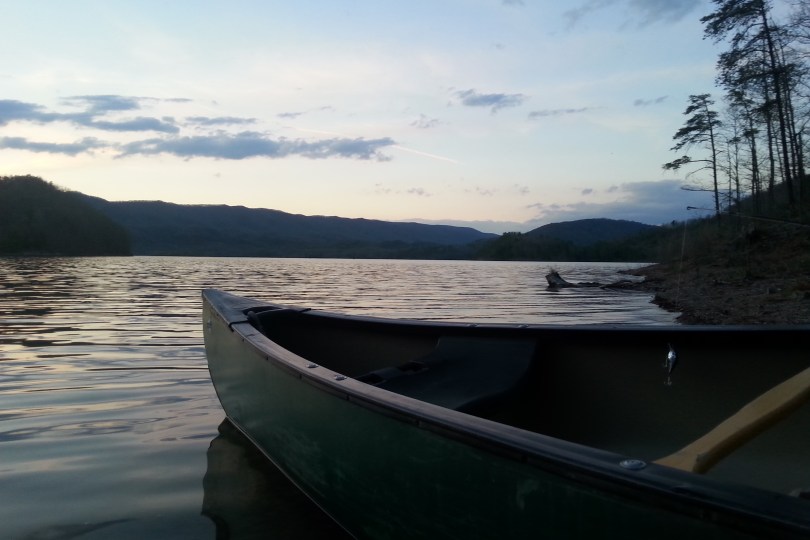
IMG_1288There’s always an upside to rainfall, for we were treated to an awesome display of misty mountains as we paddled to the campsite. The sun was making it’s way through the clouds and the sky was clearing before sunset. We spotted deer as they approached the lakeside to drink the cool water. I had forgotten how beautiful the lake was.

One of the advantages to paddling in Virginia is the lack of mosquitoes. NO horseflies/deerflies either! Sitting comfortably out in the open without a bug shelter in June is something we did not take for granted. We parked the canoe and enjoyed  some Woodford whiskey by the lake.

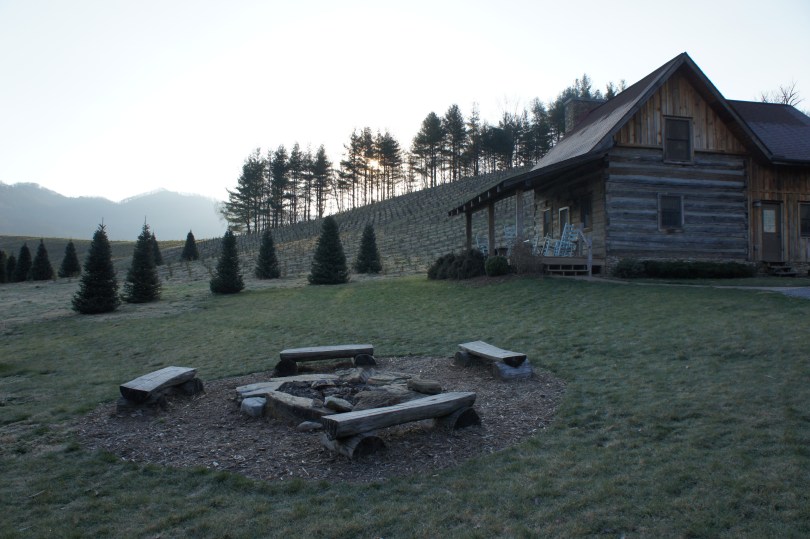
The water was especially clear that day. We saw numerous motor boats, but no other canoeists. It seems like Lake Moomaw is used mostly as a fishing and motorboating spot for the locals. All of the canoes that were available for rent were still on the racks at the marina. None of the back country campsites were occupied so we had our pick. Pretty amazing for just a $5 parking fee. We camped at a new site this time which was very clean and secluded.

DSC_0047
The Trangia alcohol stove, produced in Sweden it was designed primarily for backpackers. I found it works well with the Emberlit stove.

The following night was a perfect opportunity for me to try out my new Trangia alcohol stove. I must say this little stove is perfect for canoe trips. There certainly is beauty in simplicity. It is built like a tank and has no moving parts to break. All you have to do is fill it with fuel (alcohol of any type) and set a spark to it. I find it makes the perfect companion to the Emberlit stove, a stick stove that I’ve used for a couple of years now. The alcohol stove burns cleanly with no soot to clean from your pots and pans. Win. With the simmer plate, we were able to grill spicy sausages to perfection.

I also had a chance to play with camera settings on the DSLR to try and capture the thousands of stars. I think it turned out pretty well for the first attempt. It was difficult without a tripod but this trip opened my eyes to the world of night landscape photography.

DSC_0073
Lake Moomaw star show

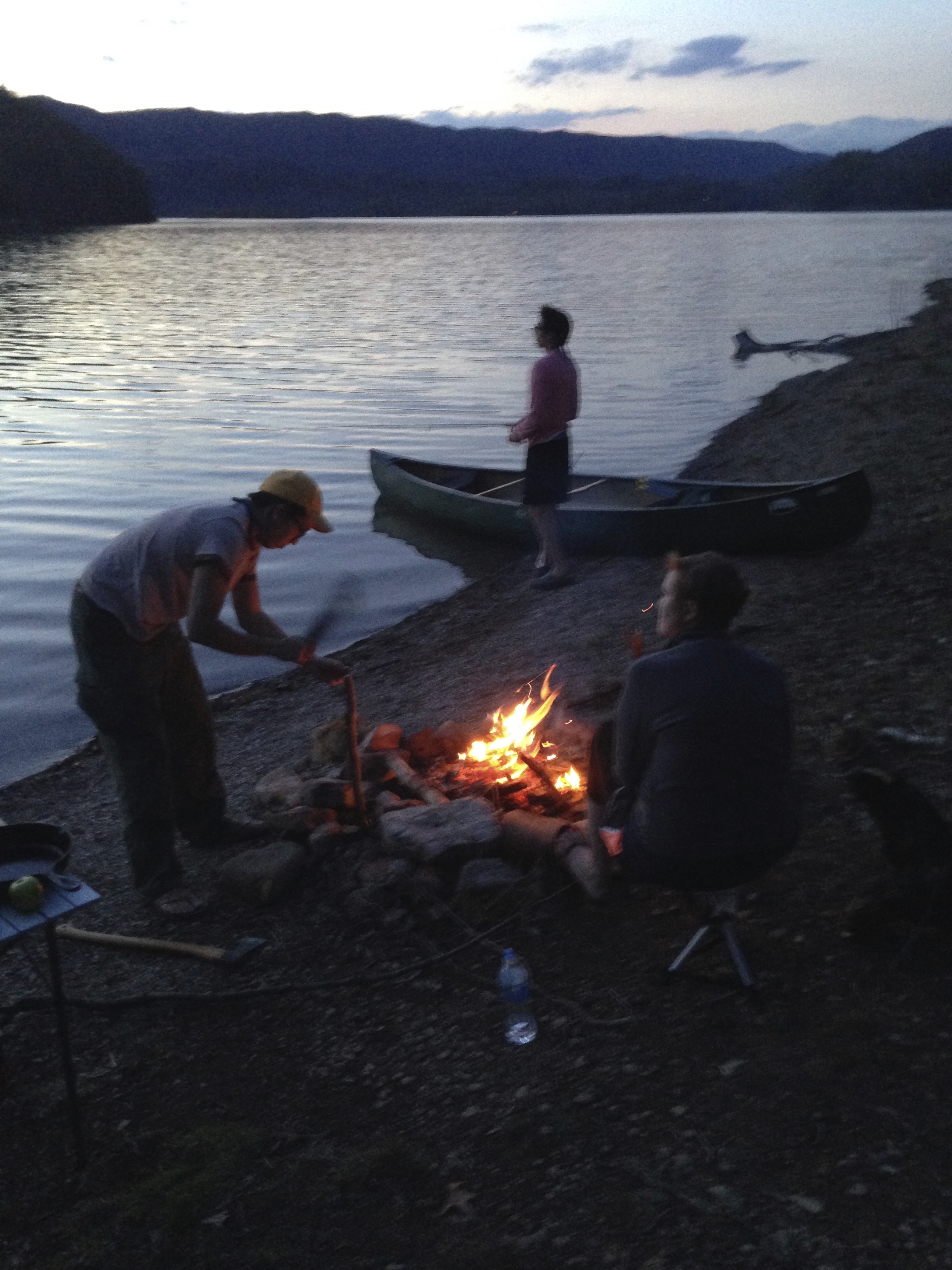
We took the canoe out for a midnight paddle on the lake under the blanket of countless stars. It reminded me of paddling Big Trout Lake in Algonquin park at 3:00am in September 2014. With the assistance of a small amount of hand sanitizer (awesome trick) to catch a flame to the soaking wood, we were able to get a rip roaring camp fire going.

We woke the next morning and prepared some breakfast once again with the Trangia. A simple meal of scrambled eggs, brie cheese, salami, toasted bread and yogurt with blueberries and raspberries. One of the perks of lakeside camping is packing a cooler. With no portages to haul heavy gear, we could bring what we wanted. The cooler is a definitely a luxury item on canoe trips.

Overall, the return to Lake Moomaw was a very relaxing trip. No heavy portages, no rushing and no real destination. Despite the spectular views, I do not suspect that we will be back any time soon. There are numerous waterways in Virginia that I have yet to paddle and I have compiled a list of rivers and lakes that I want to explore including the Cowpasture River (claimed to be one of the most pristine rivers in Virginia). I also picked up a copy of “Virginia Whitewater” by H. Roger Corbett off of ebay. Apparently it is a must for canoeists in Virginia.

We learned a great deal on this trip and left Lake Moomaw that evening with one revelation…..we must now buy a canoe. Leading choices at this point: Nova craft prospector 16 foot in royalex or the Old Town Camper 16 foot in royalex. Both beauties.
Dolly Sods North – Mongahela National Forest, West Virginia

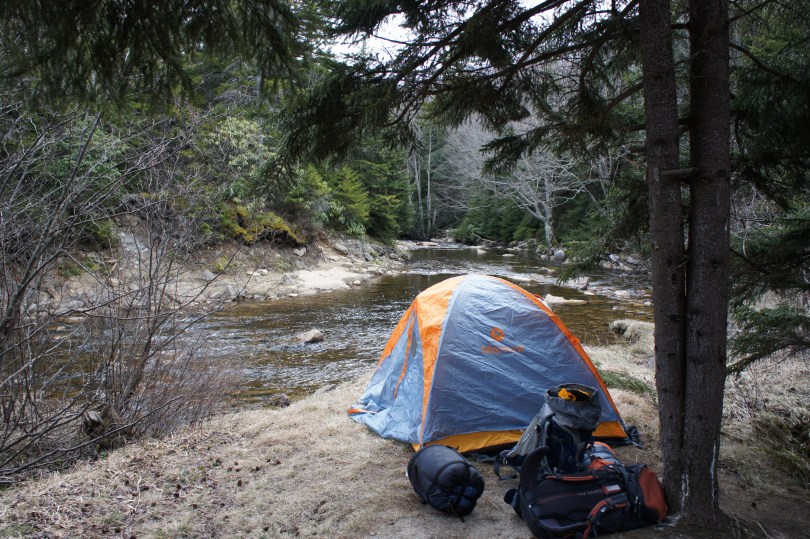
In the Allegheny Mountains of West Virginia, lies the Monongahela National Forest. The Dolly Sods (open mountain top meadow) Wilderness occupies a small portion of this area. It is one of the highest points in West Virginia and as a result the vistas are unlike any other on the East Coast. The rocky landscape, spruce forests, and sphagnum bogs is a scene normally found in Canada. Needless to say, when I heard about this place, I knew I had to experience it. I finally got the opportunity on March 22, 2015. I set aside the first three days of my vacation to explore Dolly Sods. I went with Min, an old college friend and the one who actually introduced me to the Old Rag Mountain hike in Virginia. I have been on numerous camping trips in all forms: drive in sites, canoe portages and off-road but never a backpacking camping trip where I would have to carry everything in. I knew that this one was also particularly going to be challenging with temperatures in the 19-22F range requiring bulkier clothing and heavier packs. We averaged just over 45lbs per pack.

The forecast predicted three days of clear skies however we took this with a grain of salt; the mountains were prone to abrupt changes. We started our trek that Sunday morning on the Bear Rock Trail. Walking away from our car and into the howling wind, we knew we were in for a tough trek. We were the only ones in the whole area, not another human in sight, and no other cars parked. Our progress was slow as we marched through boggy meadows and icy rocks. The spruce forests were like little oases, a place where clear streams ran and the cold wind broke. We met our first stream and took a short break to appreciate the pristine camp site.

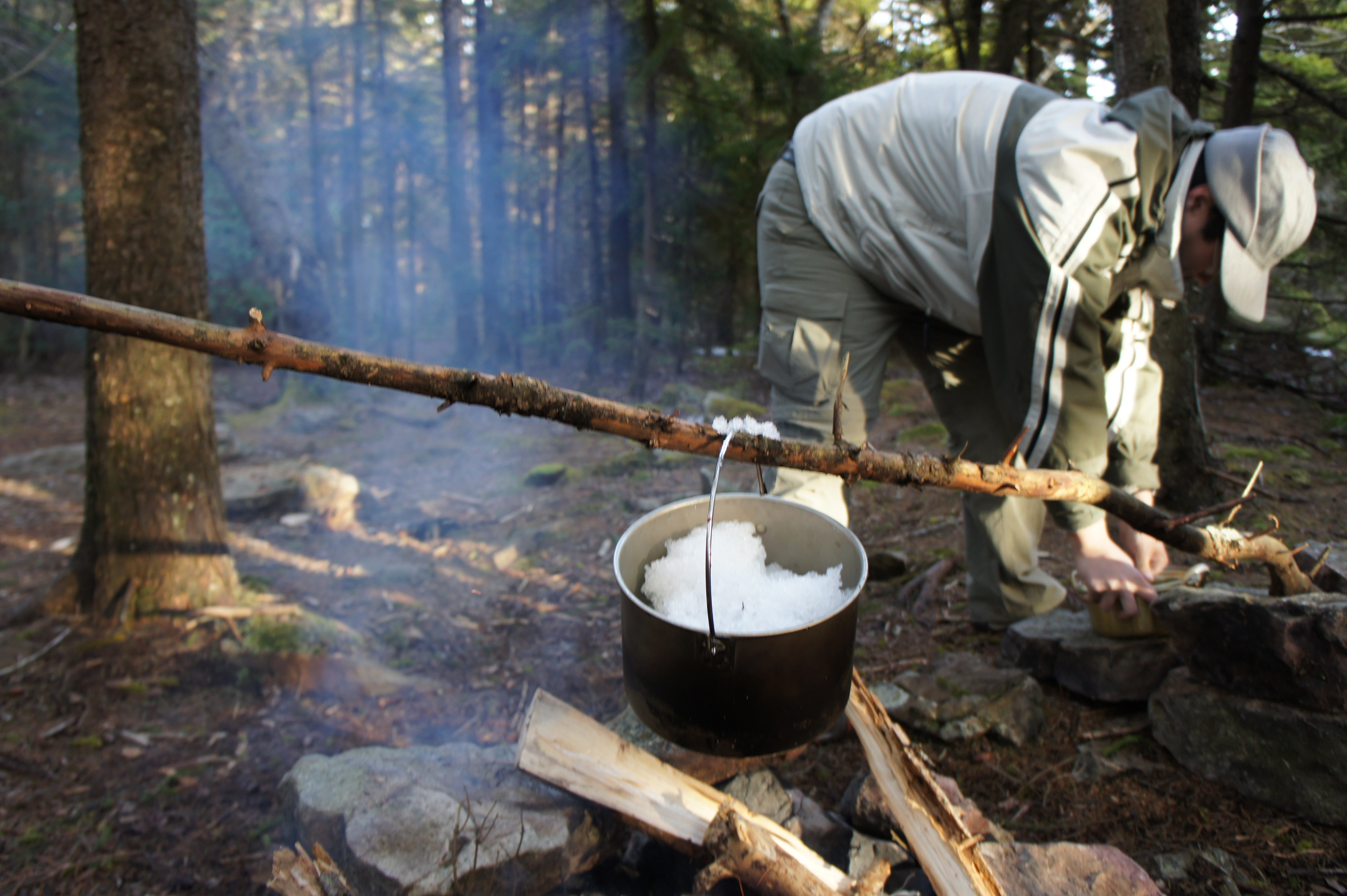
We knew it was too early to set up camp, so we pushed on through the meadows and bogs. By 4:00pm, we decided it was time to start setting up camp in one of the spruce forests. The creek in these forests had unfortunately frozen over and we were too far away from the next flowing water source to make it in time before nightfall. We decided to set up camp and melt the snow and filter out the sediment as our water source. This was made possible with an axe and folding bucksaw. In such a dense forest, these tools went hand and hand, allowing us to process the numerous downed spruce trees. It appeared that wind and the elements caused several to snap at the base, we quickly limbed the trees and got a large fire going to warm our wet socks and prepare dinner. To clarify, we DID NOT chop any down. This is a pristine wilderness area and we hope that everyone who visits pays the same respect to the Dolly Sods.

SONY DSC
With all of the streams frozen in the forest, we melted our snow and filtered out the sediment to get clean drinking water.

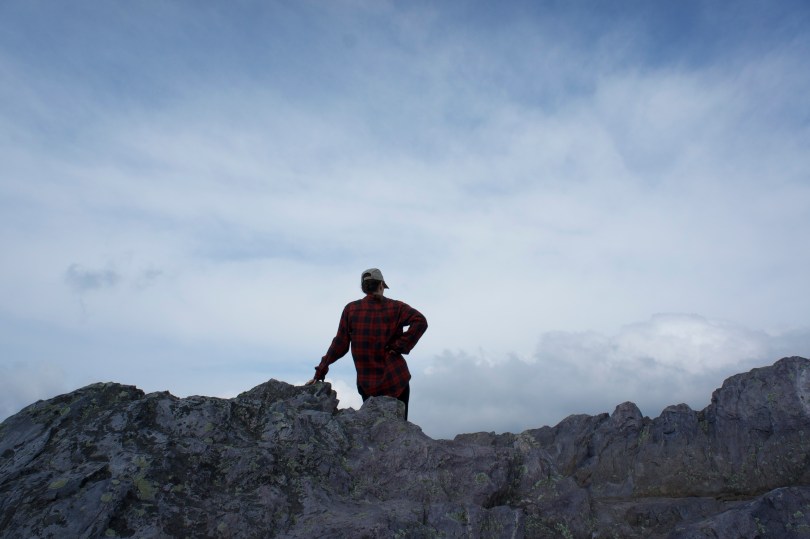
We woke up early the next morning to make up for lost ground the previous day. We found that in some parts, the trail was surprisingly difficult to find. The presence of rock cairns made the job easier left by previous hikers. We traveled across beautiful vistas and proceeded through a rock scramble where we rested our backs.

SONY DSC
Sheets of ice layered over the clear springs

It was a good thing we decided to camp where we had the previous night because the next water source was miles away. We navigated our way up a creek with fresh flowing clear spring water. It was certainly a welcome sight.

One of the highlights of the trip was crossing Stone Coal Run, the largest body we encountered since crossing Red Creek at the beginnning of our journey. We took a break and drank as much as we could and filled up our water bottles. As a method of filtration, I prefer my Platypus. The bag holds 2L and is able to filter all of it within minutes. It has served us well in the past and is particularly useful at a campsite with abundance of water. We filtered about 60L while in Algonquin Park without any issues.

Around this area, were some prime camping spots, all unused. We pushed on to head towards the red creek crossing. It was here where we decided to camp for the night. Completely secluded with tons of fallen spruce trees to process. We washed up and set up our camp.

SONY DSC
While the forest axe was certainly heavy with a 2lb head, Min was determined to bring it. I’m glad because it allowed us to split wood and have a fire hot enough to bake bannock. No trees were felled during this trip.

At this point, we were both pretty much spent. We decided it was time to go to town on our food. We cooked and ate several meals, including: curry and rice, Min’s korean noodles, bannock, and a lot of snacks. We were grateful for the running stream to provide us with ample drinking and cooking water. It was truly an oasis.

Learning from our previous cold night, we took no risks and layered on all clothing before climbing into our sleeping bags. We slept straight through the night without any disturbances. The next morning however, we awoke to 2 inches of snow.

SONY DSC
We woke to 2 inches of powdery snow

Our next leg involved crossing the stream and continuing on home. This was surprisingly difficult with the snow covering most of the trail in the dense forest. There were several occasions when we had to set down our packs and scout in different directions until one of us found the trail. At the sight of the main road, we breathed a sigh of relief, our feet were wet, cold and sore and our backs ached. On the walk down the main road, we ran into the only person we saw during this entire trip. He was a young guy who carried very little gear. To our surprise he told us that he was hiking across the country. He had made his way through Delaware and DC already. He decided to take 9 months off and make a solo trip on foot. Forest Gump style I guess.

At the arrival of the Bear Rock Trail sign, we knew we made it. The trip was a hard one and our bodies were pretty much done. The views and scenery were  simply amazing. I must give credit to the people of West Virginia and the forest rangers, this was one of the best kept wilderness areas I have ever been to. The camp sites were immaculate and I did not see signs of garbage or debris anywhere, this made the experience so much better. Overall, our trip to the Dolly Sods was everything I hoped it would be and much more. I’ve read about the area and seen photos and videos of the Dolly Sods but nothing compares to seeing it with your own eyes. I would go back in a heart beat, preferably when it gets a little warmer.

Grayson Highlands – Mouth of Wilson, Virginia

Jefferson National Forest lies in the Southwest corner of Virginia and home to the Grayson Highlands State Park and Mount Rogers Recreational Area. It is also home to the highest mountain in Virginia. It is one of the five locations in the United States where you can find the spruce-fir forests. One of the few remaining habitats of the Fraser Fir, found only at high elevations (above 5000 ft).

Dan River – Eden, North Carolina

In May of 2014, we stumbled upon the beautiful Dan River of North Carolina. We landed on the river by pure happenstance….sort of. We originally planned to return to Lake Moomaw however on the morning of our departure, we learned that they did not provide overnight canoe rentals. We then scrambled to find outfitters in the Richmond area. That’s when we came across Three River Outfitters in Eden, North Carolina. Apparently traffic on the river had been very slow due to a recent coal spill in the month earlier. The Eden community was working to restore the area and attract paddlers once again. We were the only ones on the river and it was fantastic. One of the most unique parts about the Dan River was a lone island of clean, beachy sand where we set up camp. As we cooked dinner with our toes in the sand the stars shining above us, we couldn’t help but think that our poor trip preparation once again paid off.

See a video of our trip here

Lake Moomaw – George Washington National Forest, Virginia

IMG_7303Nestled deep in the George Washington National Forest, Lake Moomaw is a gem very few paddlers know about. The lake is formed by the Gathright Dam on the Jackson River. With many areas of the lake reaching depths of over 100ft, it provides a cooler habitat for trout to thrive….an angler’s paradise. On a rainy friday, we made our way to the VCU Outdoor Adventure Program on the Monroe Park Campus. Canoes can be rented on Friday and kept over the weekend for only $20. We picked up two of them and set out on a Saturday morning in April of 2014 to paddle the turquoise waters.  It was a particularly windy day and we battled the current. The scenery was not one we expected in Virginia, it was actually more similar to the northern states and Canada. Simply a beautiful place. We will definitely be returning.


Eagle Rock – Buchanan, Virginia

In June of 2013, my brothers and I set out to canoe camp along the James River. We launched from the beginning of the river near Buchanan, Virginia and camped for just one night. There was plenty of wildlife to be seen including herons, turtles and deer. This section of the river is known for its excellent bass fishing. In typical Le brother fashion, we arrived at noon and without our DSLRs. Nevertheless, an awesome time.

See a video of our trip here.