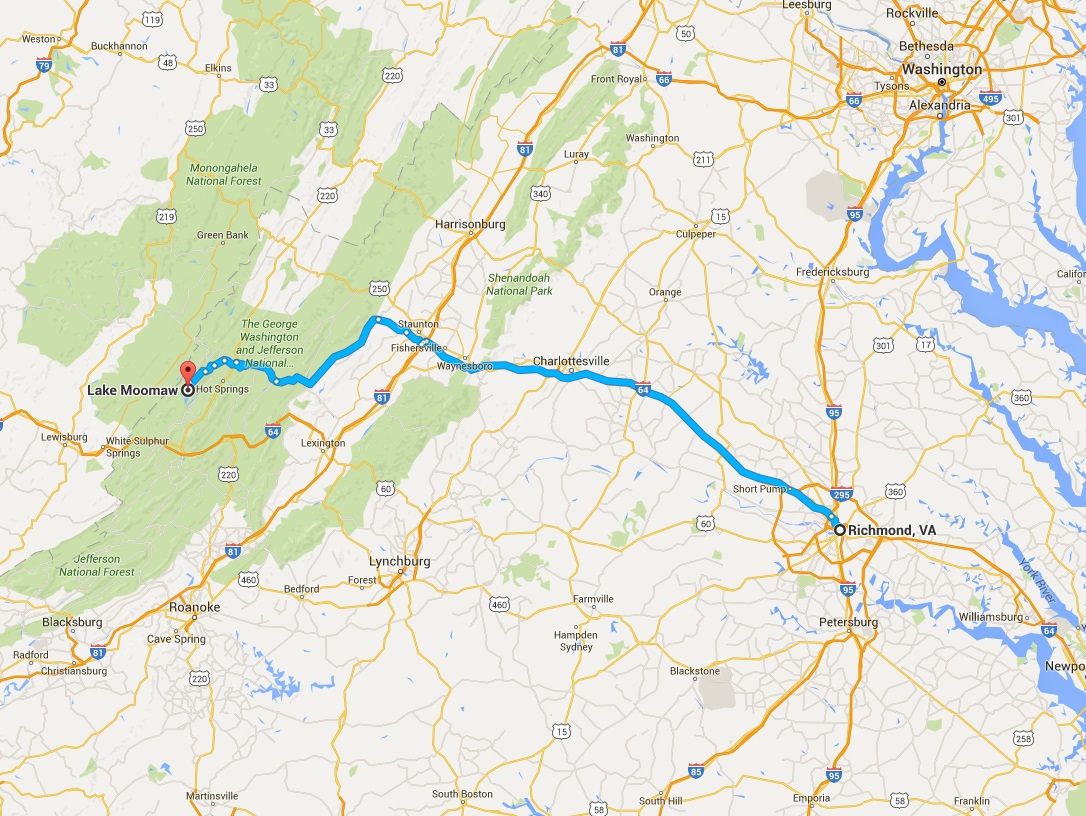
A solid 3.5 hour drive from Richmond, Lake Moomaw is high in the mountains near the West Virginia border.
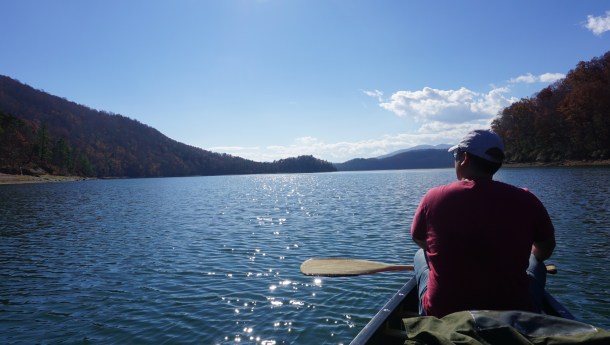
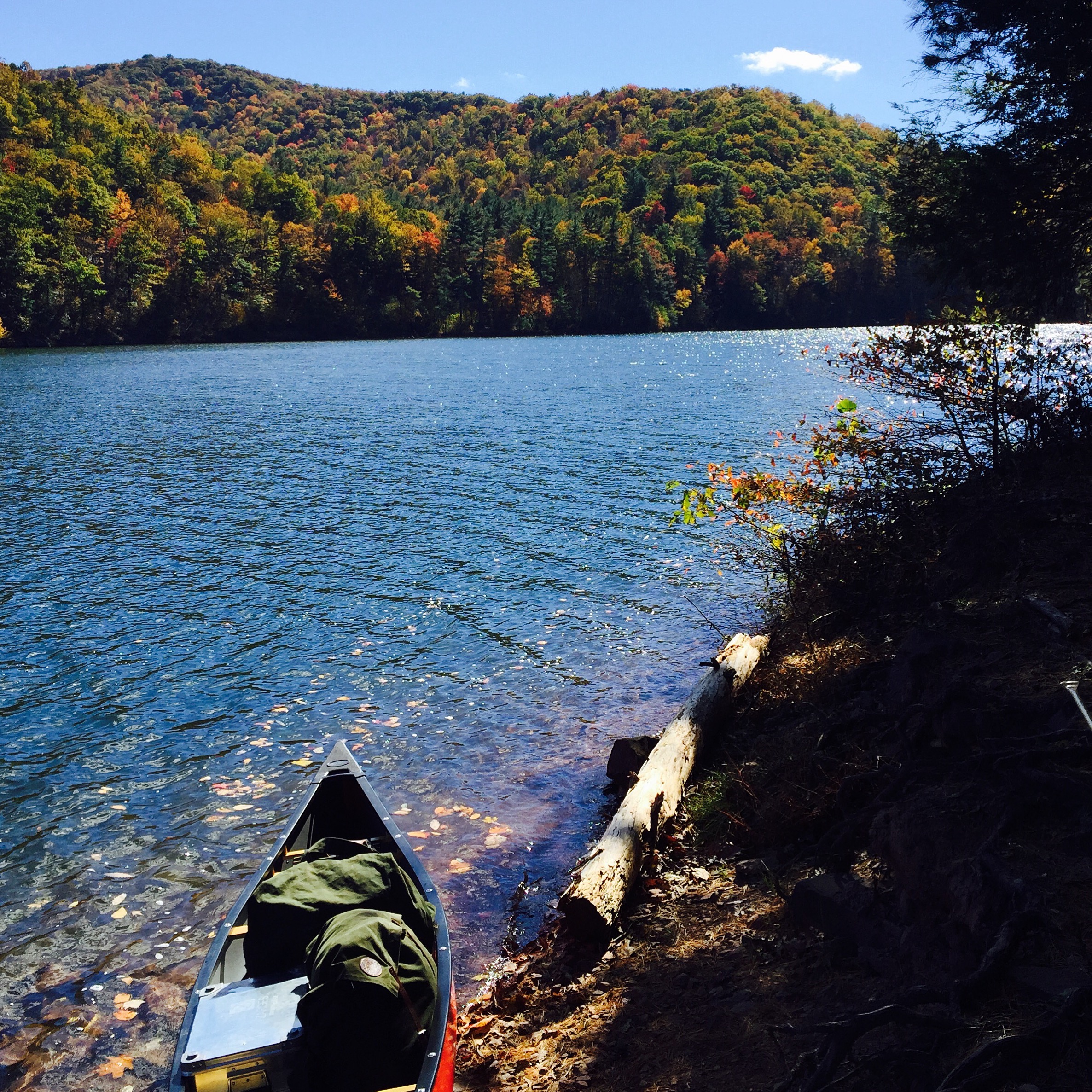
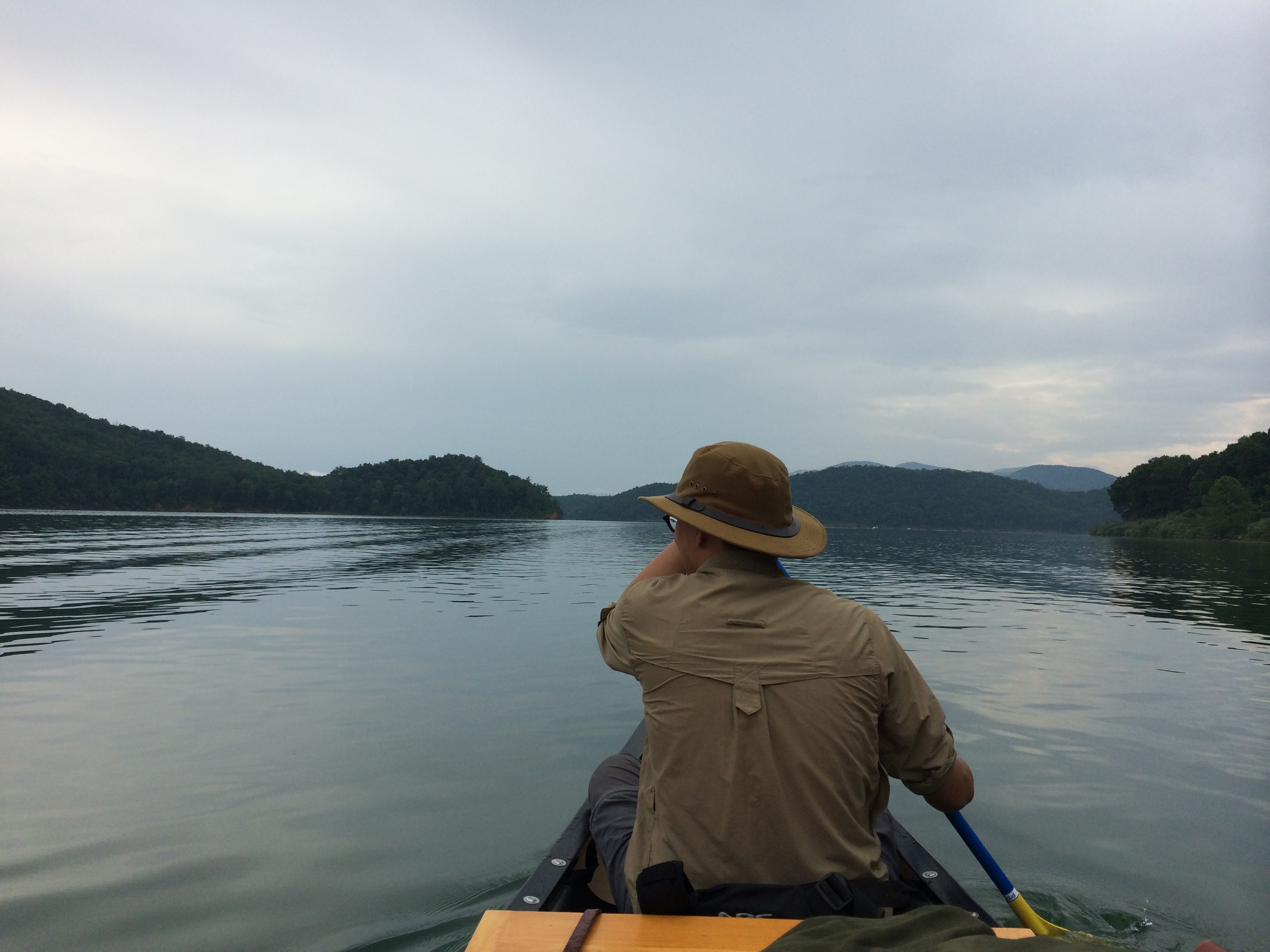
The leaves drifting from the trees in the Virginia mountains, signal the end to another canoe camping season. Min and I decided to go for one final run. It was unusually warm at Lake Moomaw up in the George Washington National Forest with temperatures in the 70s F during the day. It was a quiet couple of days with very little activity on the lake, and as usual we were the only paddlers on the lake. We had our pick of many campsites and enjoyed the peace and quiet. The only the sounds were from of shedding foliage, owls and birds of all types.
Start of the paddle out to our campsite
Wetterlings Hunter’s Axe
Japanese Single Malt
Sunset
After setting up camp, we set out to gather firewood. One of the things I like most about Virginia camping is the abundance of firewood in these deciduous forests. There were countless fallen frees in the area that were nice and dry. The area also appears to be lightly camped and as such we did not have to look far to find what we needed. The Wetterlings Hunter’s axe with it’s wider wedge, made for light work of splitting in combination with my Ray Bears bucksaw. It was also a great opportunity to put my Finnish blade the “Enzo trapper” to use. It is a full tang work horse and can easily baton through wood to make kindling and is sharp enough to produce fine feathersticks.
Gathering firewood
We enjoyed some Japanese whiskey and took in the autumn beauty, Min even had some luck fishing off the coast. Of all the wildlife we heard, I was most surprised to hear the distinct cry of a couple of loons. Initially I thought my ears had deceived me – I didn’t think loons were this far south? However upon further research, it appears that many of them migrate south during this time of the year along the east coast and through Virginia.
foliage
mirror
Scandi grind
Min and his trophy
campsite
stars
Min was nice enough to prepare all of the meals for the trip. We ate some delicious chicken breasts with rice and beans for dinner. Min actually pre-cooked the chicken so all we had to do was heat it with the rice in the cooking pot. There’s nothing quite like a warm meal on a chilly night by the campfire. We ate under the stars with breathtaking visibility. The photos I took on this trip are from a sony a6000 that I’m still learning to use. In the morning for breakfast, we had egg white omelettes with green peppers and onions. Cooking with the Trangia alcohol stove is incredibly easy and has reduced preparation time drastically.
heating the embers
reflector oven in action
The stove weighs practically nothing and the fuel burns efficiently. We used to cook by campfire however soon learned that cleaning the soot off pots and pans took way too much time, not to mention the constant tending to the fire to assure a steady heat. The Svante Freden reflector oven from Sweden is also a must on canoe camping trips. It has been a trusty companion and we used it to to prepare some hot cornbread using a recipe courtesy of Ralph in Ottawa, Canada (much appreciated!).
cornbread
bacon, eggwhites, green peppers and onions
sunrise
tent
To me, Lake Moomaw holds the title of a true Virginia gem. While there are several campsites in Virginia with lakes, only here can you get the backcountry experience of paddling to your site and setting up camp, far away from others. I can now say that I’ve camped here in 3 of the 4 seasons, spring, summer and now fall. Fall just might be my favorite. Great way to end the season.
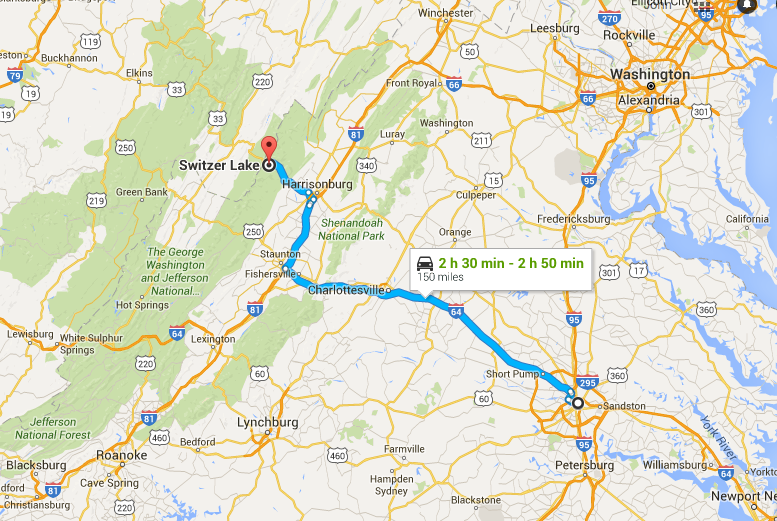
A closer drive than Lake Moomaw, but less secluded
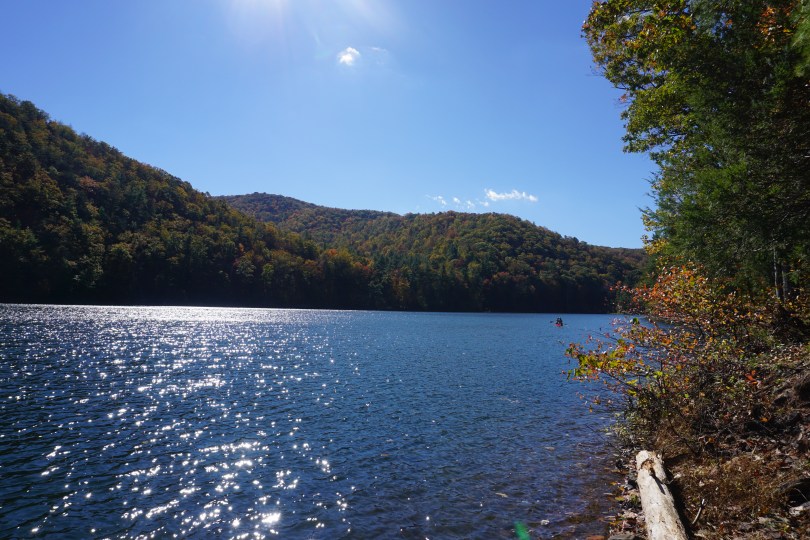
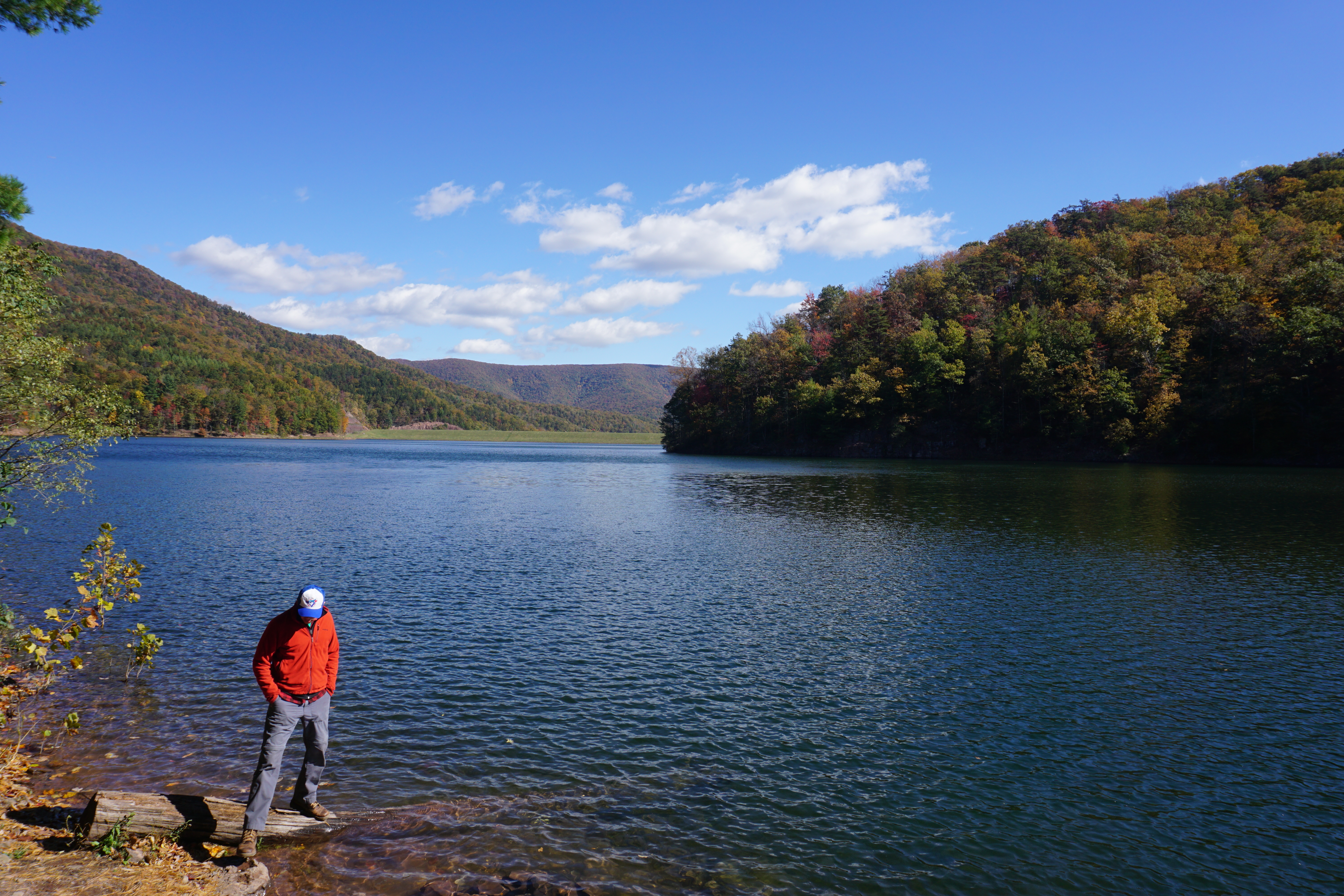
On the border of Virginia and West Virginia, at 2362 ft above sea level, lies the beautiful, Switzer Lake (aka Skidmore Dam, Skidmore Lake). The 118 acre lake serves as a water supply reservoir to the town of Harrisonburg, Virginia and watershed for the George Washington National Forest. When I heard that the lake did not allow gas motorboats, I wanted to go to check it out. We had actually planned for an overnighter but decided against it when the temperatures dropped.
It was significantly cooler in the mountains at approx 45F. We also forgot to load our food cooler in the car….. a small detail. Nevertheless we made the most of the situation. We met some nice folks from Louisiana who gave us their stack of fire wood after exchanging camping stories and canoe trips. We made a huge fire and heated some naan on the stones. It was a windy but beautiful day with the leaves at near-peak colors and the clear lake, sparkled in the sun.
battling headwinds
maple
paddling solo
fall
clear waters
For those who plan to camp here, Switzer Dam appears to be a much more popular camping location than Lake Moomaw (located in Bath County) due to the ease of access to the campsites, most of which are drive-in camp spots. The lake is also only 30 minutes away from James Madison University, and is a popular place to hang out. The lake is stocked with brook trout and the surrounding rivers and streams in the area also have healthy populations to fish.
fury
I have heard conflicting stories about whether camping is allowed immediately next to the lake. I think the best way to find out is to call ahead and ask which areas are permitted. There are several campsites situated in the forest, just a tad farther from the lake that appear to be safe spots to camp.
Since this is not an official camp ground, Lake Switzer doesn’t have the benefits of regular site maintenance. So it’s up to us to keep this place clean. It kills me when I find beer cans, tin foil, fishing line etc at campsites. Remember to pack out whatever you bring in!
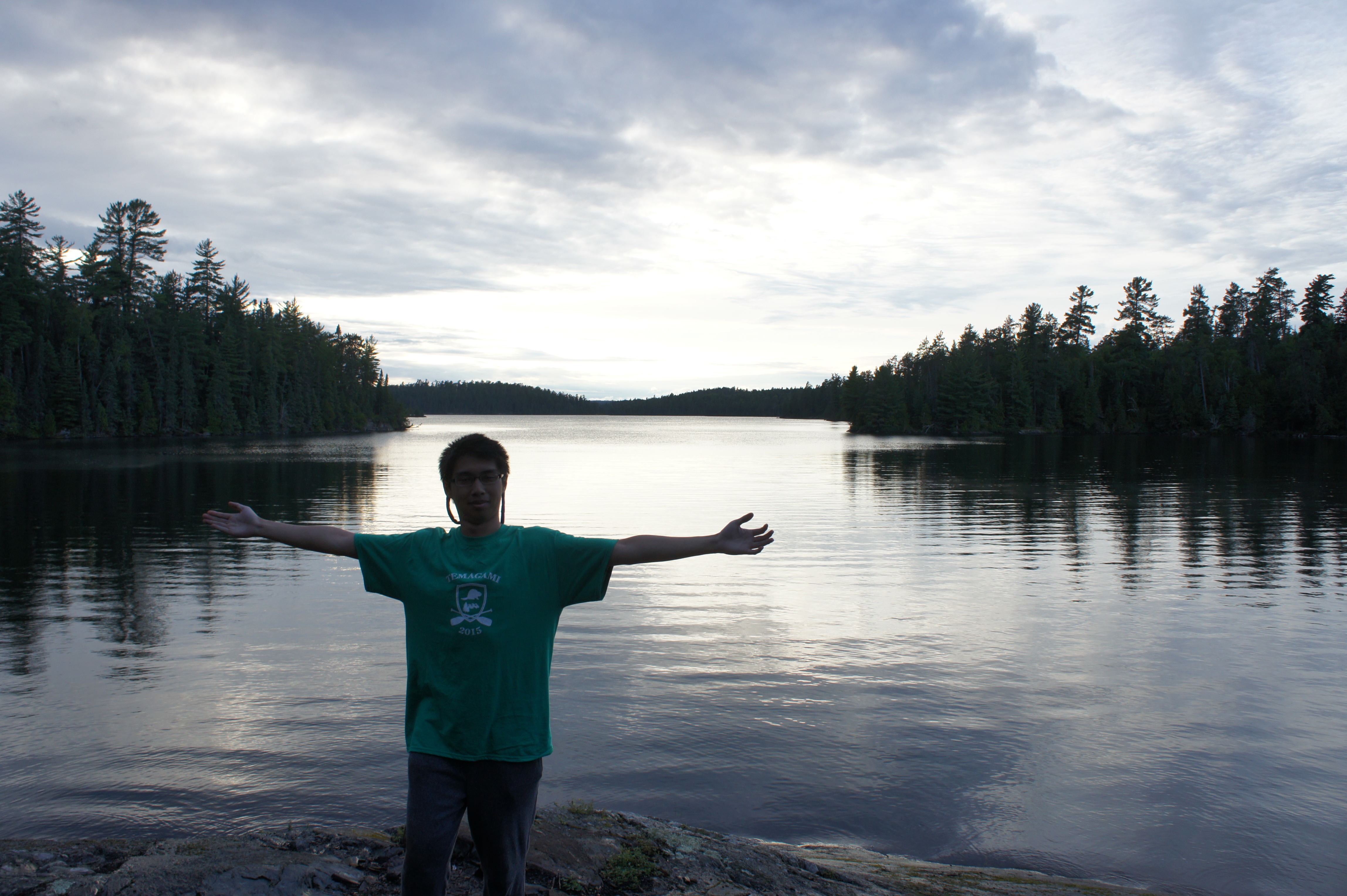
I have always wanted to share the magic of the north with those who have never been there. Stories and photos could only tell so much; the feeling of sitting on a rock island, drinking hot coffee while listening to the cries of a loon can only be experienced. When I stopped by Toronto to visit my cousins after Killarney 2015, they took one look at the photos and decided they wanted to go on the next trip. All I needed was the spark of interest to set the trip planning in motion. After setting the launch date for August 22, 2015, I began mapping out the route. I’ve always wanted to paddle the waters of Temagami in Ontario, what I better way to experience it than with two first timers. I wanted it to be a trip they would never forget. I went all out and designed t-shirts for the trip on CustomInk. It actually turned out halfway decent.
Temagami 2015 logo
Delorme satellite messenger, a new purchase for the trip
Richmond to Temagami road trip
So, on August 22, 2015, Brian and I left Richmond, VA to head to Toronto to pick up our cousins Andrew and Eric. From there, it would be another 4 hours to Temagami. We spent the night of the 22nd in Toronto, helping my cousins pack and trying on watershoes and prepping our gear. In the morning, we finished the drive, stopping only at North Bay to take a quick look at the town and eat some lunch at a restaurant called Cecil’s.
Cecil’s in North Bay, Ontario
Temagami municipality
We arrived in Temagami at about 6:00pm, from there we head to our lodging for the night, a place called Loon Lodge nestled on an island on Lake Temagami. The lodge is owned and operated by a very nice couple, John and Jenny. I had never stayed at a lodge like this before, it was Canadian in every way. Outside were forest green, restored Keewaydin Camp canoes resting by the dock, plaques of trophy Pike and Walleye hung from the cabin walls, hummingbirds drinking from the feeder and a portrait of Grey Owl displayed proudly in the dining hall. Needless to say, we were in love with the place. We spent the evening swimming and diving off the docks, racing canoes and enjoying the glory of a Northern summer.
Mapping
Nightcap
Lake Temagami
Grey Owl
breakfast
August 23, 2015: Monday morning, we each ate a giant breakfast at the lodge. I had forgotten how good Canadian sausages were. A couple of boys related to the lodge owners joined us and told tales of their fishing victories against giant Northern Pike. After breakfast, we packed up our gear and began navigating through Lake Temagami. Our journey had officially begun. We battled choppy waters and headwinds towards Diamond Lake. Halfway into the paddle and several hours later, we came to the realization that we would have to chose a different route.
Lake Temagami
clear water
headwinds
Breaktime
The route from Jeffsmap.com
The water was far too rough and we raced against threatening storm clouds that turned the water black. With such an open view of the wilderness, we could actually see the rain approaching. The drumming of rain hitting the water became louder and louder until it was finally right over our heads. After paddling a total of 20km that day, we made our way past the Keewaydin camp and into Upper Kokoko Bay where we found a nice rock campsite. I could tell Brian was excited, he’s been interested in the Keewaydin camp for quite some time now. One of the oldest camps in North America, they teach traditional camping and canoeing skills; paddling with woodvas canoes, hauling wannigans and portaging with tumplines. Their camps are broken up into sections of boys and girls. Some of the more experienced sections even take expeditions up to the James Bay. I was surprised to learn that Grey Owl actually was a member of the camp in his youth.
Storm approaches
basecamp
preparing firewood
Rain, just outside Keewaydin Temagami campgrounds
tarp tying
It was pouring by the time we reached the campsite. Brian and I worked quickly to set up the tarps while Eric and Andrew gathered firewood to dry our clothes. We had spicy curry chicken and chickpeas for dinner with a nice loaf of bannock, salami and cheese. The boys had ferocious appetites. As the night wound down, it was clear we were all exhausted. The sound of wind and rain rapping on the tents didn’t even hinder our sleep.
Enjoying a day of sunshine in Upper Kokoko Bay
Rock beach
Rock island
August 24, 2015: We woke up to a chilly morning and lowered the food barrel from the trees. It was time to make some breakfast. Scrambled eggs with cheddar cheese slices in tortilla wraps. Eric and I later took the canoe for a paddle around the bay in search of walleye, while Brian took Andrew for some canoe lessons. He was a natural paddler and was even starting to get down the J-stroke. This afternoon was actually the longest stretch we had on the trip without rain. We found a small rock island where we set our canoes and soaked in the passing sunlight. For dinner we decided to cook some chili with baked corn bread using the reflector oven. The corn bread is definitely something I will be adding to my camping menus, very easy to make and actually really good. For desert we ate smores and drank tea, coffee and hot chocolate. The clouds passed just long enough for us to get a great view of the big dipper.
Preparing chili
Dinner
Rain
camp dishes
breaking bannock
August 25, 2015: We woke up to yet another morning of overcast. It actually took us a few hours to eat breakfast and pack up all of our gear for the paddle home. At this point, we polished off the remainder of the food. I actually originally planned for an additional day and night out in the backcountry, but our food supplies were low, the fishing unsuccessful and the rain persisted. We decided to head back and get an extra day in at the lodge. We had a 6 hour paddle ahead of us and it was time to feed these guys. We made all 12 packs of oatmeal, as well as the mac and cheese with tuna.
With satisfied bellies, we made the easy paddle to the portage site. It would be a 570m portage and we were dreading it. It was wet, slippery and the mosquitoes were out. The fiberglass canoes were much heavier than kevlar. In addition, the yokes were not formed very well. We decided to assign two men per canoe for the portage and it ended up saving our spines. The paddle home was much more scenic than the way in. Kokoko Lake had several beautiful island campsites with Jack Pine scattered throughout. There were also shallow marsh regions which reminded me of Algonquin. We then reached our second portage a short 120m that was even rockier. After a quick snack break of gorp, salami and dried fruit we paddled through the beautiful and peaceful Kokoko bay. The water was calm and the paddling was smooth. The boys have come a long way since the beginning of the trip. Their paddle strokes were now powerful and consistent. Despite the rain and overcast, the beauty of Temagami was overwhelming.
Jack pinethe crew
Upon reaching Loon Lodge at 7:10pm (closing time at 8:00pm), we were happy to see John and Jenny once again. We were all starving. John fired up the grill and we ate massive meals of fish and chips, burgers and poutine. After the feast, we carried our gear to the welcoming and familar common room of the lodge. We were cold, our faces weathered from the wind, our muscles sore from paddling. We each took turns taking hot showers and felt like kings. I don’t think the feeling of dryness and warmth could never be appreciated enough. We hung our clothes by the imitation fireplace and watched Steven Seagul movies on Canadian television. It amazed me how easy it was to get dry indoors. While we were out in the upper Kokoko bay, hanging the clothes out to dry was basically futile against the intermittent showers and wind. Even during times of sunshine, there was an invisible mist of humidity which kept things damp.
Temagami sunset
old wood canvas canoe shop
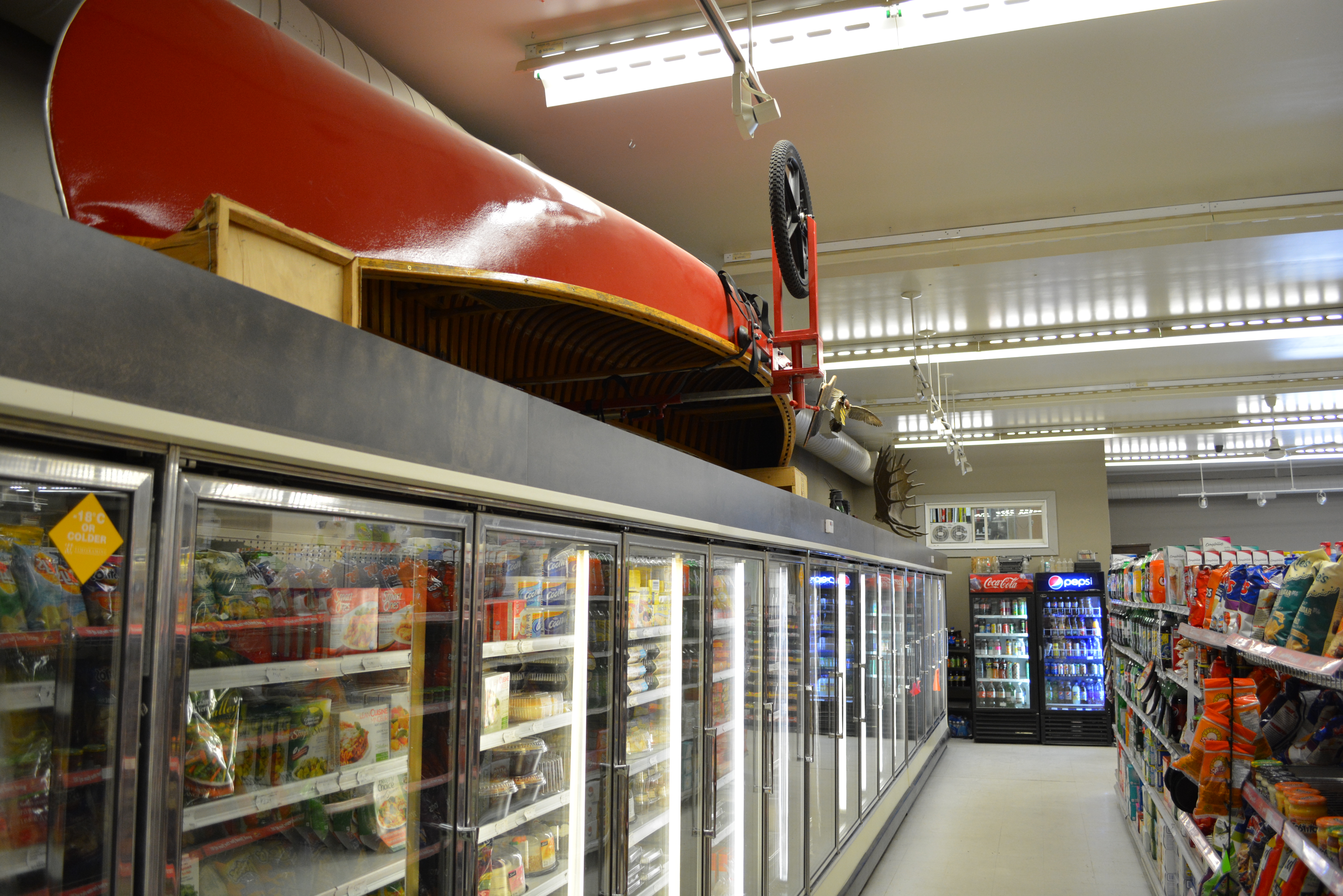
The next morning we packed up early and said our goodbyes to John and Jenny. John gave us a boat lift back to the access point and we loaded up the car. They seemed likely truly genuine nice people. As we were driving down the Temagami lake access road, the corner of my eye caught sight of a whole family of bears. One mama bear and 4 cubs. The tradition holds true! An epic wildlife sighting at the end of every trip. Tradition recap: Algonquin 2014 (moose), Killarney 2015 (black bear), now Temagami 2015 (family of black bears). The perfect exit to our time in the Temagami wilderness. We decided to explore the town, and hit up markets and local businesses. Andrew ended up buying a dreamcatcher, a necklass and bracelet. I ended up buying some local gin by a distillery near the Georgian bay. Brian picked up a case of beer. We picked up grapes as well and ate lunch in the town, fish burgers with poutine. We also visited an old site where they made wood canvas canoes many years ago. It appeared that the shop was no longer in use.
Temagami, population 900.
Beaver plane
grocery store with wood canvas canoe
Before leaving the town, we decided to make the climb up the Temagami firetower. It was a high climb with 157 steps to reach 100 feet. It stands on top of Caribou Mountain 400′ above town and 1300′ above sea level. The scenery was beautiful as we marveled at the boreal forest and Canadian shield while a beaver plane took off for an adventure.
The main reason I wanted to go on this trip was to immerse my cousins in the experience of true backcountry camping. By the looks on their faces, I knew they had a good time despite rain for four straight days. In a short time, they learned the basics of canoeing, they learned how to make fire with wet wood, they filtered water, they looked after one another and they cooked meals in the wilderness. They portaged difficult trails and carried heavy fiberglass canoes from lake to lake. I think most importantly, they learned the lesson of delayed gratification. If it’s raining, it’s okay to be uncomfortable, wet and cold, as long as you are working to improve the situation.
Setting up tarps, gathering firewood is all hard work under wet conditions, but knowing that we will be warm and dry once again is something to work for. Portages are difficult, but they too are conquered one careful step at a time. By enduring these difficulties that not many people are willing to take on, you are rewarded by being present in the splendor of Canadian wilderness.
July 21, 2015: We embark upon a 15 hour road trip to Killarney Provincial Park in Ontario, Canada. Our mission, to answer the calling of the La Cloche mountains and sapphire waters of OSA lake. We left at 1:15pm and arrived to Barrie, Ontario at 2:00am spending the night at a Best Western, apparently the only hotel room left in Barrie. Thankfully my brother was able to find us this hotel from his desktop in Virginia. In the morning we completed the final 3.5 hours of the trip to the town of
Killarney, picking up our canoe along the way at Tyson Lake Marina. Our vessel was an old but sturdy Scott Kevlar canoe weighing in at 52 lbs. The small town of Killarney has a population of less than 1000, it sits on the coast of the Georgian Bay which opens up into the mighty Lake Huron. It is hard to describe the beauty of this town. The air is fresh with a similar atmosphere to a coastal city although without the hint of salt in the air. Just fresh water. It was a warm 27 degrees celsius, dry and sunny with breezes from the lake. We couldn’t believe the water when we saw it, a crystal blue unlike anything we’ve seen before. Most of the people who come to Killarney Provincial Park, stop by this town to visit Herbert’s Fish and Chips, a place where they serve fresh fish caught right out of the Georgian Bay. We had walleye that was simply superb. I now know what they mean when they say that Walleye (pickerel) is the best tasting freshwater fish. After filling our bellies, we headed into the park.
Town of Killarney on the Georgian Bay
Fresh walleye from the bay
Prior to entering the park, we saw signs warning us that Killarney is open bear country. We took all the necessary precautions before entering the park to camp safely, including a water proof food barrel to tie up a tree at night, we hung bear bells on our duluth packs while we portaged to create noise and not startle any bears. I have always been interested in bears and their behavior, I used this trip as an opportunity to learn more. Fortunately, only black bears are present in central Ontario. They are definitely the least aggressive of the species in North America and will avoid human contact 99% of the time. It is the rare 1% of black bears that have developed a predatory instinct toward humans that we must be wary of. Although there has never been a fatal bear attack in Killarney Provincial Park, this is unfortunately not true of all Ontario parks. The following is a link to all of the fatal bear attacks in North America (notably two incidents at Algonquin Park).
Bear Country
Hanging a bear barrel/bag is best done in the daylight!
In addition to the predatory bears, one must be cautious of bears that have become too comfortable around humans. Due to the frequent use of camp sites and the improper disposal of food, some bears can develop a habit of lingering around campsites in search of food. These bears can become dangerous when they are defending food or if they are feeling threatened by campers. The best defense one could have against bears is to practice safe camping measures: stay in large groups, make noise while you portage, hanging your food and all scented items in a food barrel suspended high in a tree. Needless to say, LEAVE NO TRACE. Some portagers even had their toothpaste snatched by a bear from their packs in between trips! When all measures fail and you find yourself face to face with an angry bear, bear spray is probably your best defense. I bought it for this trip and fortunately never had to use it against a bear.
George Lake
While obtaining our camp permits, we were surprised to find that a spot had opened up on OSA lake for our 2nd and 3rd nights instead of our initially reserved Muriel Lake. We were pumped at the prospect of camping in the heart of Killarney. We unloaded our car and packed up our gear at one of the George Lake access points. In terms of size, Killarney is much smaller than Algonquin, yet both are totally different parks. The climate in Killarney is dry with relatively little rainfall throughout the year. It is usually sunny and the quartz mountain range provides a totally different backdrop as well.
George Lake
Campsite
Rock jumping
The voyageurs in the past used to implement the Hudson Bay start before beginning on a big journey. Basically, on the first day of multi-day trip, they would paddle a very short distance and set up camp for the night, this way, they could get accustomed to the gear and the loads they would be carrying and also could turn back if they noticed that they forgot something. We decided to use this practice as well and it worked perfectly. We camped the first night right on George Lake, we needed as much daylight as possible to set up and cook dinner, and of course to swim! I couldn’t pass the opportunity after seeing young campers plunge from cliffs into the blue waters. We cooked up some hot chicken curry and had some tea, watching the beautiful late sunset.
campsite view
The sunsets at about 8:45pm in central Ontario
Cooking spicy chicken curry
The next morning, we made our way to the first portage, a short one at only 45m to enter Freeland Lake. The Scott canoe was surprisingly very easy to portage. I attribute this to the well designed yoke which rested comfortably on my shoulders. The Freeland Lake area was more consistent with Ontario backcountry canoe camping that I was familiar with, hundreds of lily pads and flowers in full bloom.
First portage of the trip
Sarah spotted a snapping turtle the size of a sewer grate swimming under our canoe. After another 410m portage, we were on Killarney Lake. We noticed that as we went further into the interior, the water became even clearer. Killarney Lake is surrounded by the white mountains and was clearly a popular site for campers. We saw a family of campers settled comfortably on one of the islands. We then traveled across a swampy area with numerous beaver dams, after hauling our canoe across one, we made our last 120m portgage of the day to OSA lake!
Freeland Lake
lily pads and flowers in full bloom
Beaver dam
Beaver tail paddle
Upon first laying eyes on OSA lake, I suddenly understood why the Group of 7 artists visited Killarney for inspiration. I don’t think any camera would ever do this place justice, the clear blue waters allow visibility up to 20ft. The white quartzite mountains seemed to enhance the blue by reflecting even more sunlight. The clouds were spectacular.
After a hot day of paddling, there’s nothing like splashing your face in the crystal blue waters of Killarney
Amazingly, this giant lake only has 4 campsites. As we paddled around, we found that several were already occupied. We took our time searching for a place to set up camp and stopped to have lunch on a small island. We even contemplated staying on this island to camp but decided it would be much too windy without the trees to shield the wind. Finally, We found a perfect island campsite at site #32. A beautiful spruce island inhabited by red squirrels that were apparently tagged with white collars.
Island lunch break, OSA lake
OSA lake
Campsite #32, OSA lake
Our time on OSA was simply bliss. Perfect weather, with a cool shade among the pine and spruce. We were exhausted and slept for 10 hours after dinner, it was still light out. We swam and sunned on the rocks without a care in the world. There was tiny island just off the shore that we could swim to. Seemed like someone already built a little Inuksuk on it.
Campsite #32 on OSA lake.
The next day we packed up and we paddled to the unofficial portage trail, a little tricky to find but we found some canoes parked on the trail already. I must commend JeffsMaps once again, this portage is not official and we would have never knew about it without JeffsMap. It was a tough one, at 1285m with an elevation gain of about 65 ft. The trail also had many downed trees along the path. I think it is tradition for me to see a wild animal during the last portage of a canoe trip. The previous year in algonquin park, I longed to see a moose on our 7 day trip. By the 6th day I was starting to lose hope, it was only till the last portage on the 7th day did we see young moose grazing by Tom Thomson Lake.
Moose sighting in Algonquin Park 2014, after the last portage on the last day of the trip.
Mosquito head nets were crucial for long portages.
Such moments I believe are truly religious. It’s hard to explain to someone who doesn’t spend a significant amount of time outdoors. In Killarney, a part of me wanted to see a bear, but a bigger part of me did not. During this last portage of Killarney as I heaved the canoe over a down tree, I spotted an adolescent bear at the corner of my eye, running away from us as it heard us approach. After all of my years camping and hiking, this was actually the first encounter I’ve had with a wild bear. It was pretty awesome. I decided to tell Sarah at the end of the portage about the bear sighting. We kept conversing and making noise during the rest of the portage.
The rest of the paddle home was relaxing. As we came closer to civilization, it was nice to see occupied campsites on George Lake and kids jumping from cliffs into the water. As we packed up and headed to Toronto for the night, I couldn’t help but think what amazing luck we had during this trip. Clear skies, warm and dry weather, no injuries, and tons of memories. Killarney is really a magical place unlike any other park in Ontario, truly deserving of the title of the crown jewel of Ontario.
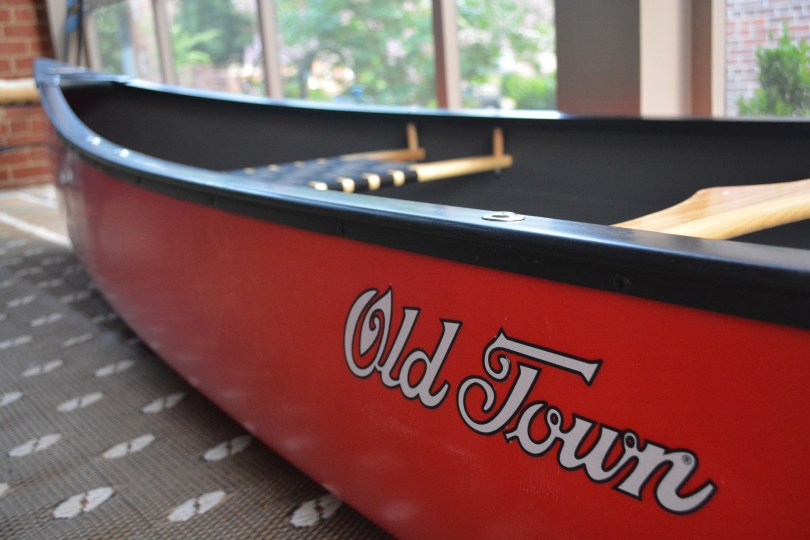
On June 23, 2015, we drove an hour and a half to Farmville, VA to check out some canoes at the Appomattox River Company, the largest canoe supplier in central Virginia. It was over 100 degrees F and I was in shirt and tie from work, dripping in sweat as we navigated through the warehouse. The guys there were super helpful and knowledgable. We originally came to check out Nova Craft canoes, but they really didn’t have the models we were after. We originally sought the light yet tough materials such as Royalex but ever since the company stopped producing this material, Royalex canoes have been hard to find. Since we are mostly paddling rivers, we needed something more durable. After much debate, we decided that the best canoe for us at this time was the Old Town Discovery 15,8 (2015). Built like a tank and almost as heavy as one too at 87lbs, this is the workhorse for most outfitters because of the durable three layer polyethylene construction. The best thing about the 2015 models are the new webbed seats, upgraded from the terrible, formed plastic seats. I figured if we can portage an 87lb canoe, kevlar will feel like paper. We are proud of our new addition to the family, her name? Fury. Time to find some paddles.
On June 13, 2015, the temperature in Richmond was 92 degrees F. We needed a place to escape the heat. This was our chance to make the return to Lake Moomaw out in the mountains of Virginia, where it was 15 degrees cooler with lows in the 60s at night. Brian worked the night previously so we left late that Saturday afternoon. For this trip, I rented an Old Town Discovery canoe 15’8″ from Riverside Outfitters in Richmond. We typically get our canoes from the VCU Outdoor Adventure center however all of theirs were taken. This trip pretty much convinced us that we need our own canoe to avoid the hassle of rental and returns.
Riverside Outfitters
After a quick lunch at the Galley, we hit the road. The drive into the mountains was peaceful. We were hit with intermittent mountain rain showers as the clouds came and left. We could already feel the cooler air as we approached the boundaries of the national forest. We passed through gorgeous passes with streams that looked perfect for Tenkara.
There’s always an upside to rainfall, for we were treated to an awesome display of misty mountains as we paddled to the campsite. The sun was making it’s way through the clouds and the sky was clearing before sunset. We spotted deer as they approached the lakeside to drink the cool water. I had forgotten how beautiful the lake was.
God’s country
Paddle forth
Misty Mountains
Deer drinking water
Lake Moomaw
One of the advantages to paddling in Virginia is the lack of mosquitoes. NO horseflies/deerflies either! Sitting comfortably out in the open without a bug shelter in June is something we did not take for granted. We parked the canoe and enjoyed some Woodford whiskey by the lake.
solo paddling
Campsite
Chillin
Clear water
our view
The water was especially clear that day. We saw numerous motor boats, but no other canoeists. It seems like Lake Moomaw is used mostly as a fishing and motorboating spot for the locals. All of the canoes that were available for rent were still on the racks at the marina. None of the back country campsites were occupied so we had our pick. Pretty amazing for just a $5 parking fee. We camped at a new site this time which was very clean and secluded.
The Trangia alcohol stove, produced in Sweden it was designed primarily for backpackers. I found it works well with the Emberlit stove.
The following night was a perfect opportunity for me to try out my new Trangia alcohol stove. I must say this little stove is perfect for canoe trips. There certainly is beauty in simplicity. It is built like a tank and has no moving parts to break. All you have to do is fill it with fuel (alcohol of any type) and set a spark to it. I find it makes the perfect companion to the Emberlit stove, a stick stove that I’ve used for a couple of years now. The alcohol stove burns cleanly with no soot to clean from your pots and pans. Win. With the simmer plate, we were able to grill spicy sausages to perfection.
I also had a chance to play with camera settings on the DSLR to try and capture the thousands of stars. I think it turned out pretty well for the first attempt. It was difficult without a tripod but this trip opened my eyes to the world of night landscape photography.
Lake Moomaw star show
We took the canoe out for a midnight paddle on the lake under the blanket of countless stars. It reminded me of paddling Big Trout Lake in Algonquin park at 3:00am in September 2014. With the assistance of a small amount of hand sanitizer (awesome trick) to catch a flame to the soaking wood, we were able to get a rip roaring camp fire going.
clear skies
Some clouds remain after a day of showers
We woke the next morning and prepared some breakfast once again with the Trangia. A simple meal of scrambled eggs, brie cheese, salami, toasted bread and yogurt with blueberries and raspberries. One of the perks of lakeside camping is packing a cooler. With no portages to haul heavy gear, we could bring what we wanted. The cooler is a definitely a luxury item on canoe trips.
Overall, the return to Lake Moomaw was a very relaxing trip. No heavy portages, no rushing and no real destination. Despite the spectular views, I do not suspect that we will be back any time soon. There are numerous waterways in Virginia that I have yet to paddle and I have compiled a list of rivers and lakes that I want to explore including the Cowpasture River (claimed to be one of the most pristine rivers in Virginia). I also picked up a copy of “Virginia Whitewater” by H. Roger Corbett off of ebay. Apparently it is a must for canoeists in Virginia.
Time to find a canoe
Entrance to Lake Moomaw
We learned a great deal on this trip and left Lake Moomaw that evening with one revelation…..we must now buy a canoe. Leading choices at this point: Nova craft prospector 16 foot in royalex or the Old Town Camper 16 foot in royalex. Both beauties.
For the longest time, I’ve wanted to create the most important tool in bushcraft. The knife. There are an endless style of knives out there, however I found myself drawn to scandinavian steel and grind. Norway, Sweden and Finland are a few of the countries that have a long standing tradition in superb bladesmith with companies like Helle, Mora and Enzo. Up until this point, I have used my Morakniv as an all purpose knife, however I wished to own one with a figured handle. Instead of purchasing a knife, I decided to make one.
Carbon steel blade, forged in Karesuando, Sweden.
Choosing the steel.In the simplest sense, steel is combination of iron and carbon. There are numerous different types of steel with different properties. Different alloys can be added to provide these properties. When it comes to forging a blade, the key distinction is whether you want a simple carbon steel blade or a stainless steel blade. The stainless properties come from the addition of chromium to the iron and carbon. The chromium provides rust resistance and flexibility but at the sacrifice of the hardness of the blade. To qualify as stainless, the overall composition must be at least 10.5% chromium. Stainless steel is the choice for several folding knife makers such as Victorinox, because of the low maintenance required with this material. Carbon steel on the other hand, is more prone to rust and corrosion, however many prefer this steel in bushcraft because it is harder and can hold an edge for a much longer time if properly maintained. It is also an easier steel to sharpen in the field. I could go on and on about the different steels that are available for knife making but to keep it short, I decided to go with carbon steel, particularly from Sweden.
Karesuando, Sweden: The most northern town in the country is known for producing superb Scandinavian blades. Photo courtesy of Stephen Hudson. http://stephenhudson.net
Karesuando is the most northern town in Sweden, it is known for producing superb blades. I purchased mine from Thompson’s Scandinavian Knife Supply . An excellent supplier of anything knife related including stabilized wood, pins, and bolsters. They have a variety of blades to choose from.
Choosing the wood. This was an easy choice for me. Curly birch. A wood that in my mind exemplifies the culture of canoeing in Ontario. When purchasing the wood, it is key to choose “stabilized” wood. This means that it has been dried thoroughly and is no longer prone to movement. The cost of the wood would also vary depending on how much figure is present.
Chiseling the outline of the tang, was a simple process and completed by hand and chisel. I like the Karesuando blades due to their thicker tangs in comparison to the Moras and Helle blades. This particular blade had a drilled hole designed for pin placement however in my case, I was going to be using a hidden wooden peg instead of the usual polished brass pin. This peg would work to secure the steel to the handle and prevent slipping of the blade.
Two separate types of glue were used to mate the two halves. The most common method of fixing steel to wood is by using epoxy resin. For the wood-wood contact however, it was gorilla wood glue all the way. I clamped the pieces and let it sit for 24 hours.
Next came the difficulttask of actually shaping the handle. I decided that I was going to do this by hand. It was a laborious process of carving, filing and sanding. My influence for the handle came mostly from existing Helle models such as the Temagami and the Eggen. While many Scandinavian knives lacked any sort of finger groove, I knew that I wanted a fingerguard.
Carving and filing
The voyageur begins to take shape
When I was finally satisfied with the end result, it was time to sand it and put a finish on the handle. Ideally, you’d want the handle as smooth as possible before putting on any coats of oil or finish. The sandpaper should have a grit of at least 400. In this case, I wanted a simple finish that would bring out the grain and figure of the wood. I stuck with tried tested and true boiled linseed oil. After several coats, I then proceeded to apply layers of beeswax for further protection and to seal it.
In the end, I must say that I was overall happy with the result. The voyageur’s handle fits comfortably and the blade is fastened securely. The use of machines would definitely make the process faster and easier however I wanted my first one to be completed by hand.






















 WAY NORTH