The Return to Lake Moomaw

On June 13, 2015, the temperature in Richmond was 92 degrees F. We needed a place to escape the heat. This was our chance to make the return to Lake Moomaw out in the mountains of Virginia, where it was 15 degrees cooler with lows in the 60s at night. Brian worked the night previously so we left late that Saturday afternoon. For this trip, I rented an Old Town Discovery canoe 15’8″ from Riverside Outfitters in Richmond. We typically get our canoes from the VCU Outdoor Adventure center however all of theirs were taken. This trip pretty much convinced us that we need our own canoe to avoid the hassle of rental and returns.

 After a quick lunch at the Galley, we hit the road. The drive into the mountains was peaceful. We were hit with intermittent mountain rain showers as the clouds came and left.  We could already feel the cooler air as we approached the boundaries of the national forest. We passed through gorgeous passes with streams that looked perfect for Tenkara.
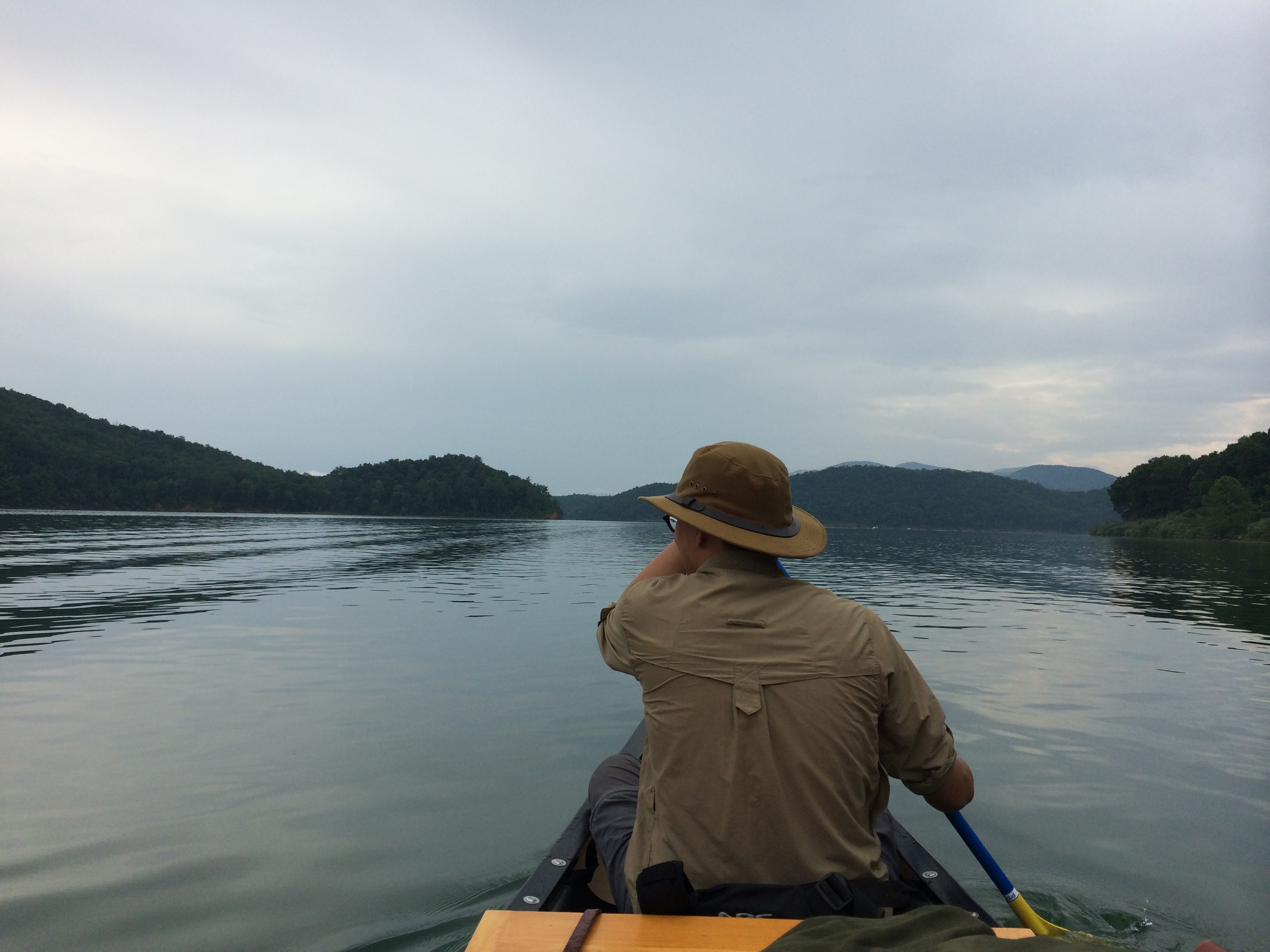
IMG_1288There’s always an upside to rainfall, for we were treated to an awesome display of misty mountains as we paddled to the campsite. The sun was making it’s way through the clouds and the sky was clearing before sunset. We spotted deer as they approached the lakeside to drink the cool water. I had forgotten how beautiful the lake was.

One of the advantages to paddling in Virginia is the lack of mosquitoes. NO horseflies/deerflies either! Sitting comfortably out in the open without a bug shelter in June is something we did not take for granted. We parked the canoe and enjoyed  some Woodford whiskey by the lake.

The water was especially clear that day. We saw numerous motor boats, but no other canoeists. It seems like Lake Moomaw is used mostly as a fishing and motorboating spot for the locals. All of the canoes that were available for rent were still on the racks at the marina. None of the back country campsites were occupied so we had our pick. Pretty amazing for just a $5 parking fee. We camped at a new site this time which was very clean and secluded.

DSC_0047
The Trangia alcohol stove, produced in Sweden it was designed primarily for backpackers. I found it works well with the Emberlit stove.

The following night was a perfect opportunity for me to try out my new Trangia alcohol stove. I must say this little stove is perfect for canoe trips. There certainly is beauty in simplicity. It is built like a tank and has no moving parts to break. All you have to do is fill it with fuel (alcohol of any type) and set a spark to it. I find it makes the perfect companion to the Emberlit stove, a stick stove that I’ve used for a couple of years now. The alcohol stove burns cleanly with no soot to clean from your pots and pans. Win. With the simmer plate, we were able to grill spicy sausages to perfection.

I also had a chance to play with camera settings on the DSLR to try and capture the thousands of stars. I think it turned out pretty well for the first attempt. It was difficult without a tripod but this trip opened my eyes to the world of night landscape photography.

DSC_0073
Lake Moomaw star show

We took the canoe out for a midnight paddle on the lake under the blanket of countless stars. It reminded me of paddling Big Trout Lake in Algonquin park at 3:00am in September 2014. With the assistance of a small amount of hand sanitizer (awesome trick) to catch a flame to the soaking wood, we were able to get a rip roaring camp fire going.

We woke the next morning and prepared some breakfast once again with the Trangia. A simple meal of scrambled eggs, brie cheese, salami, toasted bread and yogurt with blueberries and raspberries. One of the perks of lakeside camping is packing a cooler. With no portages to haul heavy gear, we could bring what we wanted. The cooler is a definitely a luxury item on canoe trips.

Overall, the return to Lake Moomaw was a very relaxing trip. No heavy portages, no rushing and no real destination. Despite the spectular views, I do not suspect that we will be back any time soon. There are numerous waterways in Virginia that I have yet to paddle and I have compiled a list of rivers and lakes that I want to explore including the Cowpasture River (claimed to be one of the most pristine rivers in Virginia). I also picked up a copy of “Virginia Whitewater” by H. Roger Corbett off of ebay. Apparently it is a must for canoeists in Virginia.

We learned a great deal on this trip and left Lake Moomaw that evening with one revelation…..we must now buy a canoe. Leading choices at this point: Nova craft prospector 16 foot in royalex or the Old Town Camper 16 foot in royalex. Both beauties.

Piankatank River – Gloucester, VA

It was a perfect day for kayaking on the Piankatank River, the main tidal river of the Chesapeake Bay. Located on the Middle Peninsula between the Rappahannock and York Rivers, it is a prime spot for fishing, crabbing and bird watching. The river attracts all species of birds including kingfishers, blue herons and bald eagles. My friend Francisco was able to join us. Gloucester County is truly a peaceful place, the pace of life is slower and the sight of trucks carrying crab pots is always pleasing for some reason. I would like to return and paddle through Dragon Run one day, a 36 mile long stream which serves as the main fresh water tributary of the Piankatank River.

Bear Church Rock – Shenandoah National Park, VA

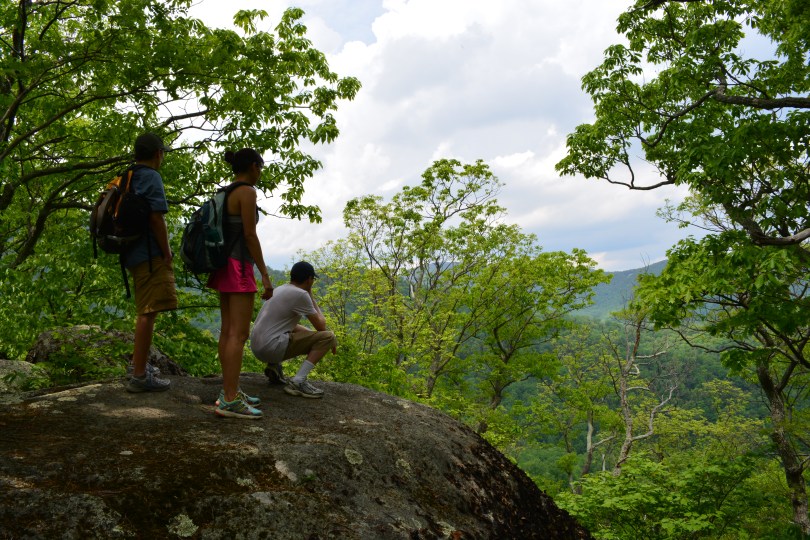
I was starting to wonder if I was ever going to make it out to the mountains before spring ended. We got our chance on May 16, 2015 when our cousin from Toronto came to visit. It was his first time to Virginia and this would be his   his first hike through the Shenandoah mountains. It was a perfect day for the Bear Church Rock loop (8.5 miles) which initially starts on the Graves Mill trail before steeply climbing the mountain along the Staunton river trail. We included a detour to check out the Jones Mountain Cabin owned by the PATC (Potomac Appalachian trail Club). It was a hot day with some overcast mixed with bursts of sunshine and spring rain. The showers peaked as we reached the top of the mountain to cool us off. Heaven.

Algonquin Park – Ontario, Canada

Watch the documentary of our trip to Algonquin Park (above)

algonquinMy brother and I last paddled the lakes of Algonquin Park over 20 years ago. One day, we decided it was time to return. While designated a provincial park, Algonquin definitely feels more like a national park. Every year, people from all over the world come to Algonquin to canoe, camp and fish in these pristine waters. The size of the park is immense, at almost 3000 square miles, it is larger than Canada’s smallest province, Prince Edward Island. For an American reference, it is larger than the states of Delaware and Rhode Island combined.

On the southeast coast, in Richmond, VA, we spent weeks planning our trip, looking at camping gear, watching Kevin Callan YouTube videos, and reading books on Algonquin Park. I don’t think we’ve ever been this excited for any other trip in our lives. The thrill of adventure was invigorating and kept us energized during long days at work. On September 6, 2014, after a 14 hour work day, we made our way north to Ontario. I took the first leg through the night, in the old Honda CRV powered on red bulls and AMP.

We arrived at the Portage Store in Algonquin Park with only half an hour left before the store closed. Thirteen hours of travel and it came down to the last half hour before they stopped renting out canoes – typical Le Brother style. We rented out a Souris River Canoe Prospector 16, a kevlar canoe.

The sun was already setting as we paddled across Canoe Lake, and Little Joe Lake. The cries of the loon welcomed us home as we paddled across glass-like waters. Not a cloud in the sky, nor a breath of a wind.  The small, red flickers of distant fires marked the Canadian shield around us. It appeared that most of the campsites on Little Joe were already occupied. We were worried that we would have to travel much further to the next lake of campsites. As we passed around a bend of forest, we found the last campsite hidden on Little Joe Lake. Both of us were far too tired to get a fire going. We heated up some stew in the Eureka bug shelter and turned in for the night.

The following morning, we woke up fully energized. After a nice breakfast of bacon, eggs and bread, we set forth for our first full day in Algonquin Park. We traversed beautiful portages, streams, beaver dams, and massive lakes to reach Little Otterslide Lake as the sun was beginning to set. We spotted a couple of old men camping who practiced some Canadian hospitality and asked us if we wanted to join and eat dinner with them at their campsite. I’m sure they would’ve had cool stories to share but we politely declined and paddled on to our own rock paradise campsite overlooking the beautiful lake. This was probably my favorite campsite of the trip. We baked some pizza for the night, which looked much better than it tasted. As we cleaned dishes by the lake, frogs and turtles approached us because of our headlamps. A pretty magical night on Little Otterslide.

The sun was out in full force the next morning. We utilized this to our full advantage and swam in the cold but refreshing waters. We washed off the grodiness of a 13 hour road trip, and 2 days worth of paddling and portaging. We picked up and headed off for Big Trout Lake at about 3:00pm. It was a late start to say the least and we knew we were in for a long night. We made our way through amazing marshlands. We traveled deep into the night and used headlamps and navigate our way through the swamps. We had some tough portages during this leg but the arrival to Big Trout Lake was epic.

We paddled out onto the biggest water we have seen yet. We traveled by moonlight which was shining incredibly bright across the still lake. Not a single ripple for kilometers ahead of us. Such moments are religious. Remarkably, we were able to find an island campsite in the dark and unpacked our gear. As I took off my water shoes, I went to brush off some bark on my feet. It did not come off so easily. This confirmed my fear….it was a leech. We grabbed some matches and burned off the sucker.

The next morning we were able to enjoy a full day of rest. No traveling today. It was time to refuel and take in our surroundings. We were able to make a large dent in our food. We fried potato pancakes, baked pies, chopped fire wood and we tried to fish unsuccessfully. Before I knew it, our time at Big Trout Lake had come to an end. At this point, we were half way into our trip and were now on the return loop. It always impresses me how much one can accomplish in a day of camping. I feel like so much happens in one day and no day is like the one previously. No schedules to follow, no traffic and no people. Your lifestyle pace is suddenly changed. You are no longer in control of the day, but you build your day around nature. The weather, the animals you encounter and the elements. It is a soothing experience.

The sky was overcast and rain fell upon us as soon as we started paddling. As night came, the storm descended upon us. We were forced to pull off the lakes because the water was far too choppy and we risked capsizing. We set up camp in the middle of a storm, our headlights were dimming and the wind ferocious. As we staked our tarp poles into the dirt, the gusts of wind would blow them clean off. We lashed them to spruce roots instead. As we continued the fight to tie the tarp, the wind picked up and the storm intensified. We breathed a sigh of relief when the tarp was finally up. Next, we set up the tent right underneath. By this point we were both cold and shivering. We slipped into the tent and took off all of our wet clothing. To be dry again was one of the most satisfying moments I have felt in a long time. Amazing how one can feel after being dry. We felt ready to put on some dry clothes, and face the next obstacle ahead of us. We fired up the snowpeak stoves, and made some delicious sphagetti; such a simple but satisfying meal.

The next morning we woke to explore our surroundings in the daylight. The campsite was a beautiful one under spruce trees and a clean flooring of pine needles. We set out to make a fire to dry our clothing. We ate some chicken tikka masala and rested for the day. We originally planned to paddle that day, but the weather was still overcast and the waters still choppy. We opted to stay an additional day.

The next morning we started the final leg of our trip. It was a big day of paddling culminating in a 2500 m portage. We were rewarded for our efforts. At the beginning and end of this tough haul, we saw a moose eating in some reeds. The perfect goodbye to our time in Algonquin Park.

Upon arrival to the portage store, we felt a sudden sadness as we pulled the canoe out of the water and onto the deck. The park gave us so much in the 7 days we traveled and unforgettable memories. We packed up our gear and found a hotel in Huntsville, Ontario to spend the night. As much as we missed the park, a hot shower and a warm bed was incredible. We spent the next day exploring the town of Huntsville, eating sausages from the hot dog vendors and chatting with the locals. We found an old laundromat to do some laundry in order to have some clean clothes to wear. We then ventured back into the park to pick up some gifts for friends and family from the souvenir shop. We lingered at the portage store to enjoy burgers and poutine before officially departing.

It is easy to see why people from all over the world come to Algonquin year after year. There is a certain magic to it that you can already feel when you’re at the park boundaries. The sheer size of the park and the endless possibilities of adventure that lay ahead is more than enough to create an atmosphere of excitement. The cry of loons that echo in the background, and the gorgeous sunsets particularly stand out in my mind. The place is unlike any other, the sight of canoes on every car, and groups of campers pouring over maps and prepping their gear, each party with a unique adventure in store for them, waiting to be fulfilled.

Angel’s Landing – Zion National Park, Utah

On January 13, 2012, we stopped by Zion National Park on a road trip through the American Southwest at the recommendation of one of my friends. I am definitely glad we listened, because the ascent up to Angel’s Landing is one I’ll never forget. The beginning of the 5 mile trail, follows the Virgin River along a dirt path. As we climbed higher, the trail transforms into a paved stone pathway up the mountain. There are a series of 21 steep switchbacks before reaching Scout Lookout (the last point of return). From here on, the ascent to the top of Angel’s Landing would be a treacherous path consisting of steep drop offs on both sides while navigating tiny stone walkways. Most areas had chain-link hand rails to cling on to while scaling the side of the mountain. The national park recognizes five fatalities along Angel’s Landing, but more have been reported. With cold winds and ice in January, it was a test of nerve for sure, but ultimately a rewarding view. Incredible place.